

How to choose a reliable home contractor in Texas

TL;DR:
- Hiring a licensed, insured contractor with clear communication and detailed bids is essential for successful Texas remodels. Preparing a precise scope, verifying credentials, and reviewing firm contracts protect homeowners from delays and costly issues. Digital tools like BidWolf streamline this process, ensuring organized, responsive, and reliable contractor selection.
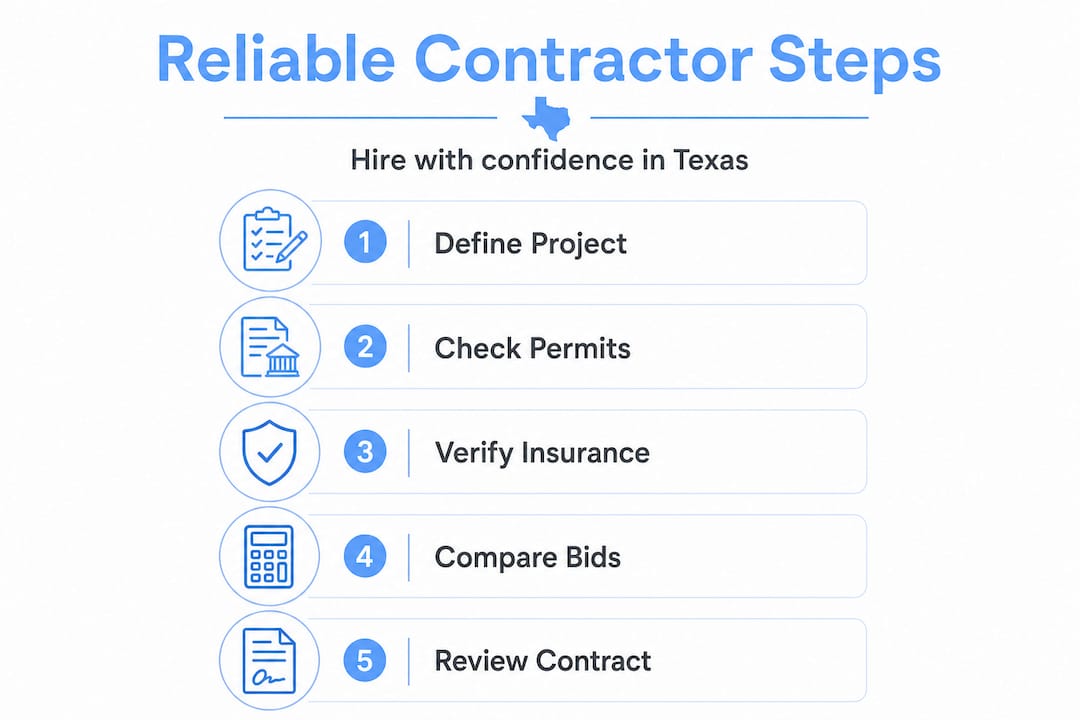
Hiring the wrong contractor in Texas can turn a straightforward bathroom remodel into a months-long ordeal. Costs spiral past budget, timelines stretch with no explanation, and suddenly you’re the one chasing down phone calls that never get returned. These situations happen more often than they should, and almost every case traces back to skipping a few critical steps early in the process. This guide walks you through each of those steps in order: how to define your project, verify credentials and insurance, collect and compare bids, review contract terms, and spot warning signs before they become expensive problems.
Table of Contents
- Preparing to hire: Define your project and gather essentials
- Verify contractor credentials and insurance
- Request and compare contractor bids: Hassle-free process
- Review contract terms and payment structure
- Expert pitfalls and shortcuts: What seasoned homeowners do
- The uncomfortable truth about contractor selection in Texas
- Connect with reliable Texas contractors the smart way
- Frequently asked questions
Key Takeaways
| Point | Details |
|---|---|
| Always verify insurance | Request the certificate and call the insurer to confirm it is current. |
| Request three detailed bids | Compare scope, pricing, and inclusions line by line before choosing. |
| Demand clear contracts | Insist on written milestones, payment schedules, and warranties to protect yourself. |
| Permit responsibility matters | Contractors should handle all permitting and inspection duties, not the homeowner. |
| Communication predicts reliability | If a contractor is slow or unclear during bidding, expect similar issues during construction. |
Preparing to hire: Define your project and gather essentials
Before you contact a single contractor, spend time getting your project details in order. A vague request produces vague bids. When contractors don’t have a clear picture of what you need, they fill in the gaps with assumptions, and those assumptions rarely line up with your expectations or your budget.
Start by writing a scope of work. This doesn’t need to be a formal document, but it should describe exactly what you want done, what materials you prefer if you have a preference, and what a finished result looks like to you. Include room dimensions, any existing conditions that might complicate the work (such as old plumbing or asbestos in older walls), and your expected start date. A clear scope helps every contractor bid on the same job, which makes comparing those bids far more useful.
Key documents to gather before reaching out:
- Photographs of the current condition of the space or area
- Measurements of the work area
- Any existing floor plans or architectural drawings if relevant
- Your budget range (a realistic range, not just a minimum)
- Desired project start date and completion deadline
- Notes on materials, finishes, or brands you want included
Understanding Texas permit and licensing requirements
One thing Texas homeowners frequently overlook is how varied permit and licensing rules are across the state. The Texas Licenses & Permits Guide explains that different types of work require different licenses and permits, and these requirements can vary significantly depending on your city, county, and the nature of the project. A roofing job in Austin may carry different requirements than the same job in Houston or San Antonio.
Use the following table as a starting reference for project types and common Texas documentation to have ready:
| Project type | Common permit needed | Who typically pulls permit | Key document to prepare |
|---|---|---|---|
| Kitchen or bath remodel | Building/remodel permit | Licensed contractor | Detailed scope of work |
| Roof replacement | Roofing permit | Contractor | Property address, HOA approval if needed |
| Electrical work | Electrical permit | Licensed electrician | Current panel info, scope |
| Plumbing work | Plumbing permit | Licensed plumber | Existing system layout |
| Landscaping/hardscaping | Varies by city | Homeowner or contractor | Survey plat if near setback lines |
| HVAC replacement | Mechanical permit | Licensed HVAC contractor | Equipment specs |
Before contacting contractors, review our Texas homeowner checklist to make sure you have everything in order. Walking into the process prepared saves time, prevents miscommunication, and signals to contractors that you’re a serious, organized client, which often results in more thorough and competitive bids.
Pro Tip: Take date-stamped photos of the current condition before any work starts. These become invaluable if a dispute arises over what existed before the contractor arrived.
Verify contractor credentials and insurance
Credentials and insurance are not optional checkboxes. They are your primary protection if something goes wrong on your property. A contractor who seems skilled and affordable but carries no valid insurance puts you at direct financial risk if a worker is injured or your property is damaged during the job.
How to verify insurance step by step:
- Ask the contractor to provide a Certificate of Insurance (COI) before any project discussion begins.
- Review the COI for two specific coverage types: general liability (covers property damage) and workers’ compensation (covers injuries to workers on your property).
- Check the expiration dates on the policy. An expired COI is worthless.
- Call the insurance company directly using the number listed on the certificate, not a number provided by the contractor. Ask the insurer to confirm the policy is active and covers the type of work being performed.
- Request to be added as a certificate holder if the project is large enough to warrant it.
As noted by contractor industry professionals, homeowners should ask for proof of insurance before discussing project details, confirm it is current and active by contacting the insurer directly, and ensure coverage includes both general liability and workers’ compensation.
Permit responsibility is also a credential signal
A licensed, professional contractor knows what permits their work requires and handles the application process themselves. According to guidance on vetting home contractors, homeowners should confirm who is responsible for pulling permits and require that the contractor manage required inspections rather than suggesting permits can be skipped. If a contractor tells you permits are unnecessary for work that clearly requires them, or suggests you pull the permits yourself to “save money,” treat that as a major red flag.
Skipping permits creates problems when you sell your home. Unpermitted work can delay or kill a sale, require costly remediation, and potentially void your homeowner’s insurance coverage if a claim is tied to that work.
Special cases to know about
Some project types carry additional credential requirements. Work on manufactured homes, for example, is regulated through the Texas Department of Housing and Community Affairs (TDHCA). Contractors working on these homes need specific authorization. If your project involves a manufactured or mobile home, verify that the contractor holds the appropriate TDHCA credentials before you agree to anything. For secure contractor hiring on specialized projects, doing this verification upfront can prevent a project from stalling mid-build.
“Never accept verbal assurances about insurance. A contractor who says ‘I’m covered, don’t worry about it’ is not giving you what you need. A current, verifiable certificate of insurance is the only acceptable proof.”
Pro Tip: Always confirm insurance directly with the insurer. Outdated or photocopied certificates are common. The two-minute phone call to verify active coverage is worth far more than any assurance the contractor gives you in person.
Request and compare contractor bids: Hassle-free process
Getting multiple bids is not just about finding the lowest price. It’s about understanding the full scope of your project through the eyes of several experienced professionals. Each bid teaches you something, and together they give you a much clearer picture of what your project actually costs and what could go wrong.

A standard benchmark, supported by industry guidance on Texas remodel bids, is to collect at least three written, detailed estimates before making a decision. Compare the scope and specifications of each bid line by line, not just the total price. Watch for bids that come in unusually low without explanation, as these often exclude labor, materials, or cleanup costs that the other bids include.
What a solid, detailed bid should include:
- Itemized breakdown of labor and materials
- Brand or grade of materials specified (not just “tile” but what kind and from where)
- Project start and estimated completion dates
- Payment schedule with milestones clearly defined
- What is NOT included (exclusions matter just as much as inclusions)
- Permit costs, if applicable
- Warranty terms for both labor and materials
Comparing bids side by side
The table below shows how to structure a simple bid comparison to help you evaluate three bids objectively:
| Bid element | Contractor A | Contractor B | Contractor C |
|---|---|---|---|
| Total price | $14,200 | $11,800 | $15,500 |
| Materials specified | Yes, itemized | Vague references | Yes, itemized |
| Permits included | Yes | Not mentioned | Yes |
| Timeline | 3 weeks | 2 weeks | 4 weeks |
| Warranty offered | 1 year labor | None stated | 2 year labor |
| Payment terms | 10% deposit, milestones | 50% upfront | 15% deposit, milestones |
| Exclusions listed | Yes | None listed | Yes |
In this example, Contractor B’s price is lowest, but the vague materials list, missing permit mention, 50% upfront payment demand, and no stated warranty should raise serious concern. The lowest number is not always the best deal.
Learning to compare contractor bids carefully is one of the highest-value skills a Texas homeowner can develop. It protects your budget and sets clear expectations before work begins. You can also review winning bid examples to understand what a well-structured proposal looks like in practice.
Pro Tip: Use the bidding phase as a communication test. Send each contractor a follow-up question after they submit their bid and note how quickly and clearly they respond. A contractor who is slow, evasive, or unclear during estimating will likely behave the same way once you’ve already signed a contract. Reading about contractor communication tips can help you set the right expectations from day one.
Review contract terms and payment structure
A signed contract is your legal protection. It locks in the scope of work, materials, timeline, and the payment structure you’ve agreed to. Without a detailed written contract, disputes become your word against the contractor’s, and those situations rarely end well for homeowners.
Before you sign anything, review the contract for each of the following elements:
- Scope of work: Every task that will be performed should be listed explicitly. “Bathroom remodel” is not a scope. “Remove and replace tile on floor and shower walls, install new vanity and plumbing fixtures, repaint ceiling and walls” is a scope.
- Materials and brands: Confirm the specific materials match what was discussed. If the bid mentioned a specific tile brand or fixture model, it should appear in the contract.
- Project timeline: Start date, major milestones, and an estimated completion date should all be written in.
- Payment milestones: Never agree to pay more than 10 to 15 percent as a deposit. Progress payments should be tied to completed milestones, and the final payment should only be released after a satisfactory walkthrough.
- Change order process: Any changes to scope, materials, or cost must be documented in a written change order signed by both parties before the work is done.
- Warranty terms: What does the contractor warranty, for how long, and what is the process for claiming it?
- Dispute resolution: What happens if you disagree about the finished work?
According to contract guidance from Texas construction professionals, contracts should be specific about scope, materials, timeline, payment milestones, change orders, and warranty terms. Homeowners should avoid vague agreements and insist on milestone-based payments rather than front-loading cash to the contractor.
Payment milestone structure reference:
| Project stage | Typical payment percentage | Trigger condition |
|---|---|---|
| Contract signing | 10 to 15% | Confirmed start date and signed contract |
| Materials delivered / demo complete | 20 to 25% | Verified delivery or completion |
| Rough work complete (framing, rough plumbing, electrical) | 25 to 30% | Passed inspection if required |
| Finish work complete | 20 to 25% | Visual inspection and approval |
| Final walkthrough and punchlist resolved | Remaining balance | All items on punchlist signed off |
Use the contract review essentials checklist to make sure nothing is missing before you sign.
“A contract that front-loads payments gives the contractor less reason to finish the job on time and on spec. Structure payment to protect your leverage until the work meets your expectations.”
The change order process deserves special attention. Scope changes are common during renovation work, especially in older homes where walls can hide unexpected conditions. Every change to the original plan should have a written change order that specifies what is changing, how it affects the cost, and how it affects the timeline. Never allow verbal change orders. They create disputes.
Expert pitfalls and shortcuts: What seasoned homeowners do
Experienced homeowners who have managed multiple contractor relationships know things that first-timers often learn the hard way. These practical shortcuts and warning signs can save you significant time, money, and frustration.
What experienced homeowners consistently do:
- Test communication during bidding and treat slow or unclear responses as a disqualifier
- Ask for references from projects completed in the last 12 months, not several years ago
- Request references specifically tied to your project type (a roofing reference is not useful if you’re hiring for electrical work)
- Read reviews with a focus on how contractors handled problems, not just whether customers were happy overall
- Document every conversation about scope or changes in writing, even if just a confirmation email after a phone call
- Conduct a pre-construction walkthrough with the contractor to align on exactly what the work involves
According to guidance on vetting home contractors, references and reviews should be recent and relevant. The key is to understand how a contractor behaves when complications arise, not just whether past customers give a thumbs-up. Ask references directly: “Did anything unexpected happen during the project, and how did they handle it?”
The communication test is one of the most reliable predictors of project quality. As contractor hiring experts point out, if a contractor is hard to reach or unclear during estimating, that pattern typically continues once construction begins, creating friction and delays throughout the project.
Checking contractor review tips can help you read reviews more critically and extract information that less experienced buyers often miss.
Pro Tip: Keep a project folder with dated records of every bid, email, contract, change order, payment receipt, and site photo. If a dispute arises, this documentation is what gives you the strongest position, whether in conversation with the contractor or in a formal complaint process.
The uncomfortable truth about contractor selection in Texas
Here is what most contractor guides won’t tell you: a high review count does not make a contractor reliable. Neither does a long list of logos from industry associations on their website. The metrics that actually predict a smooth project are much simpler and more observable.
We’ve seen it consistently across the Texas market. Homeowners who focus on the number of five-star reviews or how long a company has been in business sometimes still end up with budget overruns and communication breakdowns. Meanwhile, homeowners who tested responsiveness during bidding, confirmed insurance with one phone call, and insisted on milestone-based payments tend to have significantly better outcomes, regardless of how long the contractor has been operating.
Communication speed and transparency are far more predictive than reputation scores. A contractor who responds to your initial inquiry within a few hours, asks clarifying questions about your project, and sends a detailed written bid is demonstrating something important: they run an organized operation. Disorganization during the bidding phase always shows up again during construction.
The other uncomfortable truth is that skipped verification steps cause most disputes. Not contractor incompetence. Not material failures. Simply failing to confirm insurance, failing to put scope in writing, or agreeing to a vague contract because it felt awkward to push for specifics. These steps feel procedural, but they are what protect you.
Digital bidding tools and contractor marketplaces have genuinely improved the playing field for Texas homeowners. The benefits of contractor bidding platforms are real: faster access to multiple bids, standardized information formats, and built-in communication records. But they work best when you bring your own diligence to the process. No platform replaces the phone call to confirm insurance or the careful read of a contract before signing. A contractor marketplaces guide for Texas homeowners can help you understand how to use these tools to your advantage without becoming over-reliant on them.
The most effective approach is to combine the efficiency of digital tools with the discipline of the verification steps in this guide. Use platforms to get bids faster and to maintain organized records. Then apply the same credential checks, contract review, and communication tests you would use with any contractor you found through a personal referral.
Connect with reliable Texas contractors the smart way
This guide gives you the foundation to hire with confidence, but having the right process is only part of the equation. You also need access to contractors who are already verified and responsive.
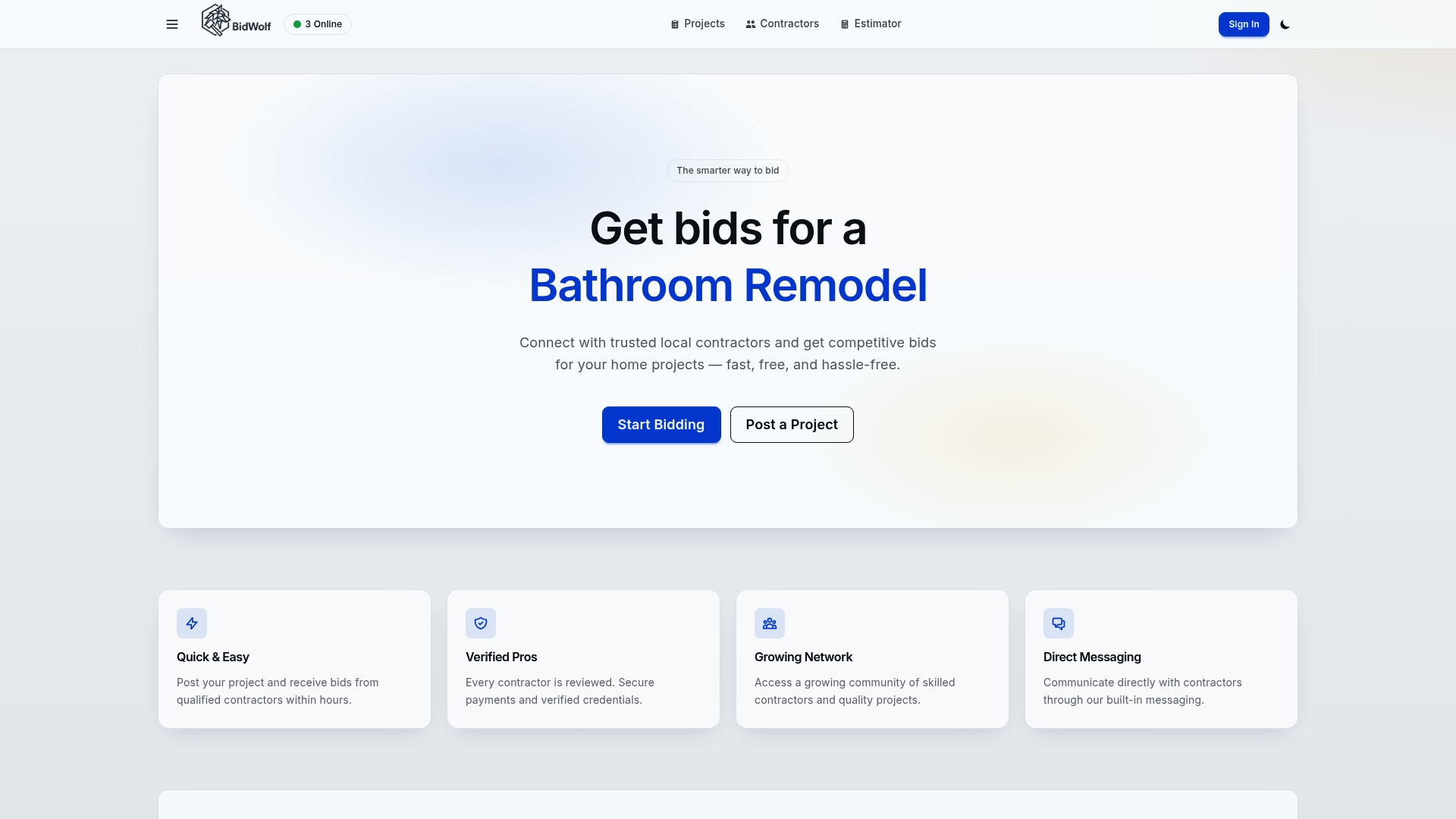
BidWolf makes it easier to put this process into practice. When you post your project on BidWolf, you get competitive bids from license-verified local contractors across Texas, with built-in messaging to test communication from day one. Every bid comes through a structured format so you can compare scope and pricing without chasing paperwork. You can find local contractors in your area, review their credentials, and manage the entire process from your phone. It’s the hassle-free starting point for a project done right.
Frequently asked questions
How do I verify a Texas contractor’s insurance?
Request a Certificate of Insurance (COI) and call the insurer directly to confirm the policy is current and covers the type of work being performed. As recommended by Texas construction professionals, you should verify both general liability and workers’ compensation coverage before any project discussion begins.
How many bids should I collect before choosing a contractor?
Get at least three written bids and compare each one line by line for scope, materials, and pricing before deciding. Industry guidance on Texas remodel bidding consistently benchmarks three comparable estimates as the minimum needed to make an informed comparison.
What contract terms protect Texas homeowners from unexpected costs?
Ensure your contract includes milestone payments, a fully written scope of work, and a signed change order process for any modifications. Contracts that follow milestone-based payment structures keep financial leverage with the homeowner throughout the project.
Is it a red flag if a contractor asks me to pull permits?
Yes, it is a clear red flag. Reliable, licensed contractors handle permit applications and inspections themselves. According to Texas contractor vetting guidance, shifting permit responsibility to the homeowner is a common practice among contractors trying to avoid scrutiny or work outside their licensed scope.
How can I spot a contractor likely to cause delays?
Watch how quickly and clearly the contractor communicates during the bidding phase, because slow or vague responses during estimating typically predict friction once work begins. As contractor hiring resources confirm, communication patterns during the bid phase are one of the strongest early indicators of how a project will run.