
Contractor marketplaces: a complete guide for Texas homeowners
TL;DR:
- Contractor marketplaces connect homeowners with local, verified contractors for faster project sourcing.
- Homeowners must independently verify licenses, insurance, permits, and scope details despite platform vetting.
- Clear communication, multiple bids, and detailed contracts are essential for successful and protected projects.
Finding a reliable contractor in Texas is harder than it should be. You ask neighbors, scroll through search results, and still end up with a stack of phone numbers and no clear way to compare your options. Online contractor marketplaces promise to fix that problem, but most homeowners have a surface-level understanding of how these platforms actually work, what they check, and where they still fall short. This guide walks you through everything: the mechanics of these platforms, what to look for when choosing one, the real benefits and limitations for Texas homeowners, and how to protect yourself from start to finish.
Table of Contents
- How contractor marketplaces work
- Key features to evaluate in contractor marketplaces
- Benefits and limitations for Texas homeowners
- Best practices for safe and successful project outcomes
- The biggest myths—and what really helps Texas homeowners
- Find and hire top Texas contractors with BidWolf
- Frequently asked questions
Key Takeaways
| Point | Details |
|---|---|
| Faster contractor discovery | Marketplaces help Texas homeowners quickly connect with local, available pros for their projects. |
| Due diligence still required | Even with platform vetting, always check licenses, insurance, and references yourself before hiring. |
| Multiple bids advantage | Getting several quotes ensures competitive pricing and increases the chance of finding the right contractor. |
| Written agreements matter | Keep all project details and any changes in writing to protect your investment and avoid disputes. |
How contractor marketplaces work
Understanding how contractor marketplaces function is the first step toward using them confidently. At the most basic level, a “contractor marketplace” is a two-sided online platform that connects homeowners with contractors and service professionals who bid on or accept work requests for renovations and repairs. Think of it as an organized, digital version of word-of-mouth referrals, built to move faster and give you more options at once.
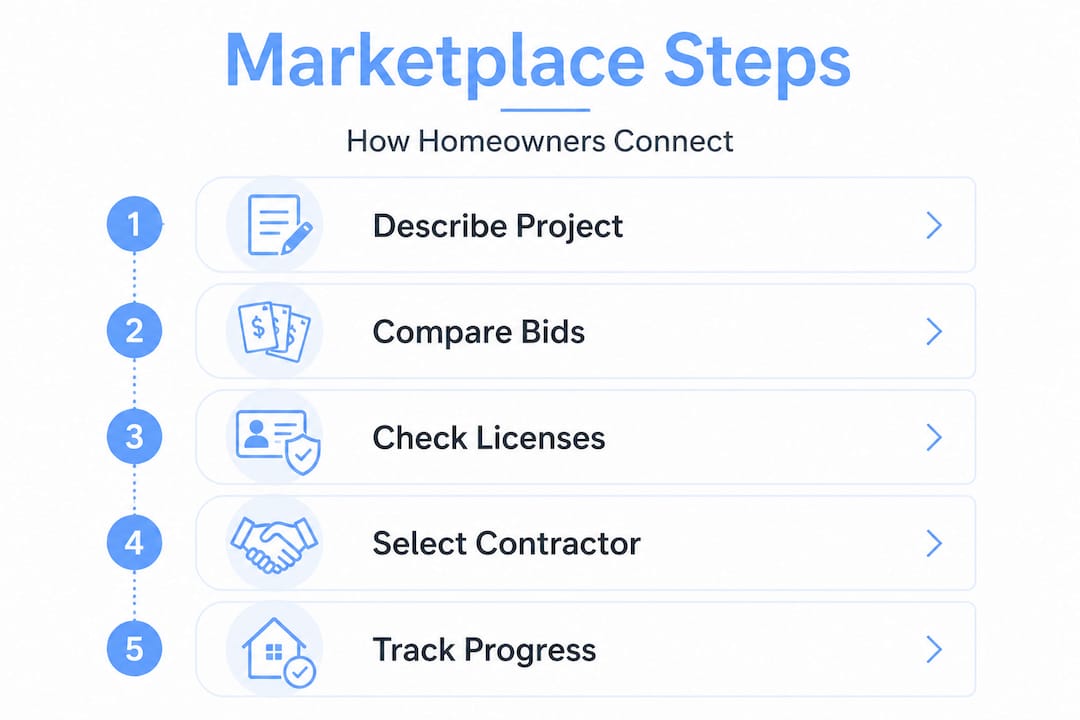
Here is a typical flow from start to finish:
- Post your project. You describe the work you need done, your location, your timeline, and your rough budget. Good platforms let you upload photos or documents to give contractors a clearer picture before they submit a proposal.
- Receive bids or proposals. Contractors on the platform review your posting and submit competitive bids. Depending on the platform, you might see itemized quotes, flat-rate offers, or a request for an on-site visit before pricing.
- Review contractor profiles. Each contractor typically has a profile showing their credentials, completed projects, reviews from previous clients, and any verified licenses or insurance information the platform has collected.
- Select your contractor. You compare the bids, read the reviews, and message contractors directly through the platform’s built-in messaging system to ask follow-up questions.
- Coordinate and manage the project. Many platforms allow you to track milestones, release payments in stages, and keep all project communication in one place.
To make this concrete, consider a Texas homeowner in Austin who needs a kitchen remodel. They post the project on a marketplace, upload photos of the current layout, list their $35,000 budget, and note they need the work done within three months. Within 48 hours, they receive bids from five local contractors. They can filter by rating, check license verification status, and read reviews from other Austin homeowners who hired those same contractors. That kind of side-by-side comparison would take weeks through traditional methods.
You can browse sample project postings to get a better sense of how projects are structured and what level of detail tends to attract the most qualified contractors.
“These platforms streamline the connection between homeowner and contractor, facilitating communication, milestone tracking, and in many cases secure payment handling, so both parties have a clear record of the agreement and its progress.”
Pro Tip: The more specific your project description, the better your proposals will be. Include dimensions, materials you prefer, and any work that has already been completed. Vague postings attract vague bids.
Key features to evaluate in contractor marketplaces
Now that you know how the platforms function, here is how to evaluate which one fits your needs as a Texas homeowner.
Not all contractor marketplaces are created equal. Some platforms differentiate by their degree of vetting or related guarantees, but homeowners should still perform due diligence on licenses, insurance, scope matching, and change-order rules regardless of what the platform claims to handle. That reality should shape how you evaluate your options.
Here are the key features to look at:
- Contractor vetting process. Does the platform verify state licenses? Do they run background checks? Is insurance confirmation required, or just self-reported? The answers matter significantly for larger or more technical jobs.
- Work guarantees or dispute resolution. What happens if a contractor walks off the job, or the finished work does not meet the agreed-upon scope? Some platforms offer satisfaction guarantees or escrow-based payments that protect you in these situations.
- Review system depth. A simple star rating tells you very little. Look for platforms where reviews are detailed, time-stamped, and verified as coming from actual completed projects. Pay attention to patterns across multiple reviews rather than reacting to a single five-star or one-star entry.
- Change order policies. Scope creep is one of the most common sources of disputes in home renovation. A good platform will have a clear process for documenting and approving change orders so you are never surprised by a larger-than-expected invoice.
- Ease of quoting and communication. A platform that makes it easy to message contractors, ask questions, and compare bids in a structured format saves you significant time and reduces the risk of miscommunication.
Here is a practical comparison of how different marketplace types typically stack up:
| Feature | Basic listing platform | Mid-tier verified marketplace | Full-service verified platform |
|---|---|---|---|
| License verification | Self-reported | Partial check | Full verification |
| Background checks | None | Optional | Required |
| Insurance confirmation | Self-reported | Requested | Verified |
| Work guarantee | None | Limited | Structured guarantee |
| Payment protection | None | Partial escrow | Full escrow option |
| Dispute resolution | Not provided | Basic support | Dedicated process |
When comparing marketplace options, pay close attention to what is verified versus what is simply self-declared. A contractor who uploads a photo of a license is not the same as a contractor whose license has been independently confirmed against the Texas Department of Licensing and Regulation database.
Pro Tip: Even if the first bid you receive looks perfect in every way, get at least two more before making a decision. A second and third quote reveal whether the pricing is competitive and sometimes surface questions about scope you had not considered.
Benefits and limitations for Texas homeowners
Choosing well means understanding both the strengths and the limitations, especially for homeowners in Texas where local licensing requirements, weather-related demand surges, and market conditions all add complexity.
The real benefits
- Faster contractor discovery. Instead of spending two weeks making calls and waiting for callbacks, you can have multiple bids in your inbox within a day or two. This is one of the most immediate and consistent advantages these platforms deliver.
- Side-by-side bid comparison. Seeing proposals in one place makes it much easier to compare not just price, but scope, timeline, and included materials. You can spot gaps in one contractor’s proposal versus another’s with much less effort.
- Access to verified credentials. Platforms that conduct license and insurance checks reduce the risk of hiring an unqualified contractor. In Texas, where trade licensing requirements vary by specialty and municipality, this can save you serious problems down the road.
- Built-in communication records. When all your messages, agreements, and approvals happen inside the platform, you have a documented paper trail if any dispute arises later.
- Broader contractor pool. Particularly in rural or suburban parts of Texas, online platforms can surface qualified contractors from nearby cities who would never have appeared in a local search.
The real limitations
For Texas homeowners, the key practical edge is reducing the “discovery” problem of finding and comparing local professionals quickly. But it does not replace checking trade licensing, permits, and insurance, especially for safety or structure-related work.
Here is what online platforms cannot do for you:
- They cannot pull a permit on your behalf or verify that your project requires one.
- They cannot guarantee that a contractor’s work will meet local building codes in your specific Texas municipality.
- They cannot resolve disputes with contractors who operate outside the platform’s guidelines.
- They cannot protect you from storm-chasing contractors who flood the market after hurricanes or major weather events, which happens regularly in Texas.
“The platform makes finding and shortlisting local contractors much faster. But when it comes to permits, inspections, and code compliance, those responsibilities remain with the homeowner and the licensed contractor they hire.”
Finding local contractors easily is a genuine strength of these platforms. What you do with that list of contractors, and how carefully you vet them further, is what separates a successful project from a frustrating one. You can also review Texas-focused contractor search tips to improve your shortlisting process before you even post your project.

Pro Tip: For any structural, electrical, or large-scale project, contact your local city or county building department before work begins. Ask whether your project requires a permit and what inspections will be needed. Your contractor should expect this question and know the answer.
Best practices for safe and successful project outcomes
To maximize the benefits and minimize risk, here is your step-by-step success plan for using a contractor marketplace in Texas.
-
Write a clear project scope. Include the full list of work you need done, the square footage or scale of the project, materials you have preferences for, and your timeline. Specify what is in scope and, where relevant, what is not. A roofing project post, for example, should note whether you want a full tear-off and replacement or an overlay repair, because the two carry very different costs and permit implications.
-
Get at least three bids or proposals. One bid gives you a number. Three bids give you a market. If one contractor comes in 40% lower than the others, ask why. It may mean they missed part of the scope, plan to use lower-grade materials, or are using subcontractors you have not vetted. Equally, a dramatically high bid may include scope that others excluded.
-
Check references and licenses. Call at least two references from each contractor you are seriously considering. Ask specifically about how they handled unexpected problems, how they communicated, and whether the final cost matched the estimate. Verify their Texas trade license through the appropriate state agency, not just by trusting the platform’s badge.
-
Agree on contract and payment terms in writing. Your contract should include a full scope of work, a payment schedule tied to project milestones, the expected completion timeline, and the materials to be used. Avoid paying more than 10 to 30 percent upfront. Never pay the full amount before work is complete and inspected.
-
Make a plan for change orders. Agree in writing before the project starts that no changes to scope, materials, or cost will happen without a signed written change order. Both parties sign. Both parties keep a copy. This single step prevents the majority of contractor disputes.
Home-vetting guidance stresses reading reviews carefully, getting multiple quotes, confirming licensing, permits, and insurance, and using written change-order rules. Comparison guidance also notes that platforms can vary significantly in how they screen providers and what recourse homeowners have when things go wrong.
Here is a quick reference table to clarify who is responsible for each diligence step:
| Diligence check | Platform’s role | Homeowner’s role | Contractor’s role |
|---|---|---|---|
| License verification | Partial or full check | Confirm independently | Provide documentation |
| Insurance confirmation | Request or verify | Confirm current policy | Provide certificates |
| Permit identification | Not responsible | Inquire with local authority | Advise on requirements |
| Written contract | Provide template/tools | Review and sign | Prepare and sign |
| Change order management | Provide tools | Approve before work proceeds | Submit before work proceeds |
| Final inspection | Not responsible | Schedule with local authority | Coordinate access |
| Payment release | Hold in escrow (if applicable) | Release upon milestone | Request per milestone |
When estimating project costs before you post, having a realistic budget range in your posting helps attract serious, qualified contractors rather than a flood of lowball or speculative bids.
Keep all communication within the platform whenever possible. If a contractor asks you to move the conversation to text or email, that removes your paper trail and may void certain platform protections. On the platform, everything is logged, timestamped, and available if you need to reference it later.
The biggest myths—and what really helps Texas homeowners
With the step-by-step guide in hand, let us address the most common misunderstandings that cause Texas homeowners to either over-rely on these platforms or dismiss them entirely.
Myth 1: Marketplace vetting means you can skip your own checks.
This is the most dangerous assumption a homeowner can make. Even platforms with rigorous vetting processes are checking credentials at a point in time. A contractor’s license can lapse, their insurance can expire, or their situation can change between when they were verified and when they submit a bid on your project. Platforms do not replace checking trade licensing, permits, and insurance, especially for safety or structure-related work. Treat platform verification as a helpful starting point, not a final answer.
Myth 2: More bids always means a better deal.
Receiving 12 bids when you need 3 is not an advantage. It creates noise. What you want are qualified, competitive bids from contractors with demonstrated experience in your specific project type. A trusted contractor marketplace that curates or pre-qualifies bids often delivers more value than a platform that floods you with low-effort proposals. Quality over volume applies here.
Myth 3: The platform handles disputes, so you do not need a strong contract.
Platform dispute processes are supplemental, not a replacement for a well-written agreement. If your contract is vague or missing key terms, even the best platform process cannot reconstruct what was agreed upon. Written agreements define the project, protect your investment, and give both parties a clear framework when things do not go according to plan. This is especially true in Texas, where storm-related repairs after events like major hurricanes or hail storms create high-demand conditions that attract opportunistic and sometimes unlicensed contractors.
Myth 4: Online platforms are only useful for small jobs.
In practice, Texas homeowners use these platforms for everything from $500 fence repairs to full $150,000 home additions. The larger the project, the more valuable the side-by-side comparison, milestone payment structure, and communication record becomes. For major structural work, roofing replacements after storm damage, or full bathroom and kitchen remodels, the organizational tools these platforms provide are arguably more important than they are for a simple painting job.
What experienced Texas homeowners know that newcomers often do not: Document everything, even conversations that happen in person or by phone. Follow them up with a quick written summary sent through the platform’s messaging system. Something as simple as “Following up on our call today, we agreed that the tile selection would be finalized by Thursday” creates a record that protects both sides. Trust the contractor, but verify the agreement.
Find and hire top Texas contractors with BidWolf
Ready to start your home project with less hassle? BidWolf puts these principles into action for Texas homeowners every day.
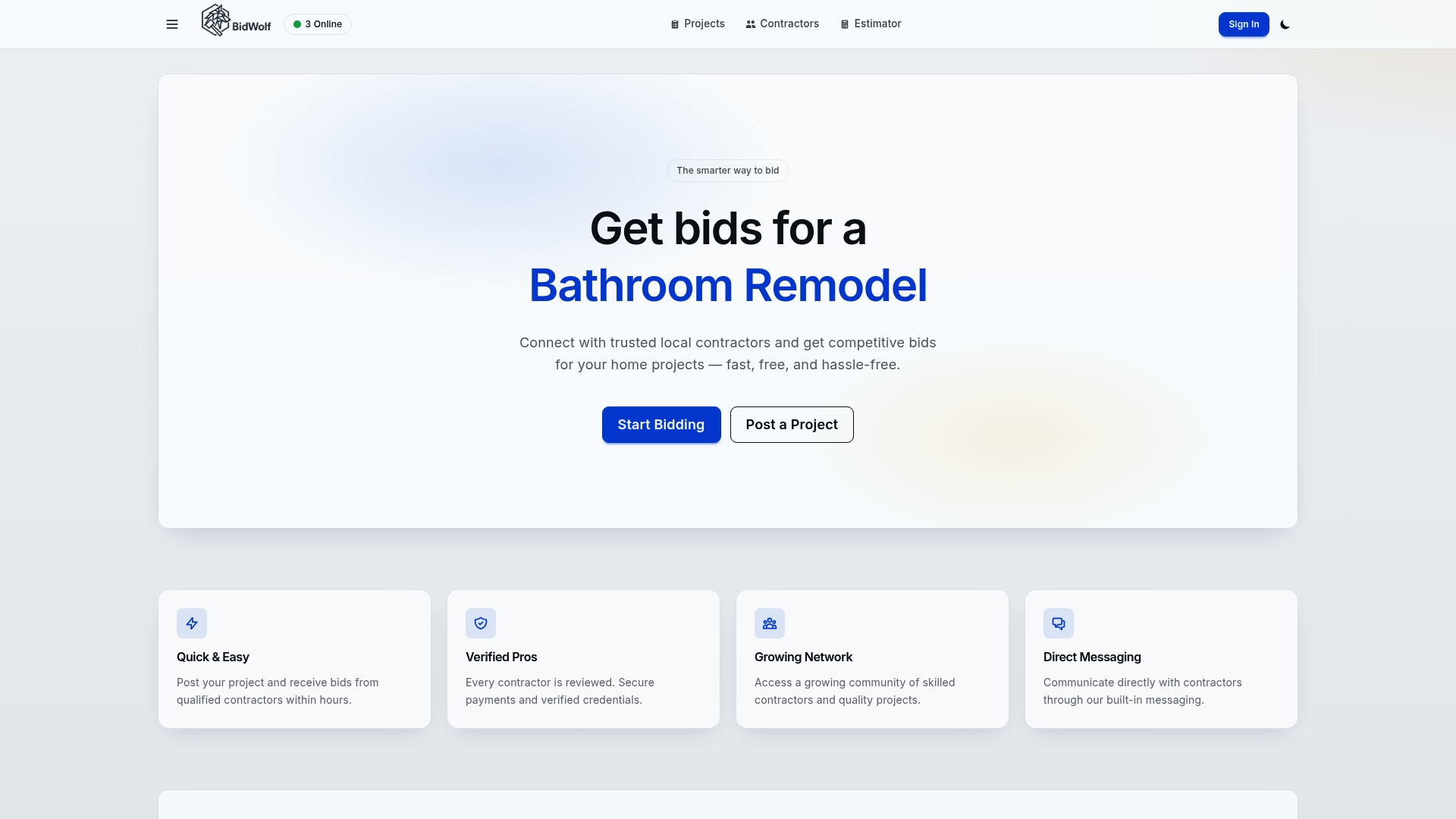
BidWolf is built specifically to connect Texas homeowners with license-verified local contractors across a wide range of project types, from bathroom remodels and roofing repairs to electrical work and landscaping. You post your project once, and qualified local contractors come to you with competitive bids. You compare profiles, read verified reviews, and communicate directly through the platform’s built-in messaging system. You can browse projects to see how other Texas homeowners have structured their postings, or go straight to find local contractors in your area. Before you post, use BidWolf’s tool to get a free estimate so you enter the process with realistic pricing expectations and attract the right professionals from the start.
Frequently asked questions
What is the main benefit of using a contractor marketplace for homeowners in Texas?
The biggest benefit is saving time by quickly connecting with several local contractors to compare bids for your renovation or repair. The key practical edge is reducing the “discovery” problem that makes finding and comparing local professionals so time-consuming through traditional methods.
Are contractors on these platforms fully vetted and guaranteed?
Most platforms perform some level of vetting, but you should always confirm licenses and insurance independently before hiring. Homeowners should still perform due diligence on licenses, insurance, scope matching, and change-order rules regardless of what the platform reports.
Can contractor marketplaces help with permit or code issues in Texas?
No. You are responsible for verifying all permits and complying with local building codes for your specific project. Platforms do not replace checking licensing, permits, and insurance, particularly for safety or structure-related work.
How do I get the best results from a contractor marketplace?
Write a clear project description, collect multiple bids, verify credentials directly, and keep all agreements in writing. Home-vetting guidance stresses reviewing carefully, getting multiple quotes, confirming licensing and insurance, and using written change-order procedures throughout the project.