

Hassle-free contractor hiring in Texas: Your guide

TL;DR:
- Many Texas homeowners lose money because they hire unreliable contractors without proper vetting or legal protections in place. Using structured, digital platforms with verified contractors, detailed contracts, and legal awareness significantly reduces disputes and project failures. Adopting modern, transparent hiring practices enhances safety, accountability, and project success across Texas.
Millions of dollars disappear every year in Texas because homeowners hire the wrong contractor. One high-profile fraud case alone resulted in $4.8 million in losses for dozens of unsuspecting families across the state. Yet the frustrating truth is that most of these situations are completely avoidable. Hiring a reliable contractor does not have to be a stressful, high-stakes gamble. In this guide, you will learn exactly where traditional hiring goes wrong, what legal protections Texas gives you, and how to use modern tools to find skilled, vetted professionals without the usual headaches.
Table of Contents
- The pitfalls of traditional contractor hiring in Texas
- What makes contractor hiring ‘hassle-free’?
- Avoiding disputes: Legal tools every Texas homeowner should know
- How digital platforms enable hassle-free contractor hiring in Texas
- Our take: Why hassle-free hiring is more crucial than ever for Texas homes
- Connect with vetted, hassle-free contractors for your Texas project
- Frequently asked questions
Key Takeaways
| Point | Details |
|---|---|
| Understand local risks | Texas homeowners face frequent contractor disputes, so awareness is crucial. |
| Demand written contracts | Written agreements reduce conflict and protect both parties during renovations. |
| Use digital platforms | Online tools connect homeowners with vetted contractors and streamline the hiring process. |
| Know your legal rights | Texas’s RCLA notice gives homeowners leverage to resolve disputes before going to court. |
| Prioritize transparency | Vetting, open pricing, and contractor ratings ensure a truly hassle-free experience. |
The pitfalls of traditional contractor hiring in Texas
Texas is one of the fastest-growing states in the country, and that growth has fueled a booming construction and renovation market. More demand means more contractors, and unfortunately, more opportunities for problems to arise. When homeowners rely on word of mouth, flyers, or a quick internet search to find a contractor, they are exposing themselves to real financial and legal risk.
The most common issues Texas homeowners face include:
- Defective workmanship: Poor construction quality that fails inspections or causes damage down the line
- Project delays: Contractors who miss deadlines, sometimes by months, leaving homes unfinished
- Project abandonment: Contractors who take deposits and simply stop showing up
- Mechanic’s liens: Unpaid subcontractors who place legal claims on your property even if you paid the general contractor in full
- Unlicensed work: Contractors performing electrical, plumbing, or HVAC work without the required Texas licenses
These issues are not rare exceptions. They are documented patterns that repeat across the state every year. Texas sees a high volume of residential construction disputes, and one notorious $4.8M fraud case illustrated just how far the damage can spread when bad actors go unchecked. Dozens of families lost money, time, and peace of mind because proper vetting was not in place.
“The problem isn’t just fraud. It’s the everyday contractor who overpromises, underdelivers, and leaves homeowners with no legal recourse because they never signed a proper contract.”
Written contracts are one of the single most effective tools you have. Homeowners who sign detailed contracts before work begins dramatically reduce their exposure to disputes, delays, and financial loss. Yet many Texans still shake hands and assume things will work out. They rarely do without documentation in place.
Smart planning also extends to your budget. Using renovation budget tips before you start means you are less likely to overpay or get caught off guard by unexpected costs that a contractor may use to pressure you mid-project.
Pro Tip: Before you sign anything, verify the contractor’s license with the Texas Department of Licensing and Regulation (TDLR). You can check trade-specific licenses online in minutes. This one step eliminates a significant portion of hiring risk. You should also read smart tips for choosing contractors so you know exactly what questions to ask before any money changes hands.

Fraud and disputes do not always look obvious at the start. Many homeowners report that early warning signs, such as vague estimates, pressure to pay large deposits upfront, or a contractor who cannot provide proof of insurance, were present but ignored. Learning to recognize these red flags early can protect you and your home.
What makes contractor hiring ‘hassle-free’?
Hassle-free contractor hiring is not just about finding someone quickly. It means going through a process that protects you, keeps communication clear, and gives you full visibility into pricing and timelines before work begins. Let’s break down exactly what that looks like in practice.
Core elements of hassle-free hiring:
- Written contracts with clear scope: Every project detail, material, timeline, and payment schedule is documented before work starts
- Transparent, upfront pricing: No surprise costs or vague “estimates that may change”
- Verified contractor credentials: License numbers, insurance certificates, and past work history are confirmed before you hire
- Easy communication tools: Messaging and project tracking happen in one place, not scattered across texts and emails
- Competitive bidding: You receive multiple bids and can compare them side by side without chasing contractors individually
The contrast between traditional hiring and a structured, modern approach is significant. Here is a quick look at how the two compare:
| Feature | Traditional hiring | Hassle-free hiring |
|---|---|---|
| Contract process | Verbal or informal | Written, detailed, legally sound |
| Contractor vetting | Homeowner’s responsibility | Pre-screened by platform |
| Pricing transparency | Often vague or variable | Clear, upfront bids |
| Communication | Phone calls, scattered texts | Built-in messaging tools |
| Bid comparison | Manual and time-consuming | Side-by-side on one screen |
| Dispute protection | Limited | Contracts and documentation built in |
| License verification | Must do yourself | Verified before listing |
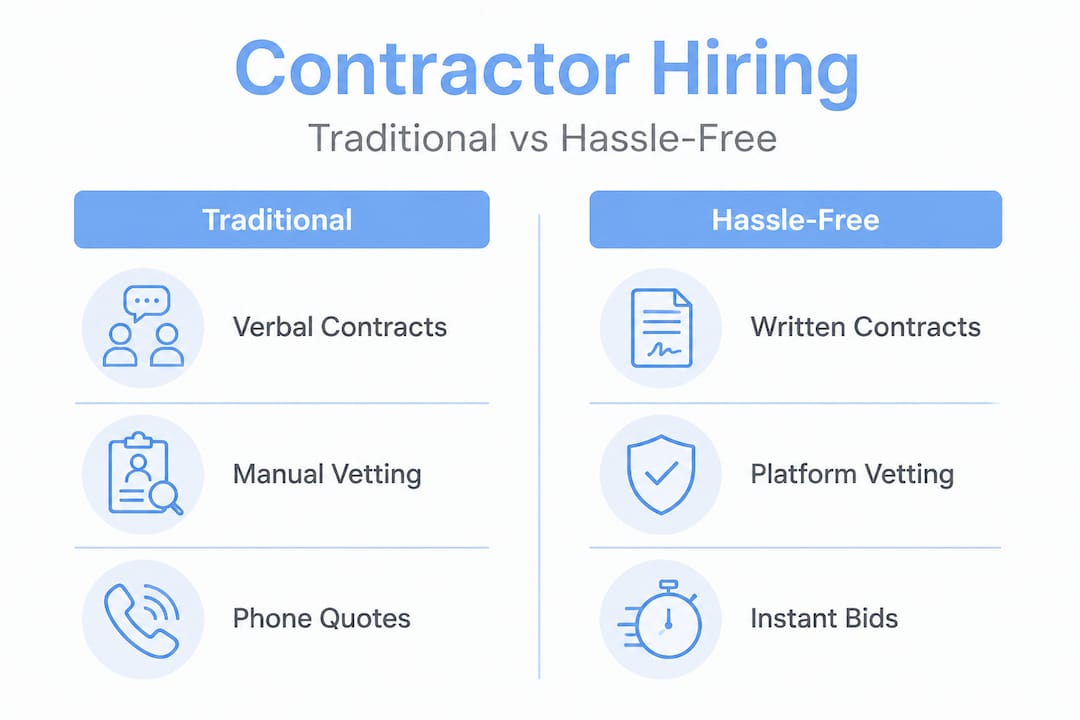
Written contracts reduce disputes significantly, as HomeAdvisor surveys consistently confirm. The data lines up with common sense: when both parties agree in writing on what will be done, when, and for how much, there is far less room for misunderstanding or manipulation.
Modern platforms also eliminate the awkward back-and-forth of tracking down bids. Instead of calling five contractors, waiting days for responses, and trying to compare handwritten quotes, you post your project once and receive structured bids you can evaluate clearly. See winning contractor bid examples to understand what a strong, detailed bid looks like and what red flags to watch for.
The benefits of secure contractor hiring in Texas go beyond convenience. Platforms with built-in vetting create accountability. Contractors who know their work history and credentials are visible to homeowners are more likely to deliver quality results and communicate honestly throughout the project.
Pro Tip: Look for platforms that offer contract templates as part of their service. Even a basic template ensures you cover the essentials: start and end dates, payment milestones, materials specifications, and a clause for handling changes to scope. This one habit can save you thousands and weeks of stress. The benefits of bidding platforms extend well beyond cost savings when you factor in the time and legal protection they provide.
Avoiding disputes: Legal tools every Texas homeowner should know
Even with a strong contract and a vetted contractor, problems can sometimes arise. Knowing your legal rights before they become relevant puts you in a much stronger position. Texas has specific laws designed to protect homeowners from construction defects and bad contractors. The most important one is the Residential Construction Liability Act, or RCLA.
What is the RCLA?
The RCLA (Residential Construction Liability Act) is a Texas law that governs disputes between homeowners and contractors over residential construction defects. Before you can file a lawsuit against a contractor for defective work, Texas requires a 60-day pre-suit notice. This notice gives the contractor the opportunity to inspect the defect, make an offer to repair it, or propose a financial settlement. Skipping this step can actually harm your legal case, so understanding the process matters.
The good news is that disputes settle before trial more than 50% of the time when homeowners act early and follow the proper steps. This means that even if something goes wrong on your project, there is a strong chance you can resolve it without going to court, as long as you move quickly and document everything.
Legal steps to take when a problem arises:
- Document the defect immediately. Take dated photos and videos. Write a clear description of what you see and when you first noticed it.
- Review your written contract. Identify the relevant clauses: warranty terms, dispute resolution language, and any agreed timelines.
- Send written notice to the contractor. Communicate the issue in writing, whether by email or certified letter. Keep records of all communication.
- Send the formal RCLA notice. This is a specific legal notice that must be sent at least 60 days before filing a lawsuit. It must describe the defect and give the contractor a chance to respond.
- Consult a Texas construction attorney. If the contractor does not respond or the problem is serious, get legal advice before taking further action.
- File a complaint with TDLR if applicable. For licensed trades, the Texas Department of Licensing and Regulation accepts complaints against licensed contractors.
Here is a summary of the most common dispute types, the action required, and what typically happens:
| Dispute type | Required action | Typical outcome |
|---|---|---|
| Construction defect | RCLA notice, document defect | Repair, financial settlement, or lawsuit |
| Project abandonment | Written demand, RCLA notice | Refund negotiation or legal action |
| Mechanic’s lien | Verify lien validity, respond within deadlines | Lien released or resolved in court |
| Delay without cause | Written notice referencing contract terms | Renegotiation, penalty clause enforcement |
| Unlicensed work | Report to TDLR, review contract | Contract may be voided, complaint investigated |
Knowing these steps in advance means you will not freeze when something goes wrong. You will know exactly what to do. Homeowners who take action quickly, especially by sending the RCLA notice at the first sign of a serious defect, are far more likely to reach a resolution without extensive legal costs.
When comparing contractor bids before you hire, look for bids that include explicit warranty terms and dispute resolution language. A contractor who is confident in their work will not hesitate to put a warranty in writing. You can also use project bidding tips to structure your project posting in a way that naturally attracts more professional, detail-oriented bids from the start.
How digital platforms enable hassle-free contractor hiring in Texas
The fastest and safest way to hire a contractor in Texas today is through a digital platform built specifically for this purpose. These platforms do not just save time. They change the entire experience of hiring by building in the protections and transparency that homeowners need.
Here is how a typical digital platform simplifies the entire process:
- You post your project once. Describe the work you need, set a rough budget range, and upload any relevant photos. No need to call five contractors individually.
- Vetted contractors reach out to you. Instead of hunting for bids, qualified local professionals review your project and submit competitive offers.
- You compare bids side by side. View pricing, timelines, contractor profiles, ratings, and past project history all in one place.
- You communicate through built-in messaging. All conversations are documented, reducing miscommunication and creating a paper trail.
- Contracts and payments are handled securely. Payments go through a secure system, and project documentation stays organized throughout.
Consider a real-world scenario: A homeowner in Austin needs a full bathroom remodel. Through a digital platform, she posts her project with photos and a budget range of $12,000 to $18,000. Within 48 hours, she receives six bids from local licensed contractors. She reviews their profiles, reads past homeowner reviews, and uses the platform’s messaging tool to ask two follow-up questions. She selects a contractor with strong ratings and a clear written scope. The project completes on time and within budget.
Without the platform, that same homeowner might have spent two weeks chasing contractors, comparing handwritten quotes with no standardized format, and signing a one-page informal agreement that offers little protection if something goes wrong.
Written contracts reduce disputes significantly according to HomeAdvisor data, and digital platforms make those contracts a standard part of the process rather than an afterthought. That consistency matters enormously when you are investing $10,000, $50,000, or more into your home.
Pro Tip: When reviewing bids on any platform, check the contractor’s average response time. A contractor who responds to project inquiries quickly is usually more organized and communicative during the actual work. Slow response times before you hire often predict communication problems once the job starts.
The shift to using online platforms for Texas home renovations is not just a trend. It reflects a fundamental improvement in how homeowners access trusted tradespeople. Combined with tools like mobile apps for managing projects, you can track progress, approve milestones, and communicate with your contractor from anywhere. That level of oversight was simply not possible for most homeowners ten years ago.
The result is fewer disputes, faster project completion, and better outcomes for everyone involved. Contractors who work through verified platforms also benefit, as they spend less time chasing leads and more time doing quality work for homeowners who are serious and prepared.
Our take: Why hassle-free hiring is more crucial than ever for Texas homes
Here is something most advice columns will not tell you directly: the biggest risk in hiring a contractor is not the fraud. It is the slow, grinding experience of working with a contractor who is simply disorganized, undercommunicative, and unprepared for the scale of your project.
Fraud cases are dramatic and make the news. But far more homeowners lose money through project creep, vague contracts, and poor communication than through outright deception. These are preventable problems, and the fix is not just about being more careful. It is about using a system that makes professionalism the default.
We believe conventional wisdom about contractor hiring is outdated. The old model, ask a neighbor, get three quotes, go with your gut, was never particularly reliable. It depended heavily on luck and local knowledge. In today’s Texas market, where population growth drives construction demand and contractor quality varies enormously, that approach leaves you exposed.
The homeowners we see get the best outcomes are not necessarily the ones who are most skeptical or most aggressive negotiators. They are the ones who prioritize transparency and structure from the very first interaction. They use the homeowner checklist for Texas as a starting point, ask direct questions, and choose contractors who welcome accountability rather than resist it.
We also want to be direct about cost. A vetted contractor hired through a transparent platform may not always be the cheapest option available. But the value of clear communication, documented agreements, and legal protection is real. The homeowner who saves $800 by hiring an unverified contractor and then spends $4,000 resolving a defect did not save anything. The math on quality hiring is straightforward.
Texas is changing fast. New construction laws, updated TDLR licensing requirements, and a growing digital-native workforce of contractors mean the rules of engagement are shifting. Homeowners who adapt to this new reality by using modern, verified platforms will consistently outperform those still relying on informal, unstructured hiring. That is not opinion. It is the pattern we see playing out across Texas cities every year.
Connect with vetted, hassle-free contractors for your Texas project
You now have a clear picture of what can go wrong, what protections are available to you, and how the right process makes all the difference. The next step is putting that knowledge into action.
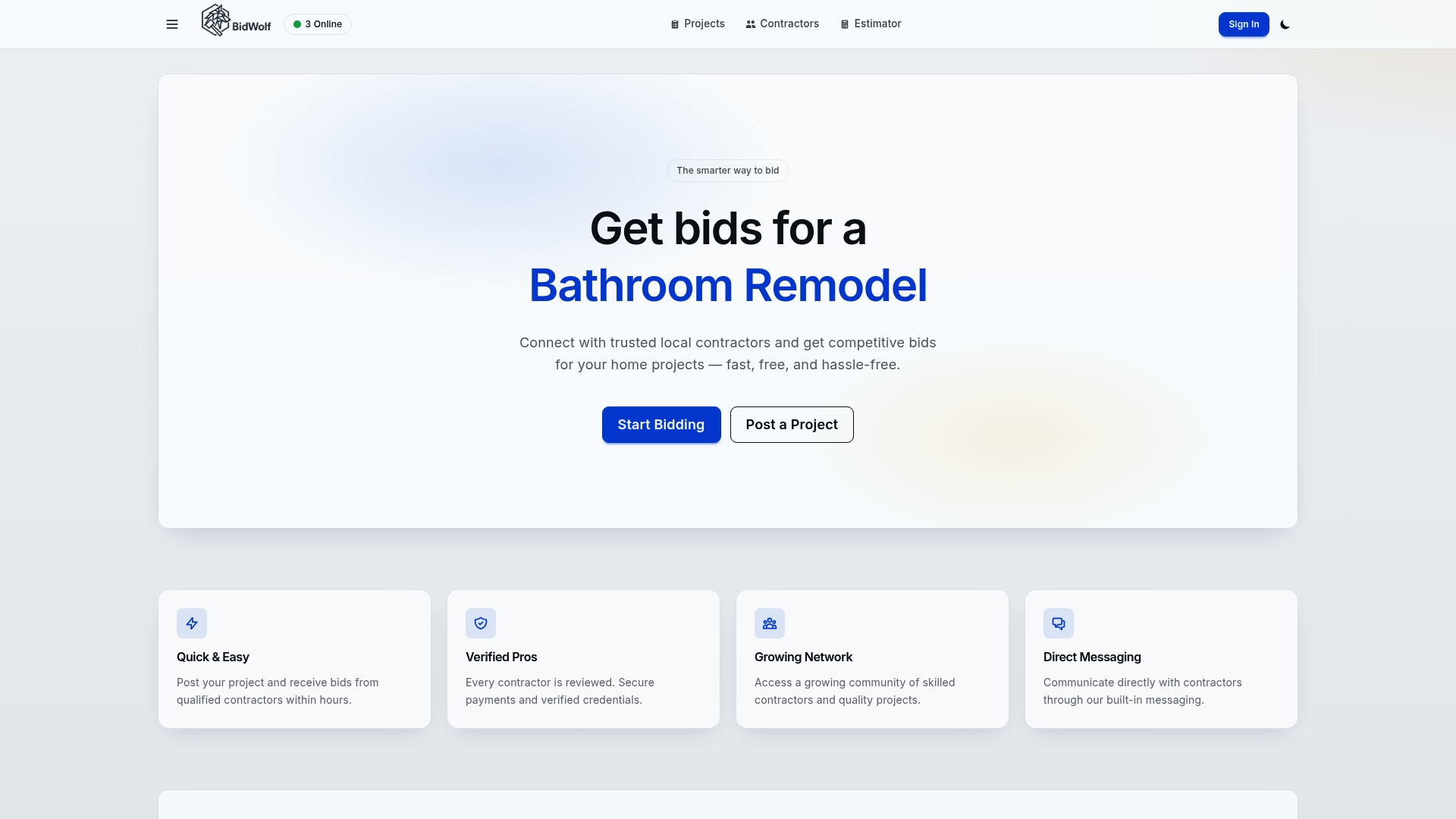
BidWolf was built specifically for Texas homeowners who want a better way to hire. Post your renovation or repair project and receive competitive bids from vetted local contractors who have been verified for credentials, licensing, and reliability. You compare bids side by side, communicate through built-in secure messaging, and manage your entire project on one platform. No phone tag, no scattered paperwork, no guessing. Whether you need a bathroom remodel, a new roof, electrical work, or landscaping, BidWolf connects you with skilled professionals across Texas who are ready to deliver. Start your project today and experience what hassle-free hiring actually feels like.
Frequently asked questions
What legal steps should I take if a contractor abandons my Texas project?
Document everything immediately, send a written demand to the contractor, and issue a formal RCLA notice. Over 50% of disputes settle before reaching trial when homeowners take early, structured legal action.
How do I avoid fraud and liens when hiring contractors?
Choose vetted platforms that verify credentials upfront, always insist on a detailed written contract, and confirm the contractor’s license and insurance before any work begins or deposits are paid.
Can digital platforms really make contractor hiring safer?
Yes. Digital platforms provide pre-screened contractor profiles, contract templates, and secure payment systems, all of which reduce the friction and risk that written contracts significantly reduce according to HomeAdvisor survey data.
What is the RCLA notice and why is it important?
The RCLA (Residential Construction Liability Act) notice is a required legal step in Texas that gives contractors 60 days to respond to a defect claim before a homeowner can file a lawsuit. Sending it early keeps disputes from reaching trial in more than half of all cases.
Recommended
- Your guide to hiring contractors securely in Texas | BidWolf Blog
- Texas homeowner’s checklist: smart tips for choosing contractors | BidWolf Blog
- How to compare contractor bids for home projects in Texas | BidWolf Blog
- Contractor marketing strategies that attract Texas homeowners | BidWolf Blog
- How to Hire a Pool Contractor for Custom Pools