

Texas homeowner's checklist: smart tips for choosing contractors
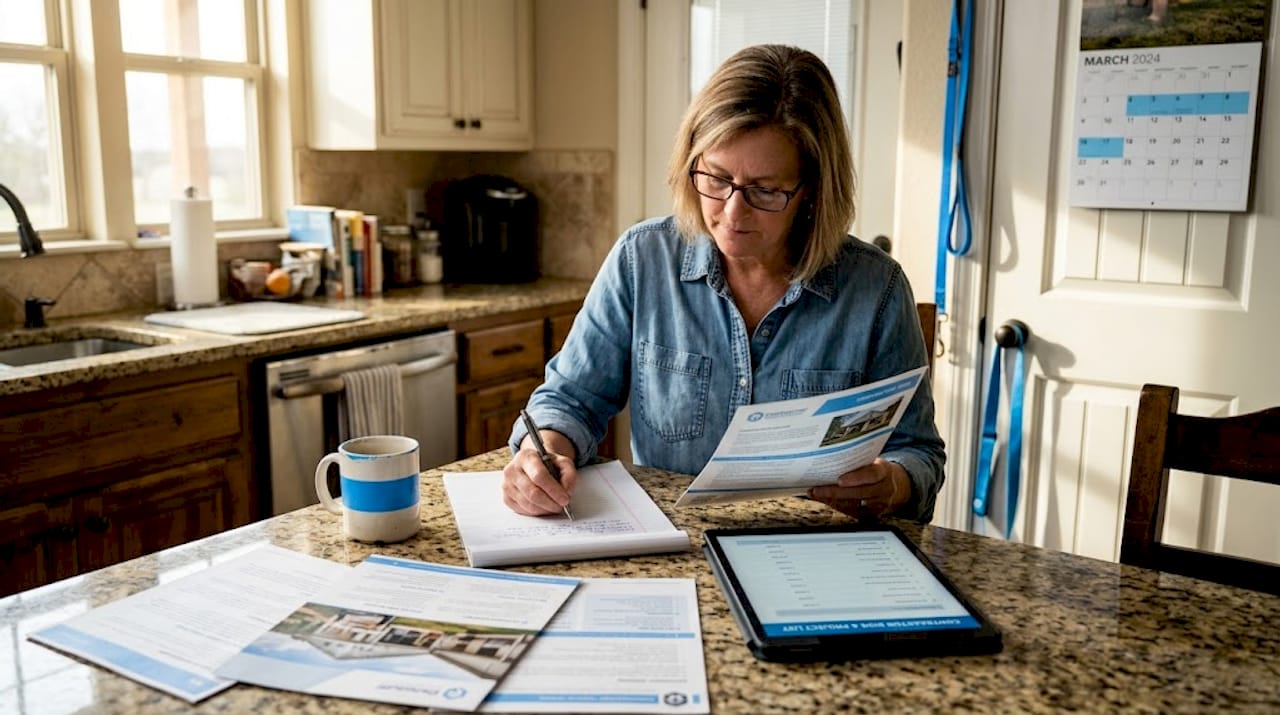
TL;DR:
- Carefully define your project scope and get multiple verified, local contractor bids.
- Verify licenses, insurance, and demand written contracts to protect your interests.
- Be cautious of scams and follow legal dispute procedures to handle issues effectively.
Hiring a contractor in Texas can feel like a high-stakes gamble. One wrong choice can mean thousands of dollars lost, months of delays, or shoddy work that fails inspection. Texas homeowners face a uniquely complex landscape: the state does not issue a blanket general contractor license, scams spike after every major storm, and legal disputes require specific steps that most people don’t know about until it’s too late. This guide walks you through a proven, step-by-step checklist so you can identify qualified professionals, compare bids confidently, protect yourself with the right paperwork, and know exactly what to do if something goes wrong.
Table of Contents
- Start with scope and shortlist: clarifying your project needs
- Demand proof: licenses, insurance, and verifying credentials
- Insist on written contracts: protecting your interests
- Estimate comparison: getting multiple transparent bids
- Watch out: scam defense and disputes in Texas
- Our take: why savvy homeowners make their own luck
- Ready to find your next trusted Texas contractor?
- Frequently asked questions
Key Takeaways
| Point | Details |
|---|---|
| Always verify credentials | Ask for trade licenses and insurance and check with official sources before hiring. |
| Get everything in writing | Signed contracts protect you and are required for most Texas projects. |
| Compare bids thoroughly | Request at least three itemized estimates for apples-to-apples vetting. |
| Stay vigilant for scams | Don’t rush, especially after storms—scrutinize references and avoid large upfront payments. |
| Document for disputes | Keep records of all communications and contracts in case you need legal recourse. |
Start with scope and shortlist: clarifying your project needs
Having set the stage about why careful contractor selection matters, let’s dive into the very first steps of defining your project and kicking off your search.
Before you contact a single contractor, you need a clear picture of what you actually need done. This sounds obvious, but skipping this step is one of the most expensive mistakes homeowners make. Without a defined scope, you can’t compare bids fairly, you can’t hold a contractor accountable, and you open the door to costly “scope creep,” which happens when the project gradually expands beyond what you originally agreed to.
Start by writing down your project requirements in plain language. Include the specific rooms or areas involved, the materials you prefer or require, your must-have features, and any firm deadlines. For example, if you’re remodeling a master bathroom, note whether you want tile or luxury vinyl flooring, whether you need a soaking tub or just a walk-in shower, and whether you require ADA-compliant fixtures. These details directly affect which contractors are qualified to do the work and what their bids will include.
Next, define a realistic budget range. You don’t need an exact number, but knowing whether you’re working with $10,000 or $50,000 will immediately filter out contractors who specialize in projects far above or below your range. It also protects you during negotiations since you’ll know when a bid is genuinely reasonable versus inflated.
Once your scope is clear, a practical homeowner methodology is to define specs and must-haves first, then shortlist multiple licensed and insured options. Aim for at least three contractors with verified experience in your specific project type. A roofing specialist is not the right hire for a kitchen remodel, even if they claim they can do both.
Here’s how to build that shortlist effectively:
- Ask neighbors, friends, or coworkers in your area for direct referrals. Personal recommendations from people in the same city are far more reliable than generic online reviews.
- Use a local contractor search tool built specifically for Texas homeowners to find vetted professionals near your ZIP code.
- Check local community groups on social media where neighbors frequently share both positive and negative contractor experiences.
- Search Google for contractors in your city paired with your specific project type, such as “bathroom remodel contractor Austin TX,” then read reviews critically, paying attention to how contractors respond to negative feedback.
- Contact your local home improvement store, as many maintain contractor referral lists for their markets.
When you reach out to each contractor on your shortlist, you’ll get faster, more useful responses if you come prepared.
Pro Tip: Write a one-page project summary before making any calls. Include your scope, preferred materials, timeline, and budget range. Contractors who receive a clear brief respond more quickly and provide more accurate initial estimates. This document also helps you ask consistent questions across all three contacts so you can compare responses fairly.
One more thing worth doing at this stage: drive around your neighborhood and look for active construction projects. Homeowners who recently completed similar work are often happy to share their contractor’s contact information and give you an honest review of the experience, including whether the crew showed up on time, cleaned up after themselves, and stayed on budget.
Demand proof: licenses, insurance, and verifying credentials
With your shortlist in hand, it’s time to get serious about credentials — here’s what to demand from every contractor.
This is the step most homeowners skip or handle too casually, and it’s exactly where scams and substandard work begin. Verifying credentials isn’t about distrust; it’s about protecting yourself and your property. A licensed, insured contractor has made a formal commitment to meet professional standards. An unlicensed one hasn’t.
Here’s what you should know about Texas contractor licensing. Unlike many states, Texas does not require general contractors to hold a statewide license. However, Texas requires licensed trade contractors for specific skilled trades, and you should always request current licenses and proof of general liability and workers’ compensation insurance. Trades that carry state-level licensing requirements include:
- Plumbers must hold a license issued by the Texas State Board of Plumbing Examiners.
- Electricians must be licensed through the Texas Department of Licensing and Regulation (TDLR).
- HVAC contractors are licensed through TDLR as well, and must hold a specific license for air conditioning and refrigeration work.
- Irrigators and landscape irrigators must be licensed through the Texas Commission on Environmental Quality (TCEQ).
- Mold remediation contractors must register with TDLR before performing any remediation work.
For trades not covered by a state license, such as general remodeling or carpentry, check whether your city or county has its own registration requirements. Austin, Houston, Dallas, and San Antonio each have local permitting offices where you can confirm whether your contractor is registered to pull permits in that jurisdiction.
“Ask for proof of insurance and verify coverage by contacting the insurance agency listed.” This step takes ten minutes and can save you from significant financial exposure if a worker is injured on your property.
When it comes to insurance, always verify coverage directly with the insurer, not just by reviewing the certificate. Certificates of insurance can be outdated or fraudulent. Call the insurance agency listed on the document, confirm the policy is active, and ask whether the policy covers your type of project. At minimum, your contractor should carry:
- General liability insurance covering property damage and bodily injury to third parties.
- Workers’ compensation insurance if anyone other than the owner will be working on your property.
You can also use a project licensing checks tool to cross-reference contractor credentials before committing. For additional context on state-specific requirements, the Texas contractor licensing guide provides a detailed breakdown by trade.
Keep photocopies of every license and insurance certificate you collect. Store them in a dedicated folder, physical or digital, alongside your contract. If a dispute arises later, these documents are part of your primary evidence.
Insist on written contracts: protecting your interests
Now that you know how to verify legitimacy, let’s talk about the document that will ultimately determine your rights: the contract.
A verbal agreement with a contractor is worth exactly nothing in a Texas courtroom. Written contracts are your legal protection, your project roadmap, and your most effective tool for preventing misunderstandings.
“A written contract is the single most important protection for Texas property owners.”
Texas law is clear on this point. Written contracts are required for home improvement projects exceeding $500, and both parties must sign before work begins. Any contractor who insists on starting work before a contract is finalized is a serious red flag.
Here’s what every Texas home improvement contract must include:
- Full names and contact information for both the homeowner and the contractor, including the contractor’s license number and business address.
- Detailed project scope listing every task, area, and deliverable. Vague language like “bathroom renovation” is not sufficient. Specify tile brand, fixture model, and finish where possible.
- Materials list with brands, specifications, and quantities where applicable.
- Start date and expected completion date with clear language about what happens if the timeline extends.
- Total project price broken down by labor and materials, not just a lump sum.
- Payment schedule tied to project milestones, not arbitrary dates. Never pay more than 10 percent upfront unless your project specifically requires expensive custom materials.
- Change order process describing how scope changes will be documented, priced, and approved before work continues.
- Warranty terms covering both labor and materials, with clear timeframes and a process for addressing defects after completion.
- Dispute resolution process specifying whether disagreements go to mediation, arbitration, or court.
- Lien waiver language to protect you from mechanic’s liens if a subcontractor goes unpaid.
Here’s a quick comparison of what a strong contract includes versus what a weak or risky contract looks like:
| Contract element | Strong contract | Weak or risky contract |
|---|---|---|
| Project scope | Itemized, material specs included | Vague summary only |
| Payment schedule | Milestone-based | Large upfront lump sum |
| Change orders | Written approval required | Verbal agreement accepted |
| Warranty | Specific terms and timeframes | “Satisfaction guaranteed” only |
| Dispute resolution | Defined process stated | Not addressed |
| Completion date | Fixed date with penalties | Estimated timeframe only |
Never sign a contract that uses generic, fill-in-the-blank language without reviewing every section. If something is unclear, ask for clarification in writing before signing.
Estimate comparison: getting multiple transparent bids
Even with your contract template ready, you can’t make an informed decision without real numbers. Here’s how to make sense of contractor bids.
Getting multiple bids is not just a good idea, it’s a critical step in protecting your budget and ensuring quality. Get at least three detailed written estimates with matching assumptions and specifications so you can compare them accurately. If each contractor bids on a slightly different scope, you end up comparing apples to oranges, and you’ll make a worse decision as a result.
When you request estimates, provide each contractor with the same written project summary you created in step one. Ask them to itemize their bid with the following components:
| Bid component | What to look for |
|---|---|
| Labor costs | Breakdown by task or trade |
| Material costs | Brand names and quantities |
| Permit fees | Included or itemized separately |
| Subcontractor work | Named and priced individually |
| Exclusions | Clearly stated work not included |
| Payment terms | Schedule tied to milestones |
Once you have three estimates in front of you, resist the urge to automatically choose the lowest one. An unusually low bid often signals one of three things: the contractor plans to cut corners on materials, the bid excludes significant portions of the work, or the contractor is desperate for jobs because of a poor reputation.

Use the project cost estimator to get a baseline for what your project should cost before reviewing bids. Having an independent benchmark helps you identify when a bid is genuinely competitive versus suspiciously low.
Red flags to watch for in any bid:
- The bid is significantly lower than all others with no clear explanation.
- Labor and materials are not broken out separately.
- Permits and inspections are not mentioned or are listed as “homeowner’s responsibility” without discussion.
- The contractor requests more than 10 to 15 percent upfront.
- Payment is requested in cash only with no paper trail.
- The scope section is vague or uses undefined terms.
- The contractor pressures you to sign quickly or claims the price is only good for 24 hours.
When bids are close in price, shift your evaluation to other factors: contractor communication style, responsiveness, references from local projects, and whether their proposal demonstrates a clear understanding of your project. A contractor who asks thoughtful clarifying questions during the bid process is showing you they’re already thinking seriously about your project.
Watch out: scam defense and disputes in Texas
Even with due diligence, things can go wrong. Here’s how to recognize, avoid, or respond to contractor scams or conflicts in Texas.
Texas is unfortunately a target for contractor fraud, especially after major weather events. Hail storms, hurricanes, and ice storms regularly bring out-of-state or unlicensed contractors flooding into affected neighborhoods with promises of fast, cheap repairs. Texas officials warn homeowners not to rush into contracts, to check BBB ratings and references, and to be especially cautious of out-of-area contractors arriving unsolicited after disasters.
Here’s what smart, scam-resistant hiring looks like:
- Never pay a large deposit to a contractor you just met, especially one who showed up at your door uninvited.
- Do not allow work to start before you have a signed contract in hand.
- Check the contractor’s complaint history at the Better Business Bureau (BBB) and with your state attorney general’s consumer protection division.
- Ask for at least two or three references from recent local projects, then actually call them. Ask whether the contractor finished on time, whether the final cost matched the estimate, and whether they would hire the same contractor again.
- Verify the contractor’s physical business address. A P.O. box or out-of-state address combined with a local phone number is a warning sign.
For additional guidance on how to evaluate contractors after storm damage specifically, the storm damage contractor selection resource provides a step-by-step workflow built for Texas weather events.
If you find yourself in a dispute with a contractor over defective work, Texas law has a specific process you must follow. Under the Texas Residential Construction Liability Act (RCLA), homeowners must send written notice and give the contractor up to 60 days to inspect or repair before filing a lawsuit for construction defects. Skipping this step can actually damage your legal case, so it’s essential to understand it in advance.
“Under Texas law, homeowners must send written notice and give contractors up to 60 days to inspect or repair before filing a lawsuit for construction defects.”
The RCLA process requires your written notice to describe the specific defects in detail. The contractor then has the right to inspect the work and make a written repair or settlement offer. You can accept or reject the offer, but this process must be completed before you proceed to civil court. This timeline matters: if you’re dealing with a serious defect, begin the notice process immediately.
Pro Tip: From the first day of your project, keep a dedicated folder, physical or digital, containing every email, text message, contract version, change order, photo, and payment receipt. If a dispute arises, this documentation is your strongest asset. Courts and mediators look favorably on homeowners who can present a clear, organized paper trail.
Our take: why savvy homeowners make their own luck
Here’s the perspective that most contractor guides skip over entirely: in Texas, the system is not designed to protect you automatically. The absence of a statewide general contractor license means there is no single authority standing between you and a bad hire. The RCLA dispute process is useful, but it’s slow and requires you to have done everything right from the start. And storm-related scams move faster than any government warning can.
The homeowners who come out ahead are not the ones who simply followed a checklist. They’re the ones who treated the hiring process like a business transaction from minute one. That means understanding Texas homeowner protections before you need them, not after a problem surfaces.
In our experience, the single most common mistake Texas homeowners make is trusting their instincts about a contractor’s character instead of trusting documentation. A contractor can be personable, punctual, and enthusiastic while still delivering substandard work or disappearing after a deposit. Professional websites, glossy business cards, and confident sales pitches are not credentials. A current license, active insurance, verifiable local references, and a detailed written contract are credentials.
Savvy homeowners also plan for the possibility of a dispute before they hire anyone. That means reading the RCLA notice requirements now, understanding your city’s permitting process, and knowing which agencies handle contractor complaints in your area. This preparation takes a few hours and can save you months of legal headache later.
The uncomfortable truth is that diligence protects you more reliably than any contract clause or licensing requirement. Document everything. Verify everything. And never assume that a smooth start means the rest of the project will take care of itself.
Ready to find your next trusted Texas contractor?
Armed with practical tips and legal know-how, here’s how you can take the next confident step to hiring the right contractor for your Texas project.
BidWolf was built specifically for Texas homeowners who want to skip the guesswork. Post your project and receive competitive bids from verified local contractors who have already passed credential checks. You can compare bids side by side, communicate directly through built-in messaging, and manage every detail from your phone.
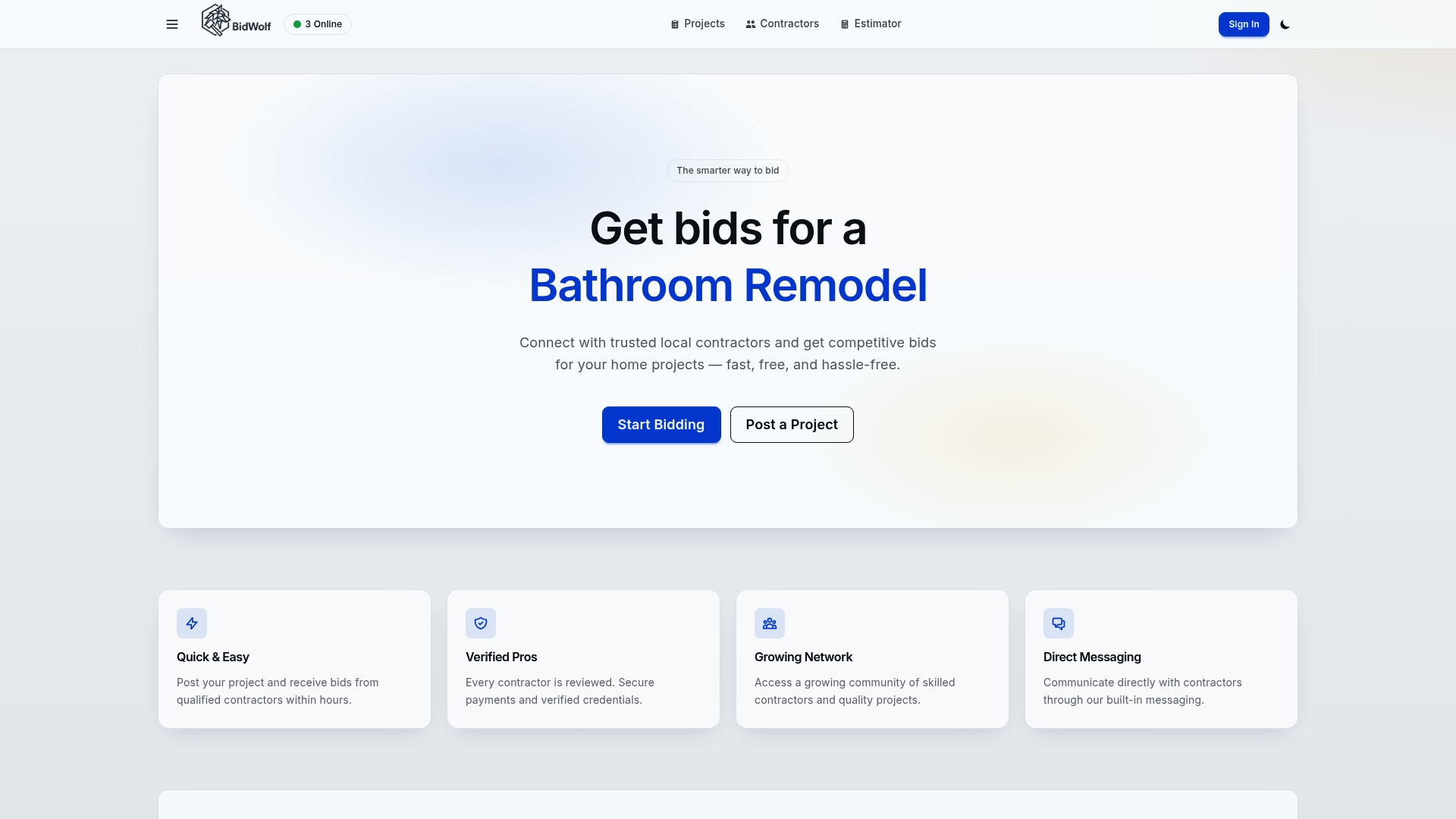
Whether you’re remodeling a kitchen, replacing a roof, or upgrading your HVAC system, BidWolf’s project comparison tools give you the transparency you need to make a confident decision. Use our platform to get a free estimate and see what qualified local pros are quoting for projects like yours. No cold calls, no guesswork, just clear information and verified professionals ready to earn your business.
Frequently asked questions
Is a written contract required with a Texas contractor?
Yes. Texas law requires a written, signed contract for home improvement projects over $500, and work should not begin until both parties have signed.
How do I check if a contractor is licensed in Texas?
Ask for their specific trade license since Texas only requires licenses for trades like plumbing, electrical, and HVAC. Texas recommends requesting proof of license and verifying with your local city permit office.
What insurance should contractors have for Texas home projects?
Contractors should carry general liability insurance and workers’ compensation coverage for any crew working on your property. Always verify coverage by calling the insurance agency directly, not just reviewing the certificate.
How can I avoid contractor scams after Texas storms?
Don’t rush into signing anything, especially with out-of-area contractors who approach you unsolicited. AG Paxton warns homeowners to check BBB ratings, verify credentials, and confirm references before making any payment.
What should I do if there’s a dispute with my Texas contractor?
Send a written notice describing the defect in detail before taking any legal action. Texas’s RCLA law requires you to give the contractor up to 60 days to inspect or offer a repair before you can file a lawsuit.