

The Role of Verified Tradespeople in Home Projects

TL;DR:
- Verified tradespeople have been independently confirmed for identity, insurance, and trade registrations, offering greater protection. Hiring them reduces legal disputes, cost overruns, and project delays by ensuring credential validity and compliance. Confirm credentials in real time before work begins to safeguard your investment and ensure high-quality, legally compliant outcomes.
Verified tradespeople are professionals whose credentials, insurance, and trade registrations have been independently confirmed before they set foot on your property. The role of verified tradespeople goes far beyond a simple badge or listing. It covers identity checks, background screening, public liability insurance validation, and registration with statutory bodies such as Gas Safe or NICEIC. For homeowners and property managers, this process is the single most reliable way to protect your investment, avoid legal disputes, and get work done right the first time.
What does tradesperson verification actually involve?
Verification is not the same as accreditation, and the difference matters. Accreditation often relies on self-reporting, where a tradesperson submits their own documents and receives a badge. True verification means an independent third party confirms those documents with the issuing body directly.
A thorough verification process covers several distinct checks:
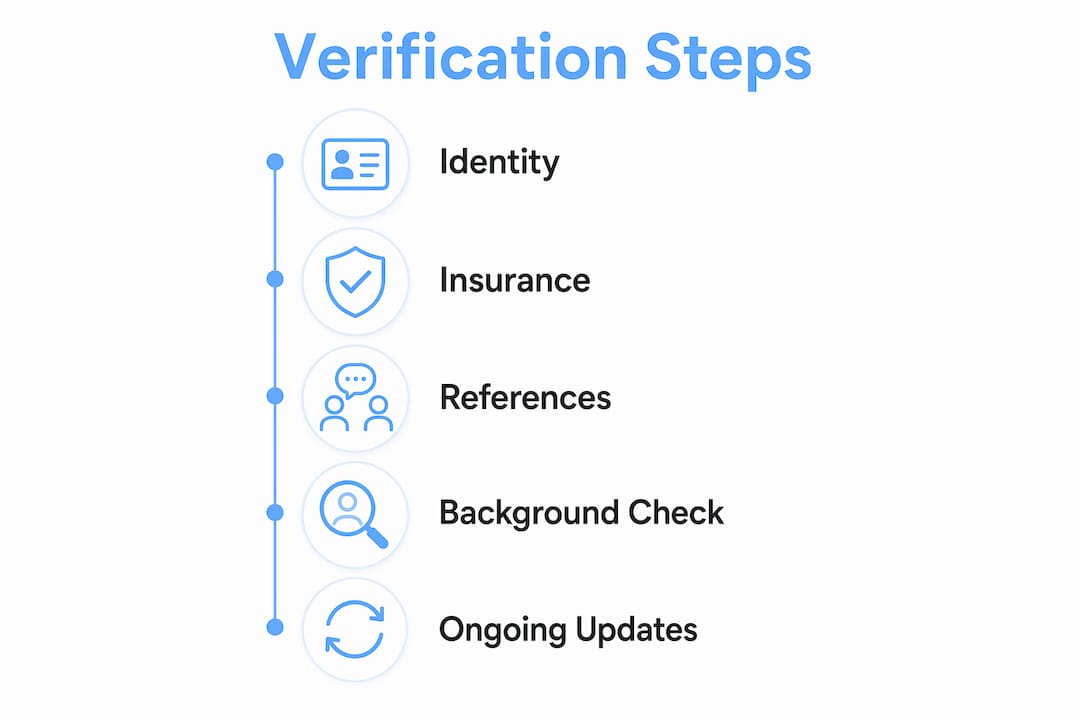
- Identity confirmation. The tradesperson’s government-issued ID is matched against their business registration and trade records.
- Criminal background check. A police or Disclosure and Barring Service check screens for offenses relevant to working in homes.
- Public liability insurance. Coverage of at least £1 million is the recommended minimum for residential work. Expired or insufficient policies leave you exposed.
- Statutory register validation. Gas engineers must appear on the Gas Safe Register. Electricians should hold NICEIC or NAPIT registration. These registers are publicly searchable and free to check.
- References and past work review. Verified platforms contact previous clients and cross-check project outcomes, not just collect names.
Verification platforms vet identity, insurance, references, and police checks before tradespeople join, and they update status regularly to remove those who no longer qualify. That ongoing process is what separates a verified contractor from someone who simply claims to be one.
One detail many homeowners miss: credentials expire. A Gas Safe registration valid in january may lapse by september of the same year. Professional accreditations expire and insurance must be renewed, which means checking credentials at the time of hiring is not optional. It is the only reliable approach.

Pro Tip: Before any tradesperson starts work, pull up the relevant statutory register on your phone and search their name or registration number in real time. For gas work, visit gassaferegister.co.uk. For electrical work, check the NICEIC or NAPIT online lookup. This takes under two minutes and confirms current status, not just past approval.
Why is hiring verified tradespeople important for homeowners?
The financial and legal case for hiring verified contractors is clear. Homeowners who hire unverified professionals are 3 times more likely to face legal disputes compared to those who hire verified tradespeople. That gap reflects the accountability difference between a professional with documented credentials and one operating without oversight.
Cost overruns tell the same story. Verified contractors maintain project cost overruns at 7%, whereas unverified workers average 34% overruns. A 27-percentage-point gap on a $50,000 renovation means the difference between a $3,500 overage and a $17,000 one.
The benefits of hiring certified tradespeople extend well beyond cost control:
- Reduced rework costs. Verified tradespeople complete work to code the first time, eliminating the expense of bringing in a second contractor to fix mistakes.
- Insurance protection. If a verified tradesperson damages your property, their public liability insurance covers the repair. An unverified worker with no insurance leaves you paying out of pocket.
- Legal compliance. Certain work, including gas installations and structural electrical changes, legally requires a registered professional. Using an unverified worker can void your home insurance and create liability when you sell.
- Dispute resolution. Verified contractors operate under trade body codes of conduct. If a dispute arises, you have a formal escalation path. With unverified workers, your only option is often civil court.
- Timeline reliability. Verified contractors with documented track records are more likely to meet agreed schedules, reducing the cascade of delays that cost property managers money.
“Verification is a critical risk-reduction strategy, not just a prestige marker, helping homeowners avoid costly disputes and poor workmanship.” — Guild of Master Craftsmen
Verification acts as a filter removing bad actors and offering financial safeguards by reducing the need for costly rework. For property managers overseeing multiple units, that filter compounds in value with every project.
How to identify and verify a tradesperson’s credentials before hiring
Checking credentials yourself takes less time than most homeowners expect. The process follows a clear sequence, and each step builds a more complete picture of who you are hiring.
- Search the statutory register. For gas work, use the Gas Safe Register online lookup. For electrical work, check NICEIC or NAPIT. For building work, look for Federation of Master Builders membership. Each search returns current registration status, not historical records.
- Confirm the registration scope. Gas Safe registration, for example, distinguishes between domestic and commercial work. Ensure tradesperson certification scope matches your project needs, such as domestic versus commercial Gas Safe registration. A commercial-only registration does not cover your home.
- Request and review the insurance certificate. Ask for the full certificate, not just a summary. Check the policy expiry date, the coverage amount, and whether the work type you need is explicitly listed.
- Verify company registration. Checking a tradesperson’s company on Companies House confirms their business exists and is in good standing. A dissolved or dormant company is a red flag.
- Contact at least two references. Ask references specifically about whether the work passed inspection, whether the final price matched the quote, and whether they would hire the same contractor again.
- Request a written quote with full scope. Written quotes with full scope and fixed prices are a transparency standard. Any contractor unwilling to provide one in writing is worth reconsidering.
Understanding what makes a contractor truly reliable goes deeper than a checklist. Bidwolf’s guide on reliable contractor criteria covers the behavioral and professional signals that separate trustworthy professionals from those who simply look the part.
Pro Tip: Ask the tradesperson directly: “Can I verify your registration with the issuing body right now?” A confident, verified professional will hand you their card and encourage you to check. Hesitation or redirection is a warning sign worth taking seriously.
Common misconceptions about verified tradespeople
The most damaging misconception is that any badge or platform listing equals verification. Accreditation and verification differ; some platforms rely on self-reporting, but top-tier vetting independently confirms credentials including insurance and background checks. A logo on a website proves nothing without the independent confirmation behind it.
Several other misunderstandings regularly cost homeowners money and time:
- “Verified once means verified always.” Verification is time-sensitive. A verified status is a dynamic credential subject to ongoing vetting; lapses or complaints can revoke it. A contractor verified six months ago may no longer hold valid insurance or registration today.
- “The lowest bid is the best value.” Hiring based solely on lowest bids without verification leads to hidden costs and large overruns. The cheapest quote often reflects missing insurance, unlicensed work, or shortcuts that require expensive correction later.
- “Platform badges are enough.” Verified profiles include real-time credential checks, references, and live insurance status, unlike static badges that can be outdated. Always confirm the underlying credentials yourself, regardless of what a listing shows.
- “All trades require the same verification.” Scope matters. A plumber registered for general plumbing is not automatically qualified for gas work. Each trade category has its own statutory register, and each project type may require a different registration scope.
- “Asking for credentials is rude or unnecessary.” Verified professionals expect and welcome credential checks. Resistance to verification is itself a signal about how a contractor operates.
Avoiding these pitfalls is especially important when selecting service providers for larger renovation projects where the financial stakes are highest.
How verification shapes the entire renovation process
Verification does not just protect you before the project starts. It changes the quality of every stage that follows. Verified tradespeople communicate more clearly about timelines and scope because they operate under codes of conduct that require transparency. That clarity reduces the misunderstandings that lead to disputes over payment or deliverables.
Payment schedules become more predictable when both parties have documented expectations. A verified contractor who provided a written, scoped quote has less room to justify unexpected charges. That accountability structure keeps projects closer to budget and reduces the friction that delays final payment and project close-out.
The long-term impact on property value is real. Work completed by verified, registered tradespeople comes with documentation that satisfies mortgage lenders, building inspectors, and future buyers. Electrical and gas work completed by unregistered workers, by contrast, may need to be fully redone before a property can be sold or refinanced.
| Project factor | Verified tradesperson | Unverified tradesperson |
|---|---|---|
| Cost overrun rate | ~7% average | ~34% average |
| Legal dispute likelihood | Significantly lower | 3x higher |
| Insurance coverage | Confirmed and current | Often absent or unknown |
| Work documentation | Certificates and warranties | Typically none |
| Dispute resolution path | Trade body escalation | Civil court only |
The home services market is shifting toward valuing professional proof of quality over price. Verified tradespeople benefit from higher booking rates and stronger client retention because their credentials remove the guesswork for homeowners. That market dynamic means the best contractors increasingly hold verified status, making verification a reliable filter for quality, not just safety.
For Texas homeowners specifically, Bidwolf’s guide on finding local tradespeople explains how to apply these verification principles in your local market.
Key Takeaways
Verified tradespeople reduce legal disputes, cost overruns, and rework risks, making credential verification the most effective protection a homeowner can apply before any renovation or maintenance project begins.
| Point | Details |
|---|---|
| Verification vs. accreditation | True verification independently confirms credentials; self-reported badges offer no real protection. |
| Cost overrun gap | Verified contractors average 7% overruns versus 34% for unverified workers. |
| Credentials expire | Check registration and insurance status on the day of hiring, not just at first contact. |
| Scope must match the job | Confirm that a contractor’s registration covers your specific project type, not just the trade category. |
| Written quotes protect you | A scoped, fixed-price written quote is a transparency standard and a dispute prevention tool. |
Verification matters more than most homeowners realize
I have spent years watching homeowners make the same mistake: they treat verification as a formality rather than a filter. They see a badge on a listing, assume someone else checked it, and move on to comparing prices. That assumption is where projects go wrong.
The contractors who caused the most expensive problems I have seen were not obviously bad. They had websites, reviews, and logos. What they lacked was current, independently confirmed credentials. One homeowner I spoke with paid nearly double her original quote to fix electrical work that failed inspection because the original contractor held a commercial registration, not a domestic one. The scope mismatch was entirely preventable with a two-minute register check.
Verified tradespeople provide economic benefits beyond trust, including higher booking rates and customer retention due to proven reliability. That dynamic tells you something useful: the best tradespeople actively maintain their verified status because it wins them better clients. When a contractor resists verification, they are often signaling that their credentials would not hold up to scrutiny.
My advice is direct. Before you compare quotes, confirm credentials. Before you sign anything, check the register. The five minutes you spend verifying a contractor’s Gas Safe or NICEIC registration is the cheapest insurance you will ever buy. Price matters, but a low bid from an unverified contractor is not a deal. It is a deferred cost.
— Devin
Bidwolf connects you with verified local contractors
Posting a home project should not mean sorting through unverified listings and hoping for the best. Bidwolf is built around the principle that every contractor in its network goes through credential and identity vetting before receiving project leads.
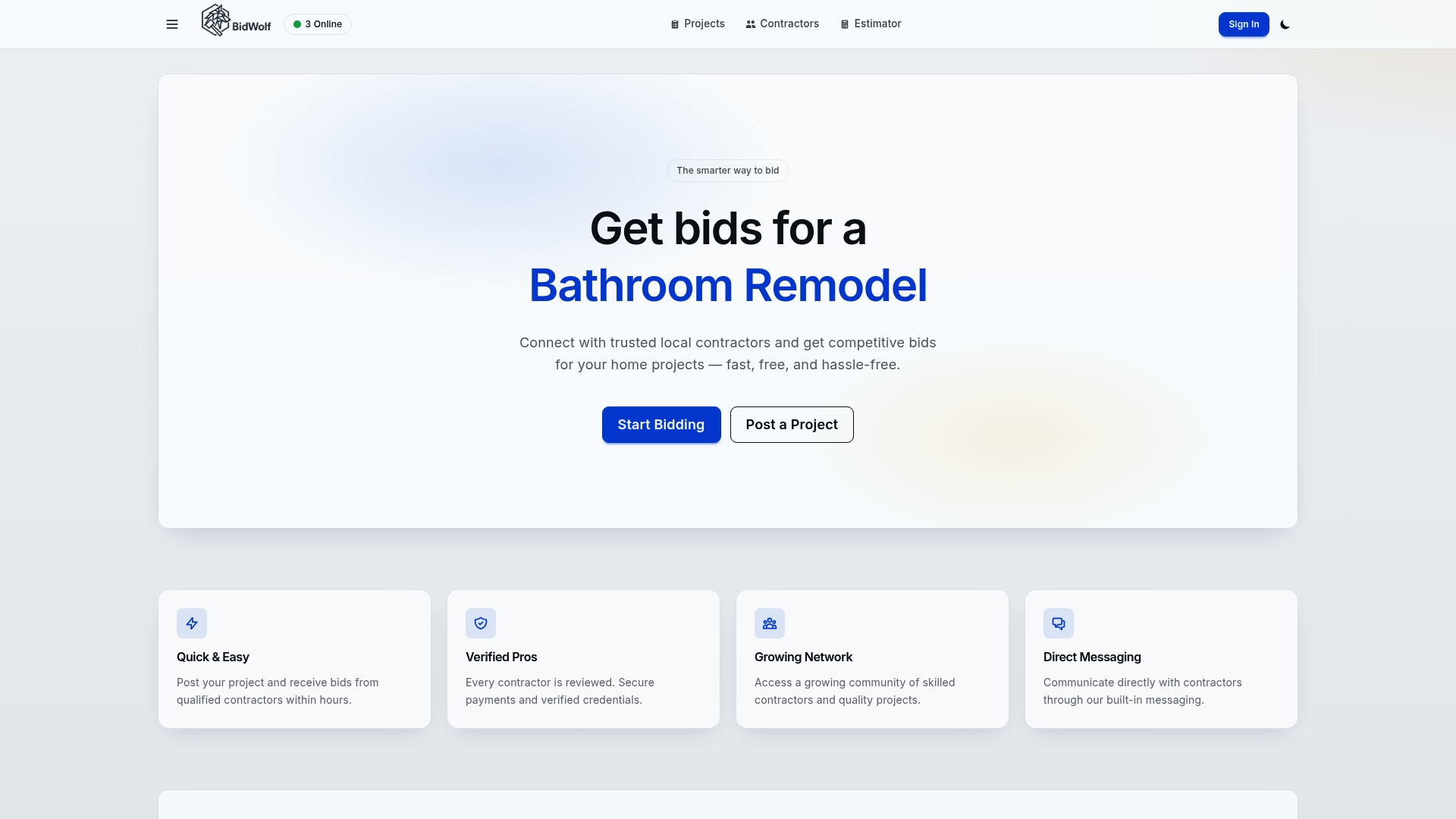
When you post a project on Bidwolf, verified local contractors submit competitive bids directly to you. You can compare bids, review contractor profiles, and communicate through built-in messaging, all without cold calls or guesswork. Bidwolf’s network covers multiple cities across Texas, with a growing roster of license-verified professionals across roofing, electrical, plumbing, landscaping, and more. If you want to find verified local contractors without the manual credential chase, Bidwolf gives you a direct path to qualified professionals ready to work.
FAQ
What is a verified tradesperson?
A verified tradesperson is a professional whose identity, trade registration, insurance, and background have been independently confirmed by a third party. Verification goes beyond self-reported accreditation by checking credentials directly with issuing bodies such as Gas Safe or NICEIC.
How do I check if a tradesperson is verified?
Search the relevant statutory register online using the tradesperson’s name or registration number. For gas work, use the Gas Safe Register; for electrical work, check NICEIC or NAPIT. Also request a current insurance certificate and verify their company on Companies House.
Why does verification status change over time?
Verification is a dynamic credential. Insurance policies expire, trade registrations lapse, and complaints can trigger revocation. Always confirm a contractor’s status on the day you hire them, not just when you first make contact.
Does hiring a verified tradesperson cost more?
Verified contractors may quote higher than unverified workers, but verified contractors average only 7% cost overruns compared to 34% for unverified workers. The upfront difference is typically far smaller than the cost of rework, disputes, or failed inspections.
What is the difference between verification and accreditation?
Accreditation often relies on a tradesperson submitting their own documents to receive a badge. Verification requires an independent party to confirm those documents with the issuing body. Only independent verification reliably confirms that credentials are current, valid, and scoped correctly for your project.