

Home Renovation Cost Factors: Your 2026 Budget Guide

TL;DR:
- Home renovation costs are driven mainly by labor, materials, project scope, and regional factors. Accurate budgeting requires detailed scope documentation, contractor bids, and contingency reserves for unforeseen expenses. Scheduling during off-peak seasons and choosing quality work prevent budget overruns and ensure project success.
Home renovation cost factors are the key elements that determine the total expenses of any remodeling project, including labor, materials, project scope, and location. The national median renovation cost sits at $2,800 in 2026, but averages jump to $6,342 once large projects are included, with whole-house renovations ranging from $19,000 to $88,000. Knowing what drives these numbers before you break ground is the difference between a project that stays on budget and one that spirals. This guide breaks down every major factor affecting renovation costs so you can plan with confidence.
1. How labor costs impact your home renovation budget
Labor accounts for 50–60% of total renovation costs in 2026. That share has grown from 40–50% just five years ago, driven by a tighter skilled trades workforce and rising wages across the country.
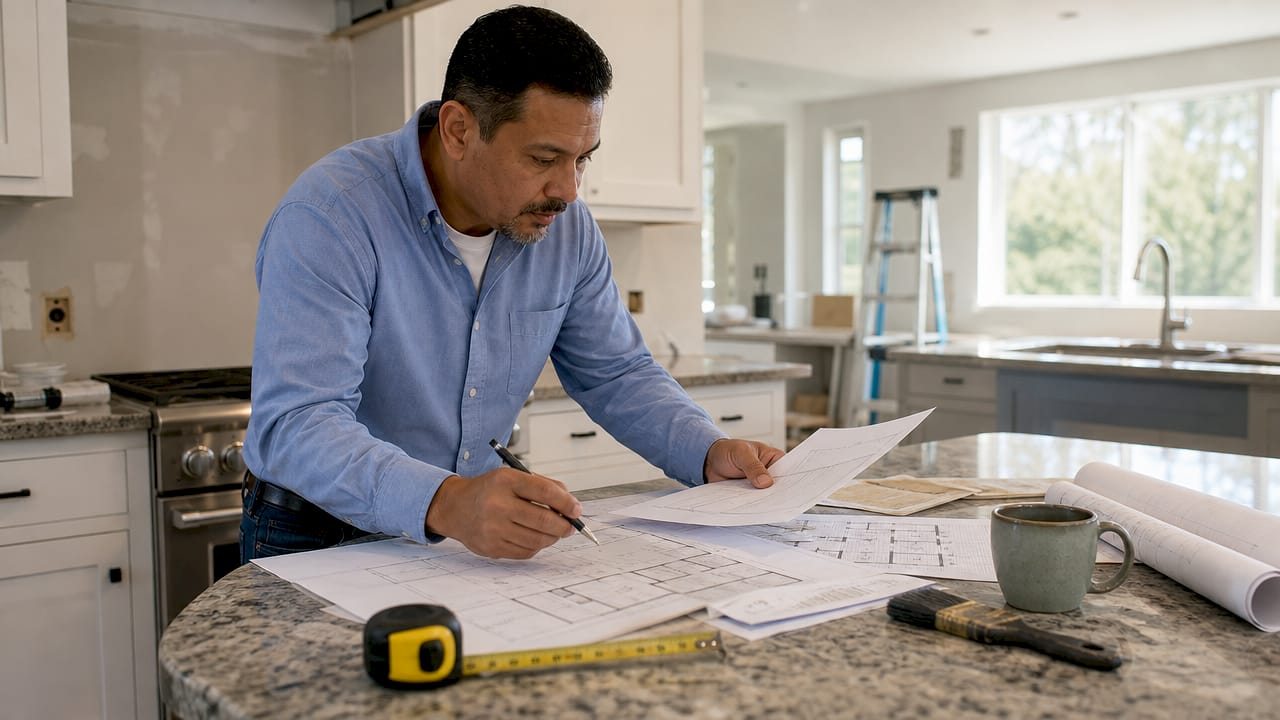
Regional labor markets create wide price swings. High cost of living areas such as San Francisco, New York City, and Seattle can run 50–70% higher than the national average. A bathroom remodel that costs $12,000 in Dallas could cost $20,000 or more in Manhattan for the same scope of work.
Different trades carry different labor-to-material ratios. Plumbing and electrical work are heavily labor-intensive, meaning the contractor’s hourly rate drives most of your bill. Tile installation and painting are more balanced between labor and materials.
- Electricians and plumbers charge premium rates because licensing requirements limit the available workforce.
- General contractors typically mark up subcontractor labor by 10–20% as a management fee.
- Experienced crews work faster, which often makes their higher hourly rate cost-neutral or cheaper overall.
- Rushed timelines force overtime billing, which can add 25–50% to daily labor costs.
Pro Tip: Scheduling your project during late fall or winter can save 10–15% on labor. Contractor demand drops after the summer rush, and many crews offer better rates to fill their calendars.
Cutting corners on skilled labor is one of the most expensive mistakes a homeowner can make. Cheap labor leads to rework that costs more to fix than the original job would have cost done right. Prioritize verified credentials and references over the lowest bid.
2. Material quality and choices as a major cost factor
Materials represent roughly 35–40% of total renovation costs, but that share shifts significantly depending on the project type. A tile bathroom remodel is more material-heavy than a drywall repair, where labor dominates.
Material quality tiers fall into three broad categories: builder-grade, mid-range, and premium. Builder-grade products are functional and cost-effective. Mid-range products offer better durability and aesthetics. Premium materials, such as natural stone countertops or custom hardwood flooring, can double or triple the material line item on their own.
Supply chain conditions and regional availability affect pricing more than most homeowners expect. Materials shipped long distances carry freight premiums. Local shortages after storms or high regional demand can push prices up 20–30% with little warning.
- Use builder-grade materials in areas that are not visible, such as subfloor sheathing or interior wall framing.
- Reserve your budget for high-traffic surfaces like countertops, flooring, and cabinetry hardware.
- Buy materials during seasonal sales at retailers like Home Depot or Lowe’s, where discounts of 20–40% are common on flooring and fixtures.
- Ask your contractor about contractor pricing on materials, which is often 10–15% below retail.
Pro Tip: Choosing budget-friendly finishes for non-focal areas and spending more on one statement feature, like a kitchen backsplash or a master bath vanity, gives you a high-end look without a high-end price tag.
Durable materials cost more upfront but reduce long-term maintenance expenses. A $3,000 solid wood cabinet lasts 30 years. A $900 particleboard cabinet may need replacement in 8–10 years. Factor lifecycle cost, not just purchase price, into every material decision.
3. The role of project scope and complexity in renovation costs
Project scope is the single biggest variable in how to estimate renovation costs accurately. Scope covers square footage, the type of work involved, whether structural changes are needed, and how many trades must coordinate on site.
Structural changes multiply costs fast
Moving walls, adding square footage, or changing rooflines requires engineering drawings, structural permits, and specialized labor. A simple kitchen refresh costs a fraction of a full kitchen reconfiguration that moves the sink and removes a load-bearing wall. Moving plumbing adds $1,500–$3,000 per relocation point. Electrical rerouting carries similar costs per circuit.
The code cascade effect
The code cascade is a well-documented phenomenon in renovation budgeting. A cosmetic update, like replacing a bathroom vanity, can trigger a full electrical inspection. That inspection may require upgrading wiring to current code. The code cascade effect can add thousands of dollars in electrical, plumbing, or energy upgrades to a project that started as a simple refresh. Older homes built before 1980 are especially vulnerable to this effect.
Fixed costs hit small projects hardest
Fixed overhead costs like dumpster rentals ($400–$800 per load), permit fees ($500–$5,000), and site mobilization do not scale down with project size. A $5,000 bathroom update carries the same $800 dumpster fee as a $50,000 kitchen remodel. This makes the cost per square foot for small projects significantly higher than for large ones.
Here is how scope complexity affects cost across common project types:
| Project type | Complexity level | Key cost driver |
|---|---|---|
| Paint and trim refresh | Low | Labor hours only |
| Bathroom remodel (cosmetic) | Medium | Fixtures, tile, labor |
| Kitchen remodel (layout change) | High | Plumbing, electrical, cabinetry |
| Room addition | Very high | Foundation, framing, all trades |
Pro Tip: Get itemized bids from contractors that break out demolition, framing, electrical, plumbing, and finishing separately. A lump-sum bid makes it impossible to identify where costs are high or where you can save.
Defining your scope in writing before contacting contractors prevents scope creep. Every undocumented change order adds cost and delays. A detailed scope document also lets you compare bids on equal terms, which is the foundation of accurate renovation expense breakdown analysis.
4. How location and regional factors influence renovation costs
Geography shapes renovation budgets in ways that online cost calculators rarely capture. Labor rates, permit fees, material availability, and local building codes all vary by city, county, and state.
High cost of living metros carry the steepest premiums. Renovation costs in cities like Boston, Los Angeles, and Seattle run 50–70% above the national average. A whole-house renovation averaging $52,000 nationally for a 1,250–1,600 square foot home could exceed $85,000 in a high-cost metro.
Permit fees vary dramatically by jurisdiction. A deck permit in one Texas county may cost $150. The same permit in a California coastal city can exceed $2,000. Inspection fees, plan review charges, and impact fees add further variation. Urban areas generally have more layers of required approvals than rural jurisdictions.
- Rural projects often face higher material costs due to delivery fees and limited supplier competition.
- Urban projects face higher labor costs but benefit from more contractor availability and competitive bidding.
- Coastal and high-humidity regions require moisture-resistant materials that cost more than standard alternatives.
- Areas with strict energy codes, like California Title 24, require upgrades to insulation, windows, and HVAC that add to base renovation costs.
Seasonal timing also interacts with location. In Texas and the Southeast, summer heat slows exterior work and pushes contractor demand toward interior projects. In northern states, winter is the slow season for most trades. Aligning your project with the local slow season is one of the most reliable ways to reduce labor costs without sacrificing quality.
5. Hidden and unexpected costs every homeowner should anticipate
Hidden costs are the primary reason renovation budgets fail. Most homeowners plan for the visible work and underestimate the expenses that appear once walls open or permits are pulled.
A 10–20% contingency reserve is the industry standard for renovation budgeting. Older homes and complex projects warrant the full 20%. A $40,000 kitchen remodel should carry an $8,000 contingency fund sitting in reserve before the first nail is driven.
Unpermitted work reduces property value by 15–25% and voids insurance coverage for damage caused by that work. Homeowners who skip permits to save $500–$1,000 in fees risk tens of thousands in liability when they sell or file a claim. Permits are not optional. They are financial protection.
Common hidden costs that catch homeowners off guard include:
- Water damage and rot: Opening walls in bathrooms or kitchens frequently reveals water damage that must be remediated before new work proceeds.
- Outdated wiring: Homes built before 1980 often have aluminum wiring or undersized panels that require upgrading to meet current code.
- Mold and asbestos: Homes built before 1978 may contain asbestos in floor tiles, insulation, or drywall compound. Remediation costs range from $1,500 to $30,000 depending on scope.
- Structural surprises: Sagging joists, inadequate footings, or improper prior repairs add significant structural costs.
- Temporary living and storage: Major renovations may require renting storage units or temporary housing, adding $500–$3,000 per month to your budget.
- Landscaping repair: Contractor access routes damage lawns and plantings. Budget for restoration after the project closes.
Pro Tip: Before finalizing your budget, have a licensed inspector walk the project area. A $300–$500 pre-renovation inspection often surfaces issues that would otherwise appear mid-project at full contractor markup.
Tracking every cost in real time against your budget prevents surprises from compounding. Use a simple spreadsheet or a project management tool to log every invoice, change order, and contingency draw as the project progresses.
Key takeaways
Accurate renovation budgeting requires understanding that labor, materials, scope, location, and hidden costs each drive expenses in distinct ways that compound when not planned for together.
| Point | Details |
|---|---|
| Labor is the largest cost driver | Labor accounts for 50–60% of renovation costs; prioritize skilled, verified contractors over low bids. |
| Materials vary by quality tier | Builder-grade works for hidden areas; invest in durable finishes for high-traffic surfaces. |
| Scope defines total cost | Structural changes, code upgrades, and fixed overhead make complex projects cost far more per square foot. |
| Location adds 50–70% in high-cost areas | Regional labor rates, permit fees, and material availability create wide geographic price gaps. |
| Contingency reserves prevent budget failure | Set aside 10–20% of your total budget for unexpected repairs, code upgrades, and change orders. |
What I’ve learned about renovation budgets after years of watching projects go sideways
Most renovation budgets fail at the planning stage, not during construction. Homeowners set a number based on a gut feeling or a single online estimate, then discover the real cost when bids come in 30–40% higher. The fix is not a bigger budget. The fix is a better process.
The most reliable budgets I’ve seen start with a written scope document before any contractor is contacted. Every room, every finish, every fixture is listed. That document becomes the basis for fair, itemized bids that you can compare line by line. Without it, you are comparing apples to oranges and the lowest bid almost always wins for the wrong reasons.
Contingency reserves are where homeowners consistently underestimate. A 10% reserve sounds generous until you open a wall and find knob-and-tube wiring in a 1940s bungalow. I recommend 20% as the default for any home over 30 years old. It feels conservative until you need it.
Off-peak scheduling is underused. Booking a contractor in november or january instead of june can save 10–15% on labor with no reduction in quality. Most homeowners do not think about timing because they want the project done now. Waiting six weeks to save $3,000 on a $25,000 project is a straightforward financial decision.
The contractors who give you the most detailed bid are usually the most reliable. A contractor who breaks out every trade, every material, and every phase of work is showing you how they think. That level of organization carries through to how they run the job.
— Devin
Bidwolf makes it easier to budget and find the right contractor
Getting accurate renovation costs starts with getting real bids from real contractors in your area.

Bidwolf connects you with vetted local contractors who submit competitive, itemized bids on your project. You can post your renovation project for free, compare detailed bids side by side, and communicate directly with contractors through the platform. Bidwolf’s free cost estimator gives you a realistic starting point before bids arrive, so you know what to expect. For homeowners who want trusted professionals without the guesswork of cold calls and referrals, Bidwolf is the direct path to getting your project started right.
FAQ
What percentage of renovation costs goes to labor?
Labor accounts for 50–60% of total renovation costs in 2026, up from 40–50% five years ago. Skilled trades like plumbing and electrical carry the highest labor rates.
How much should I budget for unexpected renovation costs?
Budget a 10–20% contingency reserve on top of your total project estimate. Older homes and complex renovations warrant the full 20%.
Does skipping permits really affect my home’s value?
Yes. Unpermitted work reduces property value by 15–25% and can void your homeowner’s insurance coverage for related damage.
When is the best time to schedule a renovation to save money?
Late fall and winter are the off-peak seasons for most contractors. Scheduling during this period can reduce labor costs by 10–15% compared to peak summer demand.
What is the best way to estimate renovation costs accurately?
Reliable cost estimates require a detailed written scope and multiple itemized bids from licensed contractors. Online calculators provide rough ranges but cannot account for site-specific conditions or regional labor rates.