
How to compare contractor bids for home projects in Texas

Picking the wrong contractor bid can cost you thousands of dollars and months of frustration. Most Texas homeowners receive a few quotes, glance at the bottom line, and choose the lowest number. That approach leads to budget overruns, surprise fees, and workmanship that doesn’t hold up. Whether you’re planning a bathroom remodel in Austin, a roof replacement in Houston, or a kitchen renovation in Dallas, you need a clear process for comparing bids. This guide walks you through every step, from collecting the right bids to spotting red flags in Texas contracts, so you can make a confident, well-informed decision.
Table of Contents
- Gathering and organizing contractor bids
- Decoding bid details: what really matters
- Validating contractor credentials and reliability
- Addressing Texas-specific bid and contract issues
- What most guides miss about picking the right bid
- Make contractor bid comparison easier with BidWolf
- Frequently asked questions
Key Takeaways
| Point | Details |
|---|---|
| Always request multiple bids | Comparing at least three itemized bids is essential for uncovering the best value and avoiding surprises. |
| Compare every line item | Focus on labor, material quality, payment schedules, and contract terms—not just the lowest price. |
| Check credentials and local compliance | Verify licensing, insurance, and contract protections to avoid costly mistakes under Texas laws. |
| Don’t ignore the details | Missing permit fees or contract exclusions can create expensive surprises after work begins. |
Gathering and organizing contractor bids
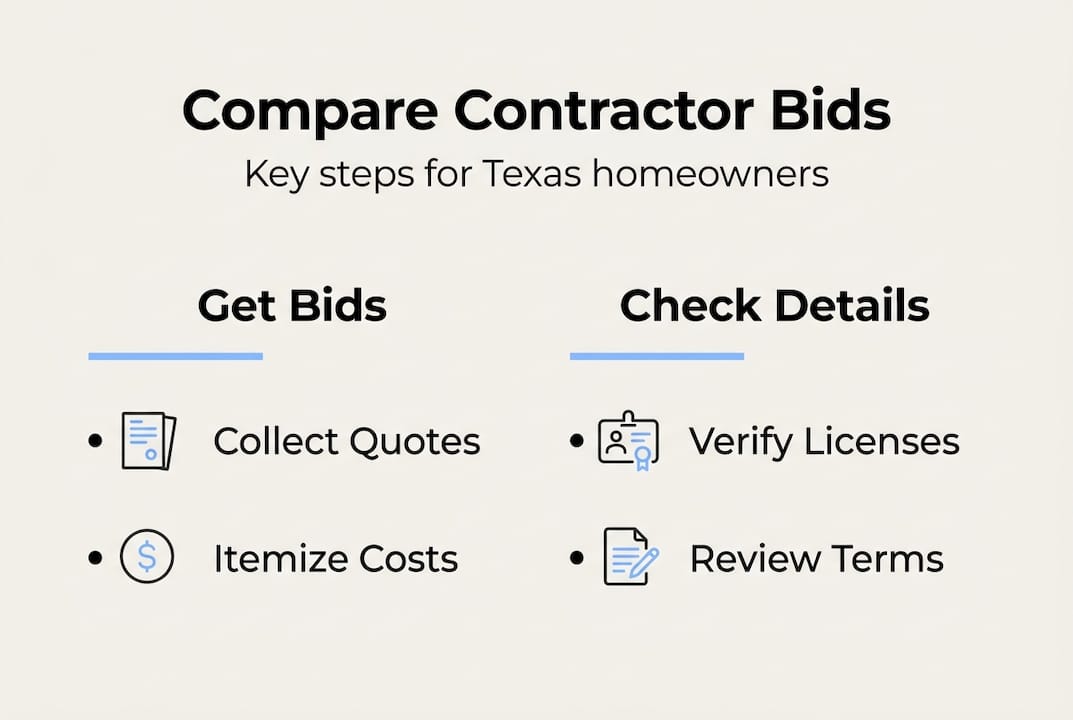
The foundation of any smart hiring decision is having the right bids in front of you. If you only collect one or two quotes, you have no way to know whether you’re being charged fairly or whether the scope of work is complete. Start by reaching out to at least three licensed and insured contractors for every project. Getting at least 3 itemized bids from verified professionals ensures you’re comparing real scopes, not guessing at what’s included.
When you request a bid, be specific about what you want. Provide each contractor with the same written description of the project. Include measurements, preferred materials, and any known constraints like existing plumbing locations or HOA rules. This consistency is what makes your bids truly comparable. If one contractor bids on a tile shower and another bids on a fiberglass insert, you’re not comparing apples to apples.
Every bid you receive should be fully itemized. That means it must break down:
- Labor costs by task or phase
- Material costs with specific product names or grades
- Permit and inspection fees
- Cleanup and waste removal
- Any subcontractor work and who is responsible for it
- Payment schedule tied to project milestones
Once you have three or more itemized bids, organize them in a side-by-side table. This is the fastest way to spot gaps and inconsistencies. Use a format like this:
| Line item | Contractor A | Contractor B | Contractor C |
|---|---|---|---|
| Labor | $4,200 | $3,800 | $4,500 |
| Materials | $3,100 | $2,600 | $3,200 |
| Permits | Included | Not listed | $350 |
| Cleanup | Included | Not listed | Included |
| Timeline | 3 weeks | 2 weeks | 4 weeks |
| Warranty | 1 year | None listed | 2 years |
| Total | $7,300 | $6,400 | $8,050 |
At first glance, Contractor B looks cheapest. But permits and cleanup aren’t listed. That could add $500 or more to the final bill. You can compare home bids more efficiently when every line item is visible and accounted for.
Pro Tip: Ask each contractor to confirm in writing whether permits are included in their bid. In Texas, pulling permits is the contractor’s legal responsibility in most cities, but the cost can vary significantly by municipality.
Using a platform like BidWolf to find local contractors means you’re already working with professionals who understand itemized bidding and are accustomed to transparent quote formats.
Decoding bid details: what really matters
With your bids organized, it’s time to dig into the details that separate a strong bid from a risky one. The total price is just the starting point. What you really need to evaluate is what’s inside each number and what might be missing.
Here’s a numbered breakdown of the key elements to analyze in every bid:
- Labor costs: Are they priced per hour or as a fixed amount? Fixed labor pricing gives you more budget certainty.
- Material quality: Does the bid specify brands, grades, or product models? Vague terms like “standard tile” leave room for substitution.
- Permit and inspection fees: Are they included, or will they be billed separately as a pass-through cost?
- Cleanup and waste removal: Some contractors charge extra for dumpster rental or debris hauling.
- Change order policy: How are unexpected costs handled? Is there a written process with approval required before work proceeds?
- Payment schedule: Avoid contractors who demand more than 30% upfront. Tie payments to completed milestones.
- Warranty terms: What’s covered, for how long, and is it on both labor and materials?
- Timeline: Is there a start date and completion date? Are there penalties for delays?
A bid comparison guide helps you track all of these elements without missing anything. The goal is to evaluate the full cost picture, not just the number at the bottom of the page.
One of the most common gaps in contractor bids is the treatment of allowances. An allowance is a placeholder amount for items not yet selected, like light fixtures or tile. If a bid includes a $500 allowance for bathroom tile and you choose a tile that costs $900, you’ll owe an additional $400. Always ask contractors to clarify what allowances are included and what your realistic budget should be for each one.
Evaluating bids with a matrix that covers labor, materials, permits, cleanup, waste removal, allowances, exclusions, timelines, warranties, payment schedules, and change order processes gives you the clearest picture of true project cost.
Statistic callout: Homeowners who compare three or more detailed bids are significantly less likely to experience unexpected cost overruns than those who accept the first or second quote they receive.
Use your project cost estimator to set a realistic budget range before you even start collecting bids. When you know what a project should cost in your Texas market, you can immediately flag bids that seem suspiciously low or unusually high.
Pro Tip: If a bid is more than 20% lower than the others, ask the contractor to walk you through their pricing line by line. Low bids often reflect missing scope items, lower-grade materials, or a contractor who plans to make up the difference with change orders later.
Validating contractor credentials and reliability
Understanding the details of each bid is crucial, but they mean little without confirming the quality and legitimacy of who submits them. A perfectly formatted bid from an unlicensed contractor is still a serious risk. Before you sign anything, take the time to verify credentials.

Texas does not have a single statewide contractor license for general residential construction. Licensing is handled at the city and county level. That means you need to check with your local municipality to confirm that a contractor holds the required permits and registrations for your area. Specialty trades like electricians, plumbers, and HVAC technicians do have statewide licensing requirements through the Texas Department of Licensing and Regulation.
Here’s what to verify for every contractor you’re seriously considering:
- City or county license: Contact your local building department or check their online portal.
- General liability insurance: This covers damage to your property during the project.
- Workers compensation insurance: This protects you if a worker is injured on your property. Without it, you could be liable.
- Bonding: For larger projects, a surety bond provides financial protection if the contractor fails to complete the work.
- References: Ask for at least three references from recent, similar projects. Call them.
- Online reviews: Check Google, the Better Business Bureau, and Nextdoor for patterns in feedback.
You can validate contractor reliability more efficiently when working with a platform that pre-screens professionals before they can bid on your project.
“Verify licensing at the local city or county level in Texas, confirm both general liability and workers compensation insurance, check references from recent similar projects, read online reviews, and look for bonds on larger jobs.” How to Vet Home Contractors
When you call references, ask specific questions. Did the contractor show up on time? Did the final cost match the bid? Were there change orders, and were they handled professionally? Would you hire them again? These answers tell you more than any review site can.
The contractor review process on BidWolf includes credential verification so you’re not starting from scratch on every hire. That said, always do your own due diligence before signing a contract, regardless of the platform you use.
Addressing Texas-specific bid and contract issues
Once you’ve reviewed the bids and checked the contractors, don’t overlook unique Texas legal and regulatory details. Texas has specific rules and common contract formats that can significantly affect your project outcome if you’re not prepared.
Here are the key Texas-specific issues to address before you sign:
- Permit and inspection timelines: In most Texas cities, pulling permits and scheduling inspections adds one to four weeks to a project timeline. Make sure your contractor’s bid accounts for this. A bid that promises a two-week bathroom remodel without mentioning permits is likely missing that step entirely.
- TAB contract forms: The Texas Association of Builders (TAB) produces standard residential construction contracts used widely across the state. These forms are often written to favor the contractor. Before signing, review contract requirements and consider having an attorney review any contract over $10,000.
- Cost-plus contracts: If a contractor proposes a cost-plus contract (where you pay actual costs plus a percentage fee), insist on a Guaranteed Maximum Price (GMP) clause. Without it, your costs have no ceiling.
- Lien rights: Texas has strong mechanic’s lien laws. A contractor or subcontractor who isn’t paid can place a lien on your home. Make sure your contract includes lien waiver requirements tied to each payment.
- Three-day right of rescission: For contracts signed at your home, Texas law may give you a right to cancel within three business days. Know your rights before you commit.
“In Texas, ensure bids address local permits and inspections, which can add one to four weeks to project timelines. Review contracts carefully for Texas-specific issues, including TAB forms that may need revisions for homeowner protection, such as adding a guaranteed maximum price clause in cost-plus agreements.” Texas Residential Construction Contract Review
Pro Tip: Always ask your contractor for a copy of the permit application before work begins. If they can’t provide one, that’s a red flag that the work may not be permitted at all.
Red flags to watch for in Texas contracts include vague scope descriptions, no start or end dates, large upfront payment requirements (over 30%), no change order process, and missing insurance certificates. A contract that doesn’t address these items puts you at a significant disadvantage if a dispute arises.
What most guides miss about picking the right bid
Most comparison guides tell you to get three bids, check licenses, and pick the best value. That’s good advice, but it stops short of what actually matters in practice.
The lowest bid is rarely the best bid. We’ve seen Texas homeowners choose the cheapest quote only to face incomplete work, material substitutions, and contractors who disappear mid-project. The real question isn’t “who’s cheapest?” It’s “who will deliver what they promised, on time, within budget?”
The best value comes from three things working together: verified qualifications, clear contract terms, and direct communication. A contractor who responds quickly, explains their pricing clearly, and welcomes questions is showing you how they’ll behave during the project. That behavior matters more than a $200 price difference.
There’s also a timing factor that most guides ignore. In Texas, storm seasons and labor shortages can push contractor prices up by 15 to 25% in affected areas. If you’re getting bids right after a major hail event in the Dallas area, for example, roofing prices will reflect that demand spike. Waiting a few weeks or expanding your search radius can make a meaningful difference. Use expert bid insight to understand what’s driving pricing in your specific market before you commit.
Efficiency and corner-cutting can look identical on paper. The difference shows up in the details: a contractor who moves fast because they’re organized is not the same as one who skips steps. Ask about their crew size, their subcontractor relationships, and how they handle inspections. Those answers reveal whether speed comes from skill or shortcuts.
Make contractor bid comparison easier with BidWolf
Ready to take the guesswork out of comparing contractor bids? BidWolf makes the entire process faster and more transparent for Texas homeowners.
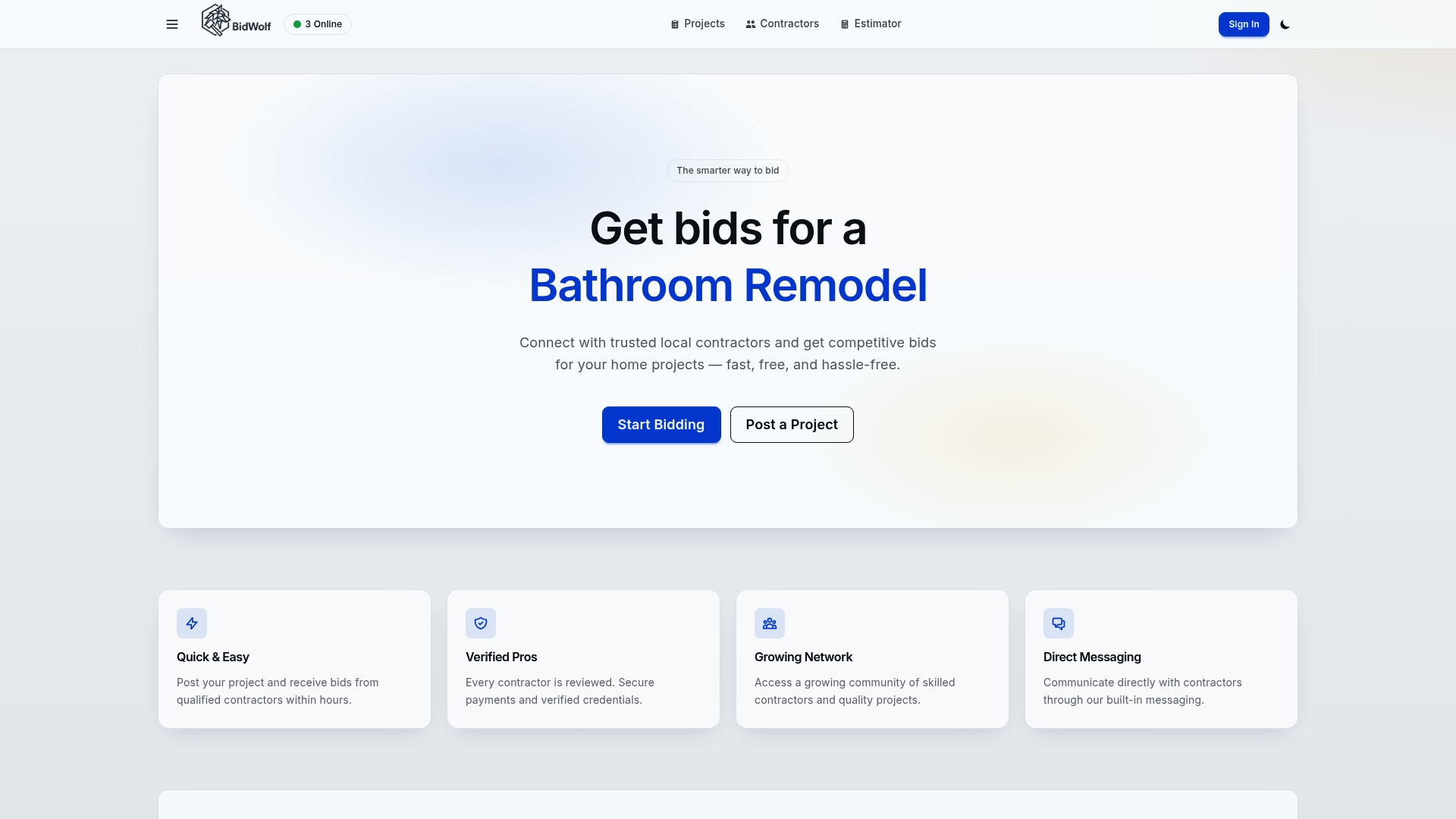
With BidWolf, you can post your project once and receive competitive bids from pre-vetted local professionals across Texas. Our platform lets you compare contractor bids side by side, communicate directly with each contractor through built-in messaging, and track every detail in one place. You can also discover local contractors by trade and location, with verified credentials already confirmed. Before you even post a project, use our tool to estimate your project cost so you know what fair pricing looks like in your area. No more guessing. No more spreadsheets. Just clear, confident decisions.
Frequently asked questions
What should be included in a contractor bid in Texas?
A thorough bid should list labor, materials with specific brands or grades, permits, cleanup, allowances, exclusions, payment schedules, and warranties. Evaluating every line item in a side-by-side format helps you spot gaps before signing.
Why get multiple contractor bids instead of just one?
Getting at least three bids helps ensure you’re seeing fair pricing and comparable scopes, not just lucky or outlier estimates. Three detailed, itemized bids from licensed and insured contractors give you the context needed to make a sound decision.
How can I check if a contractor is licensed and insured in Texas?
Contact your city or county offices for license checks, and always ask for current proof of liability and workers comp insurance. Local licensing requirements vary by municipality since Texas has no single statewide general contractor license.
What Texas-specific contract terms should I look for?
Review for local permitting timelines, lien waiver requirements, and be sure contracts address or modify TAB forms for your protection. Texas contract review guidance recommends adding a guaranteed maximum price clause to any cost-plus agreement to protect your budget.