

Contractor marketing strategies that attract Texas homeowners
TL;DR:
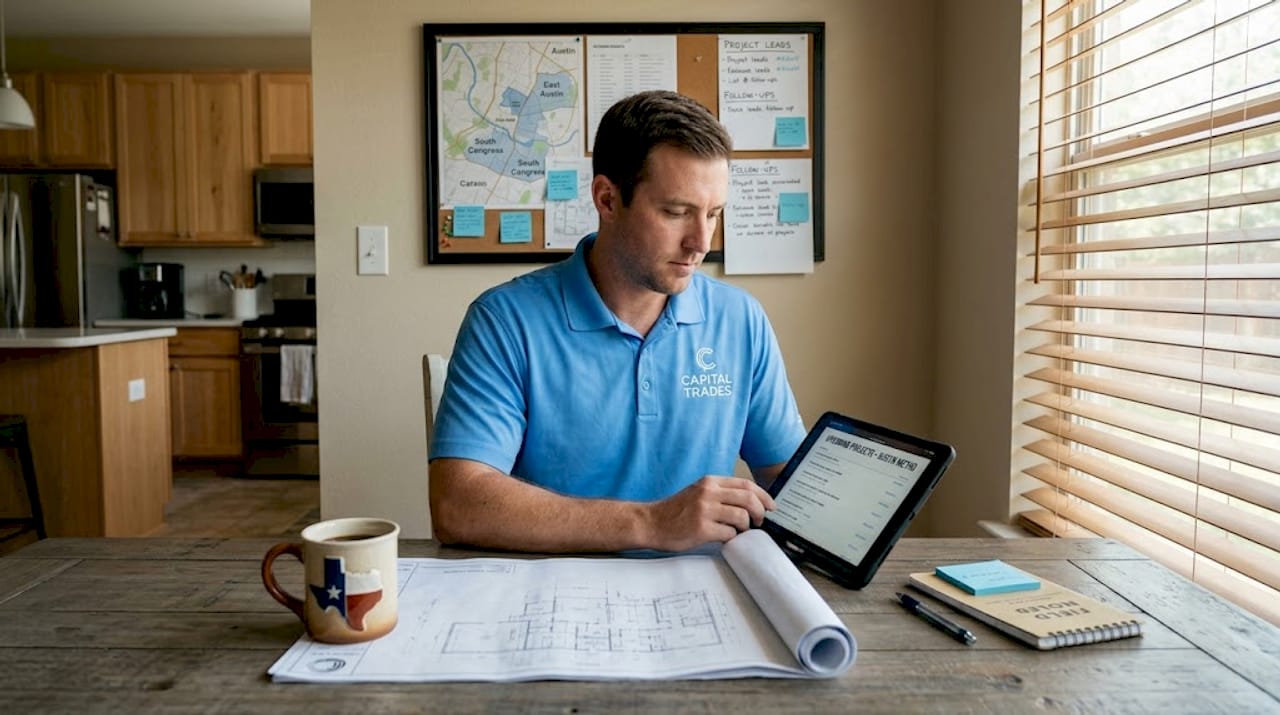
- Successful Texas contractors focus on targeted marketing to their specific local communities and niche project types.
- Online platforms like Google, Facebook, and Instagram are vital for building visibility and generating leads.
- Offline methods like yard signs, referrals, and community sponsorships remain powerful for local trust and brand recognition.
Texas contractors know the feeling well. You do great work, your crew shows up on time, and your finished projects look sharp. Yet your phone isn’t ringing as often as it should. Meanwhile, a competitor down the road seems to land every bathroom remodel and roofing job in the neighborhood. The difference usually isn’t skill. It’s marketing. In a state with over 30 million residents and one of the fastest-growing housing markets in the country, the contractors who win consistent work are the ones who make themselves easy to find, easy to trust, and easy to hire. This article breaks down exactly how to do that.
Table of Contents
- Identifying your ideal customer in the Texas market
- Leveraging online platforms to reach Texas homeowners
- Offline strategies that still work for Texas contractors
- Measuring results and optimizing your contractor marketing
- Why most contractor marketing advice misses the mark in Texas
- Put these contractor marketing strategies to work with BidWolf
- Frequently asked questions
Key Takeaways
| Point | Details |
|---|---|
| Know your ideal customer | Focus your efforts on homeowners most likely to need your services in Texas neighborhoods. |
| Mix online and offline tactics | Use both digital platforms and traditional methods to maximize reach and trust. |
| Measure and refine your efforts | Regularly track results and update your marketing approach for better ROI. |
| Adapt to the Texas market | Tailor your strategies to fit the specific preferences and culture of Texas homeowners. |
Identifying your ideal customer in the Texas market
Now that we’ve set the stage, let’s zero in on your target audience, the foundation of every successful marketing strategy.
Most contractors make the same early mistake. They try to market to everyone. The logic seems sound: cast a wide net and you’ll catch more fish. In practice, the opposite is true. When your message speaks to everyone, it resonates with no one. The first step toward effective marketing is knowing precisely who you want to reach and where they live.
Texas is not a single market. Houston homeowners have different priorities than those in Austin, San Antonio, or Lubbock. A family in a 1970s ranch home in Plano has different remodeling needs than a new construction homeowner in a Katy suburb. Understanding these distinctions lets you craft messages that feel personal and relevant rather than generic.
Start by defining your ideal project type. If you specialize in kitchen remodels, your ideal client is probably a homeowner who has lived in their house for at least five years, has some equity built up, and is planning to stay long-term. If roofing is your specialty, storm-damaged neighborhoods after a hail event are your best opportunity. Being clear about what you do best helps you focus your marketing dollars where they’ll produce the most return.
Key criteria to define your ideal client in Texas:
- Home age and condition: Older homes in established neighborhoods often need more repair and renovation work than newer builds.
- Household income range: Projects like full bathroom remodels or HVAC replacements typically attract homeowners with moderate to high disposable income.
- Neighborhood growth trends: Areas with rising home values signal homeowners who are investing in their properties.
- Project size preference: Decide whether you want high-volume small jobs or fewer, larger contracts. Both are valid, but each requires a different marketing approach.
- Previous renovation history: Homeowners who have completed one project are statistically more likely to hire again for the next one.
Segmenting your market by geography is one of the most practical tactics available to Texas contractors. Texas cities are large, and driving time matters. If your crew is based in North Dallas, chasing leads in Galveston is inefficient. Focus your marketing on a defined service radius. Use Google Maps to identify the zip codes within a 30-minute drive of your home base, then concentrate your advertising and outreach in those areas.
You can also segment by neighborhood type. Master-planned communities like The Woodlands or Sugar Land tend to have active homeowner associations and community Facebook groups. Getting visible in those spaces can generate a steady stream of referrals from neighbors who trust each other’s recommendations.
Pro Tip: Pull your last 12 months of completed projects and map them by zip code. You’ll likely find clusters where your work is already concentrated. Those neighborhoods are your warmest market because your reputation is already building there. Double down on marketing in those areas before expanding outward. You can also use tools available through local customer targeting to identify where active project opportunities are already forming near you.
Understanding your ideal client isn’t a one-time exercise. Revisit it every six months as your business grows and your service area evolves. The contractors who stay sharp on their targeting consistently outperform those who rely on gut instinct alone.
Leveraging online platforms to reach Texas homeowners
With your ideal client in focus, it’s time to meet them where they are, and that’s online.
The majority of Texas homeowners start their search for a contractor on a screen. They type a query into Google, scroll through Facebook recommendations, or browse Instagram for inspiration before they ever pick up the phone. If you’re not showing up in those moments, you’re invisible to a massive pool of potential clients.
Google Business Profile (formerly Google My Business) is the single most important free tool available to local contractors. When someone searches “roofing contractor in Frisco” or “bathroom remodel near me,” Google displays a map pack of local businesses at the top of the results. Contractors with complete, well-maintained profiles and strong reviews dominate that space. Fill out every field, upload photos of your completed work, and respond to every review, positive or negative. This signals to Google that your business is active and trustworthy.
Facebook remains the dominant social platform for homeowners in the 35 to 65 age range, which represents a large share of the home improvement market in Texas. Create a business page, post regularly, and join local community groups. Many Texas neighborhoods have active Facebook groups where residents ask for contractor recommendations daily. Being a helpful, visible presence in those groups builds name recognition without spending a dollar on ads.
Instagram works especially well for visual trades like kitchen remodeling, landscaping, and painting. A well-photographed before-and-after post can generate significant organic reach. Use local hashtags like #HoustonContractor or #AustinHomeRenovation to extend your visibility beyond your existing followers.
Top online actions that drive referrals and trust:
- Ask every satisfied client to leave a Google review immediately after project completion. A simple text message with a direct link makes it easy.
- Post before-and-after photos consistently. Show the problem you solved, not just the finished product.
- Respond to every review within 24 hours. Homeowners read your responses as much as they read the reviews themselves.
- Join and contribute to neighborhood Facebook groups without being overtly promotional.
- Share short video clips of work in progress. Authenticity builds trust faster than polished advertising.
- Update your Google Business Profile with seasonal service offerings to stay relevant year-round.
Local SEO is the long-term engine behind consistent online lead generation. Optimize your website with city-specific pages, service descriptions, and client testimonials. A page titled “Kitchen Remodeling in San Antonio” will rank better for local searches than a generic services page. Include your service area cities in your page titles, headers, and content naturally.
“Homeowners don’t just hire the contractor with the best price. They hire the one they trust most. Online reviews and professional photos are your digital handshake.”
Pro Tip: Partner with complementary local service providers, such as real estate agents, interior designers, or home inspectors, for cross-promotion online. A real estate agent who recommends you to new homebuyers can generate a steady stream of referrals. You can explore social media strategies for contractors that help you connect with homeowners who are actively looking for bids right now.
Offline strategies that still work for Texas contractors
While digital buzz is crucial, old-school methods can set you apart right in your own neighborhood.
There’s a tendency in modern marketing to dismiss traditional tactics as outdated. That’s a mistake, especially in Texas. Many of the most profitable contractor referrals still come from a yard sign, a conversation at a community event, or a well-timed postcard in the mail. These methods work because they build local visibility in a tangible, physical way that digital ads simply can’t replicate.
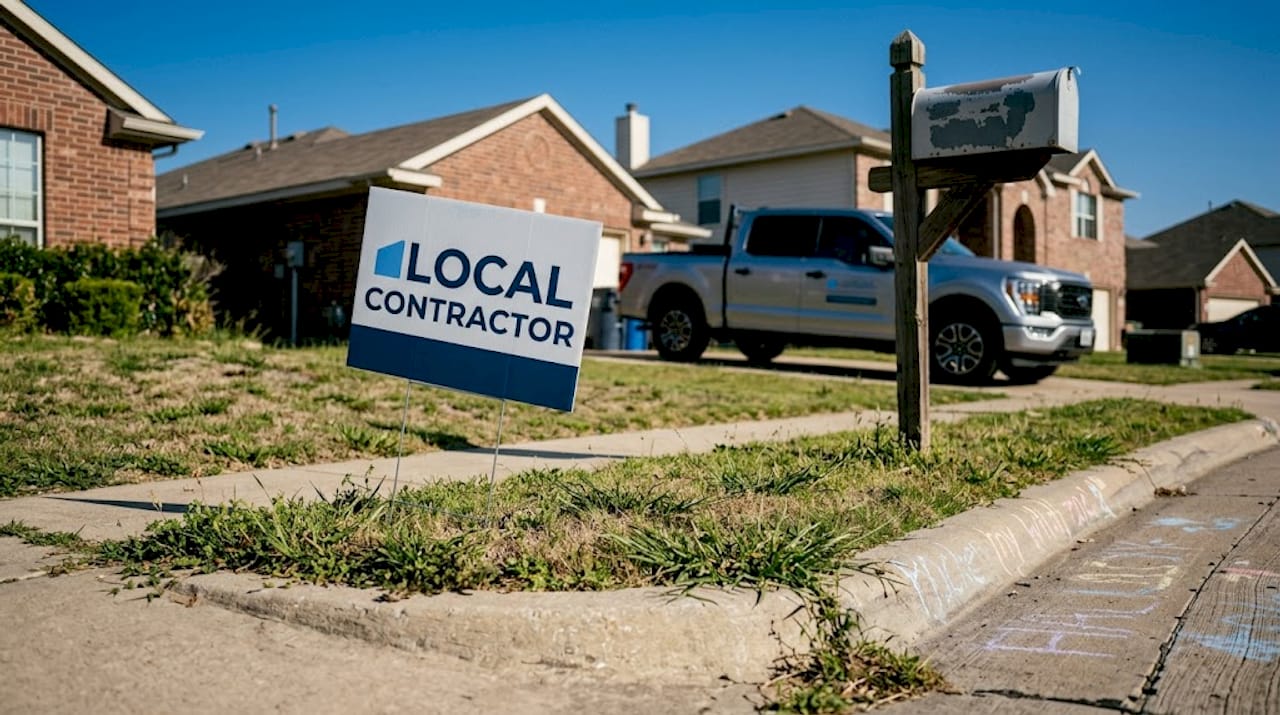
Local branding through physical presence is one of the most cost-effective marketing investments you can make. A branded truck parked in front of a job site is a moving billboard. Every neighbor who drives past sees your name, your logo, and the implicit message that someone on their street trusted you enough to hire you. Yard signs serve the same function. A cluster of your signs in a single neighborhood creates a perception of dominance. Homeowners assume you must be good if so many of their neighbors chose you.
Comparison of popular offline marketing tactics:
| Tactic | Cost | Reach | Trust factor | Best use case |
|---|---|---|---|---|
| Yard signs | Low | Hyperlocal | High | During and after active jobs |
| Branded truck wrap | Medium | Wide local area | High | Daily visibility across service area |
| Postcards/direct mail | Medium | Targeted zip codes | Medium | Seasonal promotions, storm follow-up |
| Door hangers | Low | Street-level | Medium | Neighborhoods near active job sites |
| Community event sponsorship | Medium to high | Neighborhood-wide | Very high | Building long-term brand recognition |
| Local newspaper ads | Low to medium | Broad local | Medium | Reaching older homeowner demographics |
Generating referrals from satisfied homeowners is the most powerful offline strategy available. A referral carries more weight than any advertisement because it comes with built-in trust. The homeowner recommending you is putting their own reputation on the line. To generate more referrals, you need a system rather than hoping clients will mention you.
Tactics that reliably increase referrals:
- Send a handwritten thank-you note after every completed project. It takes five minutes and leaves a lasting impression.
- Offer a referral incentive, such as a discount on future work or a gift card, for every new client a homeowner sends your way.
- Follow up with past clients six months after project completion to check in and remind them you’re available for their next project.
- Ask for referrals directly. Most satisfied homeowners are happy to recommend you but simply don’t think to do it unless asked.
Pro Tip: Sponsor a local Little League team, school fundraiser, or neighborhood block party in the areas where you want to grow. Your business name on a banner or jersey gets seen repeatedly by exactly the homeowners you want to reach. These sponsorships are often surprisingly affordable and generate goodwill that lasts far longer than a paid ad. For more structured lead generation tips for contractors, explore how combining offline visibility with an online presence creates a compounding effect on your lead volume.
Measuring results and optimizing your contractor marketing
No strategy is complete without a way to measure what’s working and what’s not.
Many contractors invest in marketing and then simply wait to see if the phone rings more. That approach wastes money and time. Tracking your results doesn’t require sophisticated software or a marketing degree. It requires consistency and a few simple habits that give you clear data to act on.
The key metrics every Texas contractor should track:
- Lead source: Ask every new inquiry how they found you. Record this in a simple spreadsheet. Over time, patterns emerge that show which channels are producing results.
- Call volume by month: Track how many inbound calls or messages you receive each month. Compare this against your marketing spend to see which months and campaigns drove activity.
- Project close rate: Of every ten leads you receive, how many turn into signed contracts? If your close rate is low, the problem may be your follow-up process rather than your marketing volume.
- Cost per lead: Divide your monthly marketing spend by the number of leads generated. This tells you exactly what you’re paying to attract each potential client.
- Return on investment by channel: Calculate revenue generated from each marketing source against what you spent on it. Some channels will surprise you with their efficiency.
Sample lead tracking table:
| Lead source | January leads | February leads | March leads | Avg. close rate | Est. monthly ROI |
|---|---|---|---|---|---|
| Google Business Profile | 8 | 11 | 14 | 40% | High |
| Facebook referrals | 5 | 6 | 5 | 50% | High |
| Yard signs | 3 | 2 | 4 | 60% | Very high |
| Direct mail postcards | 4 | 3 | 6 | 35% | Medium |
| Door hangers | 2 | 1 | 3 | 45% | Medium |
| Word of mouth | 6 | 7 | 9 | 70% | Very high |
Simple steps for making quick marketing improvements:
- Review your lead source data monthly, not quarterly. Markets shift quickly, especially in Texas where weather events can create sudden demand spikes.
- Double your investment in the two channels with the highest ROI. Cut spending on anything that hasn’t produced a lead in 60 days.
- Test one new tactic per quarter. Run it for 90 days before evaluating. Marketing results rarely appear overnight.
- Survey clients who didn’t hire you. Understanding why you lost a bid is as valuable as knowing why you won one.
- Set a monthly marketing budget as a fixed percentage of revenue, typically between 5 and 10 percent for growing contractors.
Research consistently shows that data-driven marketing adjustments can increase conversion rates by 20 to 30 percent compared to contractors who rely on intuition alone. That’s the difference between landing two or three extra projects per month and leaving that revenue on the table. Tracking doesn’t have to be complicated. A simple spreadsheet updated weekly is enough to start making smarter decisions.
The goal is to build a feedback loop. Every campaign you run teaches you something about your market. Over time, your marketing becomes more efficient, your cost per lead drops, and your close rate improves because you’re reaching the right homeowners with the right message.
Why most contractor marketing advice misses the mark in Texas
Stepping back for a broader view, let’s reconsider how most marketing advice really applies to Texas contractors.
Most marketing guides written for contractors are built around national averages. They assume a relatively uniform homeowner base, predictable seasonal patterns, and marketing channels that perform consistently across regions. Texas breaks all three of those assumptions.
Texas homeowners are shaped by distinct cultural, demographic, and climate factors that national advice simply doesn’t account for. The Hispanic homeowner population in San Antonio and El Paso represents a significant share of the home improvement market, and marketing that ignores Spanish-language channels or culturally relevant messaging leaves real money on the table. In contrast, the tech-industry transplants flooding Austin and Dallas suburbs respond strongly to digital-first, review-driven marketing that feels transparent and modern.
Climate also drives unique marketing windows. After a major hail storm in the DFW Metroplex, roofing contractors have a narrow window of peak demand that requires a rapid, localized response. Generic seasonal marketing calendars built for the Northeast or Midwest won’t capture that opportunity. Texas contractors need to be ready to activate neighborhood-specific campaigns within 48 hours of a weather event.
The deeper issue is that most national marketing advice prioritizes digital volume over personal trust. In Texas communities, especially smaller cities and suburban neighborhoods, personal trust still drives the majority of high-value project decisions. Homeowners here want to know you, or know someone who knows you, before they hand over a significant budget. That’s why Texas contractor insights that focus on community-level visibility consistently outperform generic digital ad campaigns in terms of close rate and project value.
The contractors who thrive in Texas aren’t the ones who follow the national playbook most faithfully. They’re the ones who adapt it to fit their specific community, their specific trade, and the specific homeowners they serve.
Put these contractor marketing strategies to work with BidWolf
Ready to put these marketing strategies into action and connect with more Texas homeowners?
BidWolf is built specifically for the Texas market, connecting verified local contractors with homeowners who are actively posting projects and ready to receive bids. Whether you specialize in roofing, bathroom remodels, electrical work, or landscaping, BidWolf puts your profile in front of homeowners who are already looking for someone with your skills.
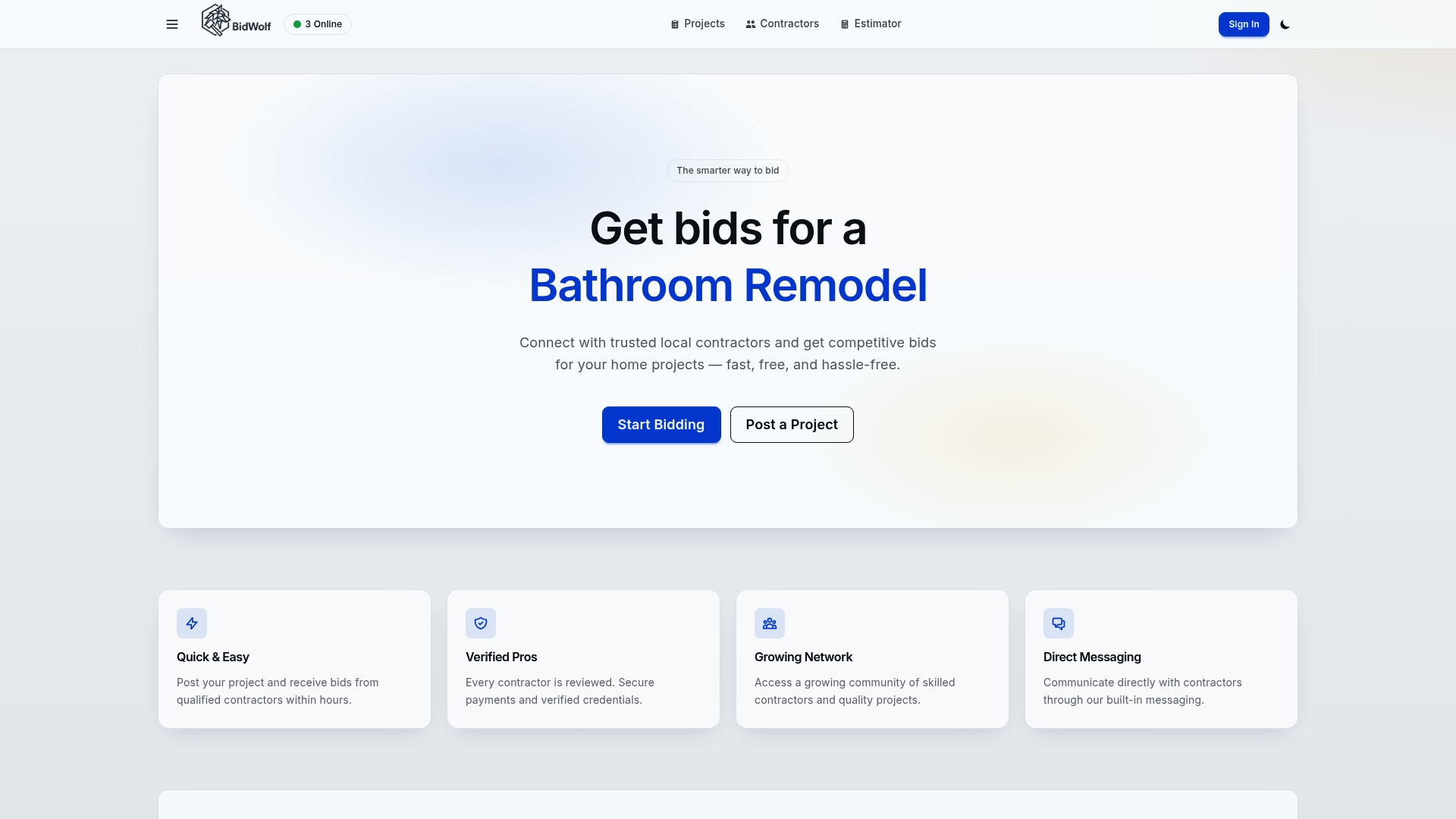
Setting up your contractor profile takes minutes, and you can immediately explore project opportunities in your service area. Homeowners on BidWolf are serious buyers, not casual browsers. They’ve posted a project, described their needs, and are waiting for qualified contractors to respond. You can also connect with homeowners directly through the platform’s built-in messaging system, making it easy to ask questions, share your experience, and build the trust that wins bids. Use the platform’s tools to get project cost estimates that help you submit competitive, accurate bids every time.
Frequently asked questions
What is the most cost-effective contractor marketing strategy in Texas?
Localized online platforms and targeted social media are the most budget-friendly ways for contractors to reach Texas homeowners, especially when combined with a well-maintained Google Business Profile that generates organic visibility at no ongoing cost.
How can I stand out from other contractors in my area?
Developing a strong local brand through consistent visual identity, community involvement, and gathering detailed homeowner testimonials helps Texas contractors build the kind of trust that generic competitors simply can’t match.
Do offline marketing methods still work for contractors?
Yes, tools like yard signs, referrals, and community sponsorships remain highly effective for Texas contractors because they build hyperlocal visibility and personal trust in the specific neighborhoods where you want to grow.
How do I measure the success of my contractor marketing?
Track the number of leads generated, your project close rate, and the return on investment from each marketing channel monthly to identify which tactics are producing results and where to shift your budget for better performance.