

The Role of Local Networks in Contracting for Texas Homeowners

TL;DR:
- Local networks in contracting offer homeowners trusted referrals and performance data beyond online reviews. They lower project risks by fostering community accountability and verifying contractor qualifications, insurance, and references. Combining informal community ties with formal verification enhances contractor reliability and project success.
Local networks in contracting are defined as the web of community relationships, referrals, and verified connections that homeowners and property managers use to identify, vet, and hire reliable contractors. For Texas homeowners, the role of local networks in contracting goes far beyond a simple word-of-mouth recommendation. These networks carry real information about contractor performance, permit compliance, and project reliability that no online review platform fully replicates. When you tap into a trusted local network, you access social capital built through repeated transactions and shared accountability.
How do local networks build trust and reduce risks in contracting?
Local networks reduce contracting risk by creating accountability structures that formal advertising cannot replicate. Research on small-to-medium construction firms confirms that informal social networks provide access to capital, information, and opportunities not available through formal institutions. The key mechanism is bonding capital: the mutual obligation and trust that forms when contractors and homeowners share the same community, neighbors, and professional circles.
Trust in contracting extends well beyond reputation. Studies on Integrated Project Delivery frameworks show that trust enables transparency, accountability, and better communication among all project participants. A contractor who knows your neighbor, attends the same local trade association meetings, and has pulled permits in your county operates under a different level of accountability than one who found you through a generic ad.
Practical trust-building through local networks works in three specific ways:
- Referrals from recent projects. A neighbor who completed a kitchen remodel six months ago can tell you whether the contractor showed up on time, handled change orders fairly, and closed out permits correctly.
- Verified references in the same trade. Vetting should confirm that references are for the same trade, completed within the last 6–12 months, and in the same geographic and permitting environment as your project.
- Local permit and insurance validation. Texas guidance from TriStar Built and Texas Heritage for Living stresses requesting proof of insurance and at least three recent references from similar local projects. Contractors who push to skip permits are a documented red flag.
Pro Tip: When you call a reference from your local network, ask three specific questions: Did the contractor start on time? How did they price change orders? Did they pull and close all required permits? These questions, recommended by Texas Heritage for Living, give you performance data that a star rating never will.
Local networks also reduce transaction costs. When you already know a contractor’s track record through community ties, you spend less time on background checks and fewer resources on failed bids. That efficiency compounds across every project you manage.
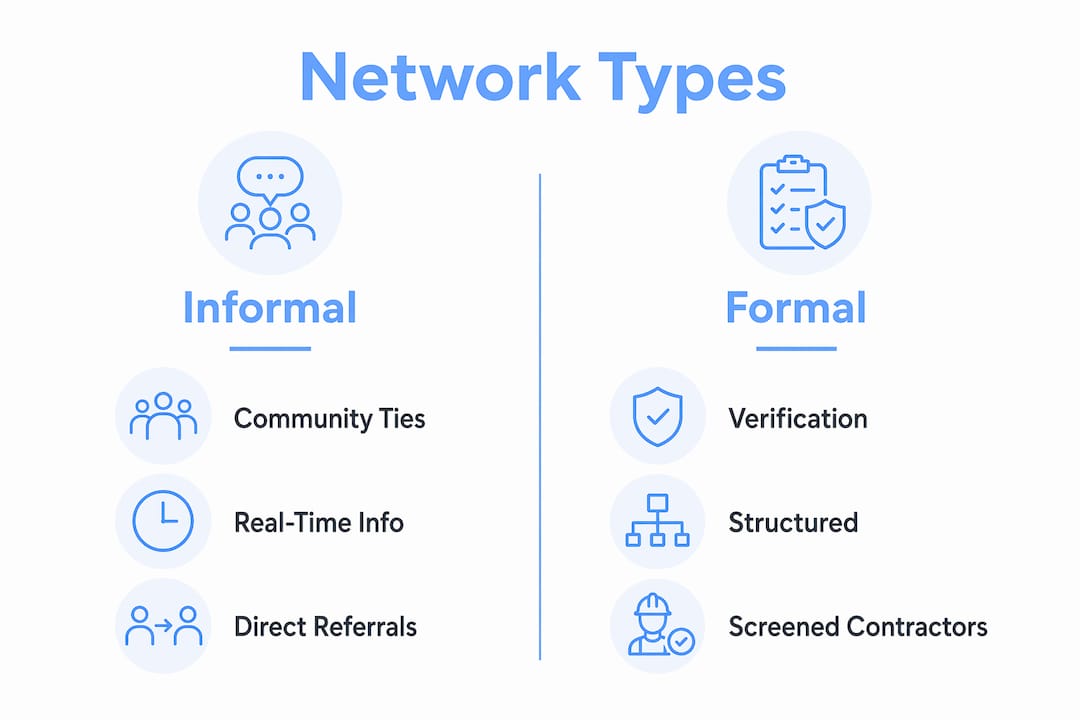
Informal vs. formal local contractor networks: what is the difference?
Not all local networks operate the same way. Texas homeowners and property managers encounter two distinct types: informal community networks and formal verified programs. Each has real advantages and real limitations.
Informal networks are built on community ties, neighborhood associations, social media groups, and direct referrals. They move information quickly and reflect genuine lived experience. A post in a local Facebook group for a Dallas neighborhood can generate a dozen contractor recommendations within hours. The limitation is consistency. Informal networks carry no screening standard. A contractor recommended by a friend may lack current insurance, have unresolved complaints with the Texas State Board of Plumbing Examiners, or have no experience with your specific project type.
Formal networks address that gap through structured onboarding and verification. The Trusted Texas Contractor Network includes over 100 contractors across 30 Texas counties and is linked to homeowner financing programs. Contractors in that network are screened before listing. That screening creates a baseline of trust that informal referrals cannot guarantee.
| Feature | Informal network | Formal verified network |
|---|---|---|
| Speed of information | Fast, real-time | Moderate, structured |
| Screening standard | None, varies by source | Defined criteria, documented |
| Insurance verification | Homeowner must confirm | Verified at onboarding |
| Financing program links | Rarely | Often included |
| Geographic coverage | Neighborhood or city level | County or statewide |
| Best use case | First lead generation | Final vetting and selection |
The most effective approach combines both. Use informal networks to generate a shortlist of candidates. Then apply formal verification steps, including insurance checks, permit history, and reference calls, before signing any contract.
Pro Tip: Search for your county’s participation in the Trusted Texas Contractor Network before posting your project. If your county is covered, that list gives you a pre-screened starting point. You can learn more about formal contractor networks and how they work for Texas homeowners before you start.
How do local networks influence collaboration and subcontractor management?
General contractors on residential projects rarely work alone. A bathroom remodel in Houston or a roof replacement in San Antonio typically involves a general contractor coordinating multiple specialty trades: plumbers, electricians, tile setters, and waterproofing specialists. General contractors typically coordinate 15–25 specialty subcontractors across a project. The strength of a GC’s local subcontractor network directly determines whether your project stays on schedule.
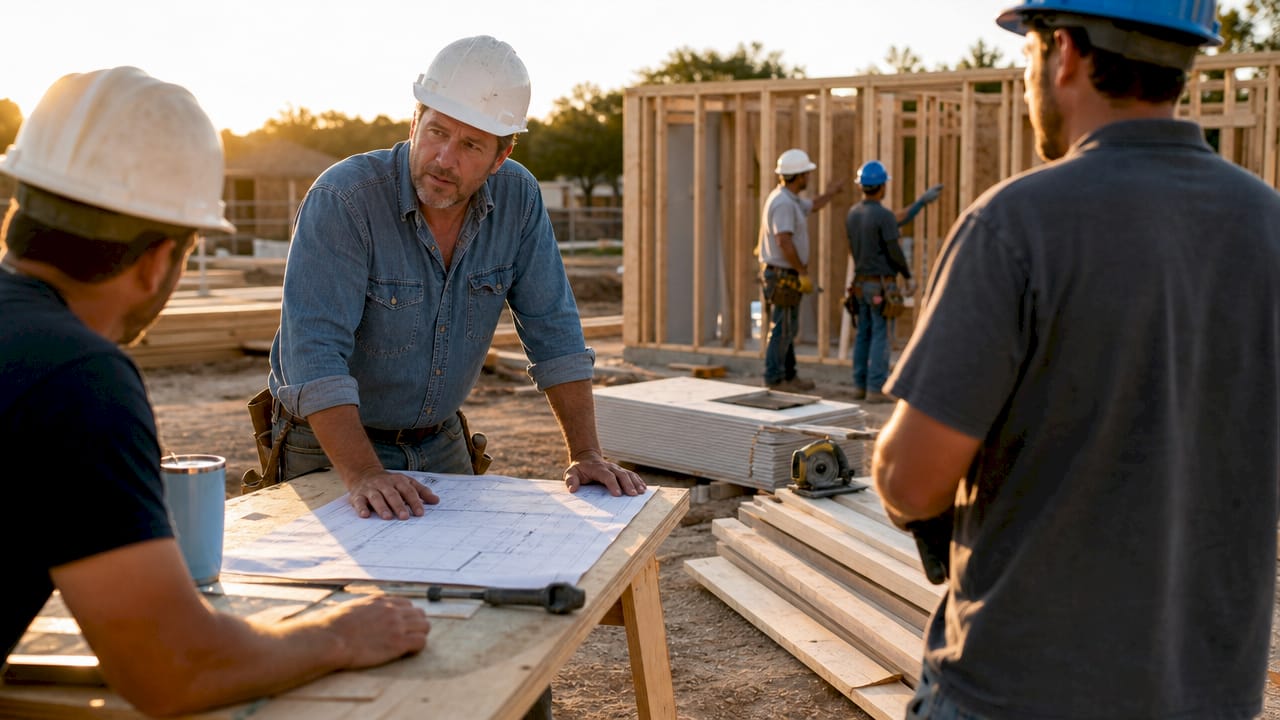
This is where the impact of local networks becomes operational, not just social. A general contractor with deep local ties can call a trusted electrician on short notice when a scheduling conflict arises. A contractor without those ties scrambles, and your project stalls. Local subcontractor ecosystems are fragile. Turnover among specialty trades is common, and a GC who relies on a thin network faces real risk when a sub drops out mid-project.
As a homeowner or property manager, you can assess this risk directly. Ask your prime contractor these questions before signing:
- Which specific subcontractors do you plan to use for this project?
- How long have you worked with each of them?
- What is your backup plan if a subcontractor becomes unavailable?
- Have you completed similar projects with this same crew in the last 12 months?
Strong subcontractor networks reduce project risk from subcontractor turnover or failure. A GC who can answer those questions with specific names and recent project examples has a real local network. One who gives vague answers probably does not.
Collaboration in contracting also affects material procurement and scheduling. Local subcontractors who have worked together before communicate more efficiently. They know each other’s timelines, flag conflicts early, and resolve disputes without pulling you into every disagreement. That coordination saves time and reduces cost overruns on your project.
What procurement strategies enhance the benefits of local networks?
Procurement strategy determines whether you get the full benefit of local networks or only a fraction of it. For homeowners and property managers, procurement means how you structure your project scope, how you solicit bids, and how you evaluate proposals. Small adjustments in each area can significantly increase the quality of local contractor participation.
-
Design your scope to match local contractor capacity. Avoid bundling too many trades into a single contract. A combined roofing, electrical, and HVAC scope may exclude smaller local firms that specialize in one trade. Breaking the scope into reserved lots lets you match each portion to the best local specialist.
-
Request local references explicitly. When soliciting bids, specify that references must be from projects completed in the same Texas county or metro area. This filters for contractors with active local networks and relevant permitting experience.
-
Weight local network verification in your evaluation criteria. Score bids not only on price but on the quality of local references, permit history, and subcontractor relationships. A bid that is 10% higher from a contractor with three verified local references often delivers better value than the lowest price from an unknown firm.
-
Use social value as a selection factor. Place-based procurement approaches reduce risk aversion and support local economies by structuring contracts with reserved lots and social value requirements. Applying this principle at the homeowner level means choosing contractors who hire local labor, source materials locally, and reinvest in the community.
-
Leverage digital platforms that reflect local networks. Platforms that aggregate verified local contractor data give you a structured view of local network strength. They surface reviews from homeowners in your area, not just national averages.
The connection between local networks and procurement is direct. Homeowners who structure their procurement process to favor local network participation get better contractor matches, faster project starts, and stronger accountability throughout the project.
Key takeaways
Local networks in contracting deliver the most value when homeowners combine community referrals with formal verification, structured procurement, and direct questions about subcontractor relationships.
| Point | Details |
|---|---|
| Local networks reduce risk | Bonding capital and community accountability lower transaction costs and improve contractor reliability. |
| Combine informal and formal networks | Use community referrals to build a shortlist, then verify credentials through formal programs like the Trusted Texas Contractor Network. |
| Subcontractor depth matters | Ask your GC for specific sub names and backup plans before signing any contract. |
| Procurement design amplifies network benefits | Break scopes into trade-specific lots and weight local references in your bid evaluation. |
| References must match your project | Confirm references are the same trade, completed within 6–12 months, and in the same local permitting environment. |
Why I think most homeowners underuse their local networks
Most Texas homeowners treat local networks as a starting point and then abandon them the moment they get a bid. That is a mistake. The network does not stop being useful after you have a list of names. It is most valuable during the verification stage, when you can ask people who have actually worked with a contractor whether they would hire them again for the same type of project.
The common pitfall is treating a referral as a guarantee. A neighbor’s glowing recommendation for a deck contractor tells you nothing about that same contractor’s electrical work or permit compliance in a different county. Referrals should always be validated with formal documentation to mitigate risks. I have seen homeowners skip insurance verification because a trusted friend vouched for a contractor. That shortcut creates real liability exposure.
The other mistake is ignoring formal networks entirely. The Trusted Texas Contractor Network exists precisely because informal referrals have limits. Screened programs give you a baseline that community word-of-mouth cannot. Combining both is not redundant. It is thorough. You can read more about selecting reliable contractors in Texas to build a complete vetting process.
My honest advice: ask your network for names, then treat every name as a lead to investigate, not a hire to confirm. The homeowners who get the best contractors are the ones who use their community connections to open doors and then do the verification work to walk through the right one.
— Devin
Bidwolf connects Texas homeowners with verified local contractors
Finding a reliable contractor in Texas is faster when you have a platform that reflects real local network data. Bidwolf is a digital marketplace where Texas homeowners and property managers post renovation and repair projects, then receive competitive bids from vetted, license-verified local professionals.
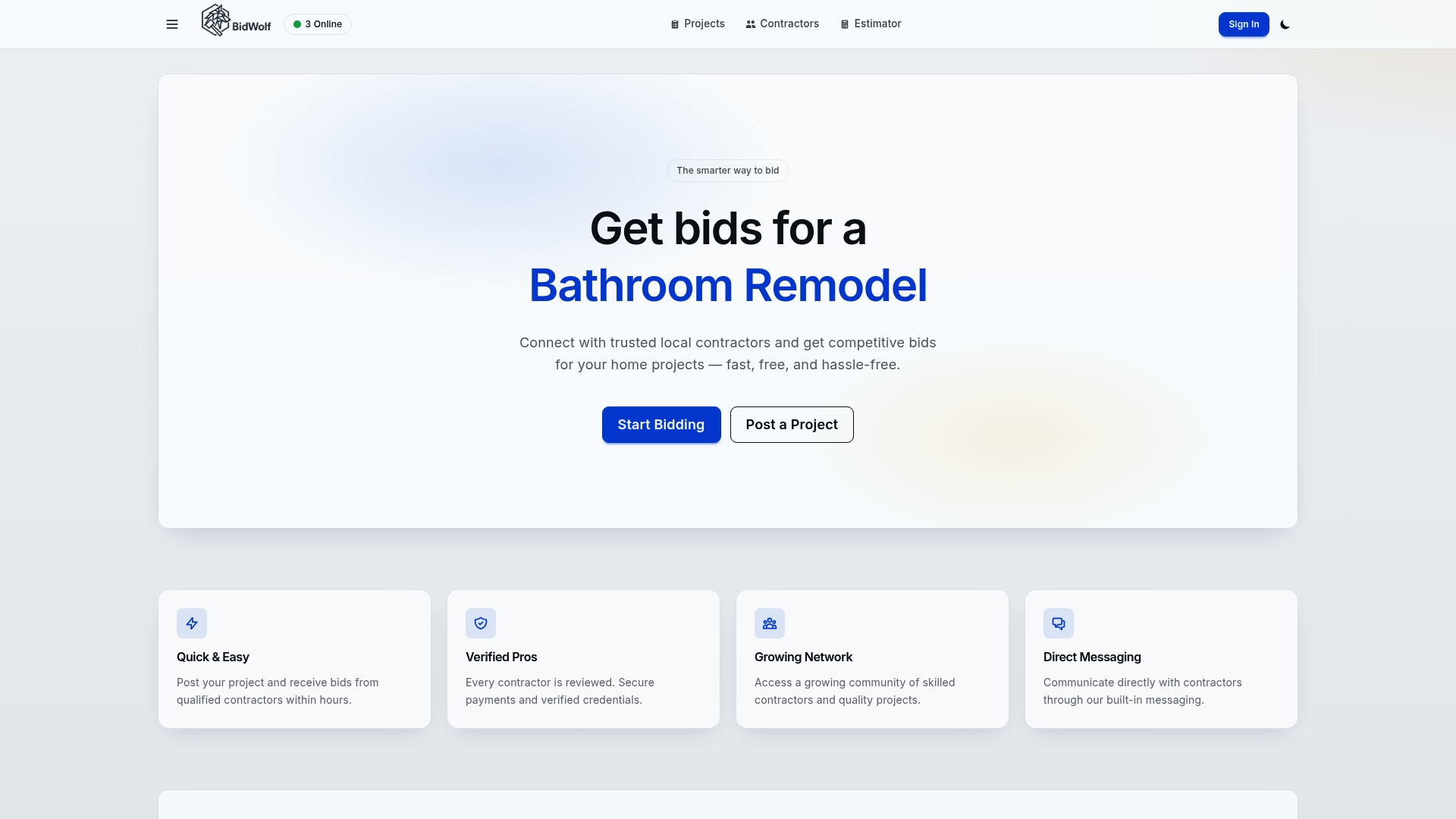
Bidwolf verifies contractor credentials, surfaces user reviews from homeowners in your area, and lets you compare bids side by side with built-in messaging for direct communication. Every contractor in the Bidwolf network has been screened for documentation and local project history. You can find verified local contractors by trade and location, or post your project to receive competitive bids from qualified pros in your Texas market. Bidwolf puts the benefits of community networks and formal verification in one place.
FAQ
What is the role of local networks in contracting?
Local networks in contracting provide homeowners with trusted referrals, performance information, and accountability structures that formal advertising cannot replicate. They reduce the time and cost of vetting contractors by surfacing real community experience.
How do I verify a contractor referral from my local network?
Confirm the contractor carries current insurance, has pulled permits on similar recent projects, and can provide at least three references from the same trade completed within the last 6–12 months in your local area.
What is the Trusted Texas Contractor Network?
The Trusted Texas Contractor Network is a formal verified program that includes over 100 screened contractors across 30 Texas counties, linked to homeowner financing programs. It provides a structured alternative to informal community referrals.
Why does subcontractor network strength matter for my project?
General contractors coordinate 15–25 specialty subcontractors on a typical residential project. A GC with strong local subcontractor relationships reduces the risk of delays caused by trade turnover or scheduling failures.
How can I use procurement strategy to get better local contractors?
Break your project scope into trade-specific portions, require local references in your bid solicitation, and score bids on verified local network quality, not just price. This approach increases the quality of contractor participation and reduces project risk.