

Finding Local Tradespeople: a Texas Homeowner's Guide
TL;DR:
- Verifying licenses, securing multiple bids, and using milestone-based contracts are essential steps for Texas homeowners hiring local tradespeople. Building trust through referrals, thorough credential checks, and clear communication helps ensure reliable project outcomes. Local accountability driven by community reputation ultimately offers more protection than simply choosing the lowest bid.
Finding reliable local tradespeople means verifying credentials, comparing at least three bids, and securing a written contract before any work begins on your Texas home. This finding local tradespeople guide covers every step Texas homeowners need, from confirming a contractor’s state license to structuring milestone payments that protect your investment. The stakes are real: unlicensed work can void your homeowner’s insurance, create code violations, and leave you with no legal recourse. Follow the steps in this guide and you will hire with confidence every time.
What credentials should Texas homeowners verify before hiring?
License verification is the non-negotiable first step in any guide to hiring tradespeople in Texas. The state regulates different trades through different agencies, and each has its own lookup tool. The Texas State Board of Public Accountancy License Lookup lets you confirm a professional’s license status by name or license number. For electricians, plumbers, and HVAC technicians, the Texas Department of Licensing and Regulation (TDLR) maintains a separate searchable database. Roofing contractors in Texas are not required to hold a state license, which makes insurance verification even more critical for that trade.

The difference between a licensed and unlicensed tradesperson is not just a technicality. Licensed professionals have passed trade-specific exams, carry continuing education requirements, and are subject to disciplinary action if they perform substandard work. Unlicensed workers carry none of those accountability mechanisms. Redfin recommends treating license, bonding, and insurance verification as non-negotiable minimums before any further evaluation begins.
Insurance verification deserves its own step. A tradesperson can show you a certificate of insurance that expired last month or was issued for a different job. Always call the insurance provider listed on the certificate and confirm the policy is active and covers the type of work you are hiring for. This single phone call takes five minutes and can save you from a six-figure liability claim if a worker is injured on your property.
Some Texas municipalities add a layer of local registration on top of state licensing. Cities like Austin and Houston require contractors to register with the city before pulling permits. Check your city’s building department website before you finalize any hire.
Here is a quick credential checklist to work through for every candidate:
- Confirm trade-specific license through the relevant Texas state agency database
- Verify bonding status, which protects you if the contractor fails to complete the job
- Call the insurer directly to confirm active general liability and workers’ compensation coverage
- Check for city or county registration requirements in your municipality
- Ask for the contractor’s physical business address, not just a phone number
Pro Tip: Request the certificate of insurance naming you as an additional insured for the duration of the project. This gives you direct standing to file a claim if something goes wrong.
How do you find reliable contractor recommendations?
Consumer Reports confirms that referrals from friends, neighbors, and real estate agents are the most reliable starting point for finding trusted tradespeople. A neighbor who recently had their roof replaced or bathroom remodeled has firsthand knowledge of how a contractor communicates, handles problems, and delivers on their promises. Real estate agents are particularly valuable sources because their professional reputation depends on recommending contractors who perform consistently.
Local Facebook groups and Nextdoor communities are useful for gathering names quickly, but treat them as a lead generation tool rather than a vetting tool. A glowing post from one neighbor does not replace a license check or a reference call. The same applies to online marketplace platforms like Angi and Thumbtack. These platforms offer broad exposure to local tradespeople, but workers self-report credentials on many of them, which means the homeowner still carries the responsibility of independent verification.
When you evaluate online reviews, look for patterns rather than individual data points. A contractor with 47 reviews averaging 4.6 stars, where the negative reviews consistently mention the same issue (say, poor cleanup or slow response to warranty calls), is telling you something specific and useful. One negative review buried in 80 positive ones is far less informative. Pay attention to how the contractor responds to negative reviews. A professional, solution-focused response signals accountability. A defensive or dismissive response signals the opposite.
Here is how to build a strong candidate list before you start making calls:
- Ask two or three neighbors who have completed similar projects in the past 12 months
- Contact a local real estate agent, even if you are not buying or selling, and ask for their preferred contractor list
- Search your city’s permit records to identify contractors who have pulled permits in your neighborhood recently, which confirms they work legally
- Use local Facebook groups and Nextdoor to collect names, then independently verify every name you gather
- Check the Better Business Bureau (BBB) profile for any contractor you are seriously considering, noting complaint history and resolution patterns
The checklist-driven vetting process that includes reference checks, qualification verification, multiple quotes, and communication style assessment dramatically reduces the risk of substandard work. Skipping even one step in that sequence is where most homeowner hiring mistakes originate.
What are the best practices for bids and contracts in Texas?
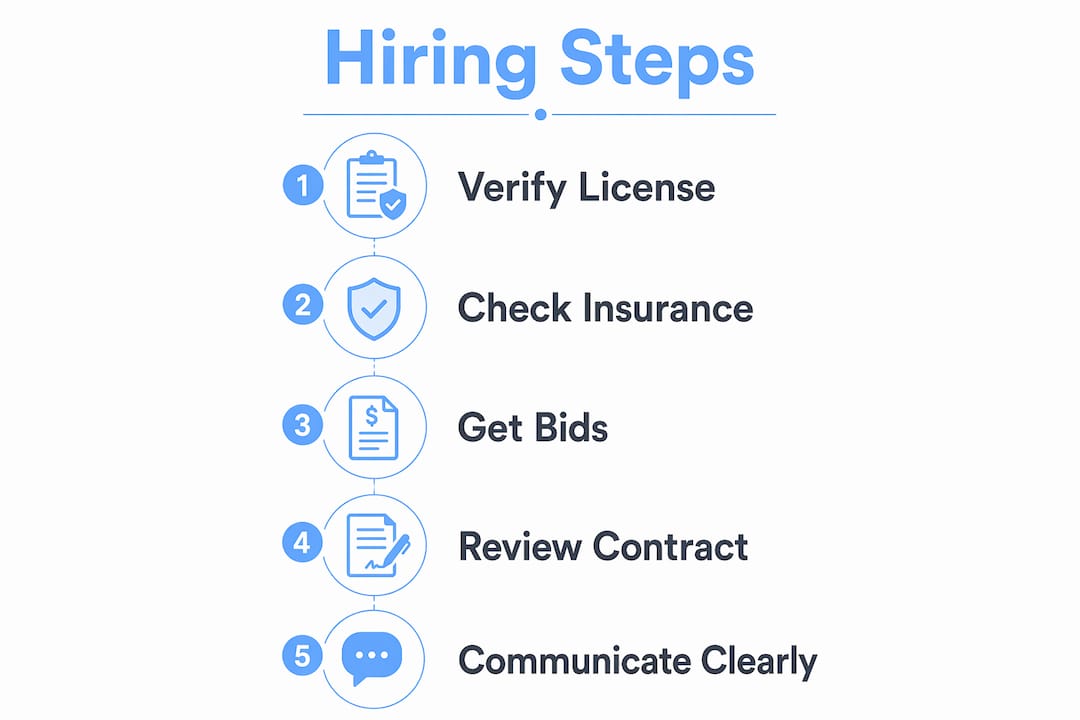
Getting at least three comparable bids is the standard recommendation for a reason. It gives you a market-rate baseline, exposes outliers on both ends of the price spectrum, and forces each contractor to think carefully about scope. The lowest bid is not automatically the best choice. A bid that comes in 30% below the other two usually means the contractor has underestimated the scope, plans to use lower-grade materials, or intends to make up the difference through change orders later.
To compare bids accurately, follow this sequence:
- Write a detailed scope of work before you contact any contractor. Include the specific materials you want, the areas of the home affected, and any access restrictions.
- Send the identical scope document to all three contractors so you are comparing the same job, not three different interpretations of a vague request.
- Ask each contractor to itemize labor and materials separately in their quote. This makes it easy to spot where costs differ and why.
- Request a project timeline with specific milestones, not just a start and end date.
- Ask each contractor how they handle unexpected conditions and change orders. Their answer tells you more about their professionalism than the price itself.
Pro Tip: When reading a quote, look for what is not listed. If a bathroom remodel quote does not mention tile removal, debris disposal, or permit fees, those costs will appear later as change orders. Ask each contractor to confirm their quote is all-inclusive or to list exclusions explicitly.
Once you select a contractor, the written contract is your primary legal protection. TriStar Built advises using milestone-based payment structures, written contracts that outline materials, timeline, and warranty terms, and verifying insurance directly with the insurer before signing. A payment structure tied to completed milestones, rather than a calendar schedule, keeps the contractor financially motivated to stay on track.
Here is a comparison of payment structures to understand the risk profile of each:
| Payment structure | Risk level | Best use case |
|---|---|---|
| Large upfront payment (50%+) | High | Avoid for most projects |
| Calendar-based installments | Medium | Short projects under two weeks |
| Milestone-based payments | Low | Recommended for all major renovations |
| Payment on completion only | Medium | Small jobs under $1,000 |
The contract should also include a change-order clause that requires written approval from you before any additional work or cost is added. Precise job scope and timeline terms in the contract reduce disputes and enable scheduling reliability. Without a change-order clause, verbal agreements during the project can become expensive misunderstandings.
How should you evaluate and communicate with tradespeople during a project?
Clear communication from day one sets the tone for the entire project. Agree on a single point of contact on both sides, establish how often you expect updates (daily for large projects, at each milestone for smaller ones), and decide on the preferred communication channel, whether that is text, email, or a platform with built-in messaging. Respectful, clear communication correlates directly with timely scheduling and quality results. Contractors prioritize clients who are organized, responsive, and easy to work with.
Consumer Reports recommends asking tradespeople to explain completed work and inspecting it immediately after each phase. Do not wait until the entire project is finished to raise concerns. A tiling issue caught after the first bathroom is complete is a one-room fix. The same issue discovered after three bathrooms are done is a much larger conversation. Walk through each completed phase with the contractor before authorizing the next milestone payment.
Here are the communication and evaluation practices that produce the best outcomes:
- Schedule a brief daily check-in for projects lasting more than a week, even if it is just a five-minute walkthrough
- Document everything in writing. If you agree to a change verbally, follow up with a text or email confirmation the same day
- Photograph completed work at each milestone before it is covered by the next phase, such as plumbing before drywall goes up
- Address concerns directly and promptly. Waiting until the end of a project to raise issues gives the contractor less opportunity to correct them
- Pay on time when milestones are met. Contractors remember reliable clients and prioritize their future projects
Being an organized, communicative client also gives you leverage when things go wrong. A contractor who has been paid on schedule and treated professionally is far more likely to address a warranty issue quickly than one who had a contentious project experience. For tips on communicating effectively throughout a renovation, the approach is the same whether you are managing a kitchen remodel or a roof replacement.
Key takeaways
Hiring trusted local tradespeople in Texas requires license verification, multiple bids, a milestone-based contract, and proactive communication at every project phase.
| Point | Details |
|---|---|
| Verify credentials first | Confirm trade-specific licenses through Texas state agency databases before any other step. |
| Use referrals as a starting point | Friends, neighbors, and real estate agents provide the most reliable initial leads. |
| Get three comparable bids | Use an identical scope document for all quotes to make apples-to-apples comparisons. |
| Use milestone-based payments | Tie payments to completed work phases, not calendar dates, to protect your investment. |
| Inspect work at each phase | Walk through completed work before authorizing the next payment or phase to catch issues early. |
Why local accountability matters more than a low price
I have seen Texas homeowners make the same mistake repeatedly: they find a contractor through a national platform, skip the license check because the profile looks polished, and accept the lowest bid because the savings seem significant. Six months later, they are dealing with a failed inspection, a contractor who has moved on, and a repair bill that exceeds the original project cost.
Local contractors with established community ties offer something a low-price outsider cannot: accountability. A contractor who lives and works in your city has a reputation to protect in that community. Their next job is likely two streets over. That proximity creates a level of professional motivation that no contract clause can fully replicate.
The credential verification steps in this guide are not bureaucratic box-checking. They are the mechanism by which you confirm that a person is who they say they are and carries the financial protection you need if something goes wrong. Texas licensing oversight varies significantly by trade, which means the burden falls on you as the homeowner to do the work that some states do automatically.
My strongest advice: treat the contract negotiation as a window into how the contractor operates. A professional who pushes back on milestone payments, resists putting change-order terms in writing, or cannot provide a current certificate of insurance is showing you exactly how they will behave when a problem arises mid-project. The contract conversation is free information. Use it.
— Devin
Find verified Texas contractors with BidWolf
Searching for trusted local tradespeople across Texas does not have to mean hours of phone calls and credential checks done from scratch.
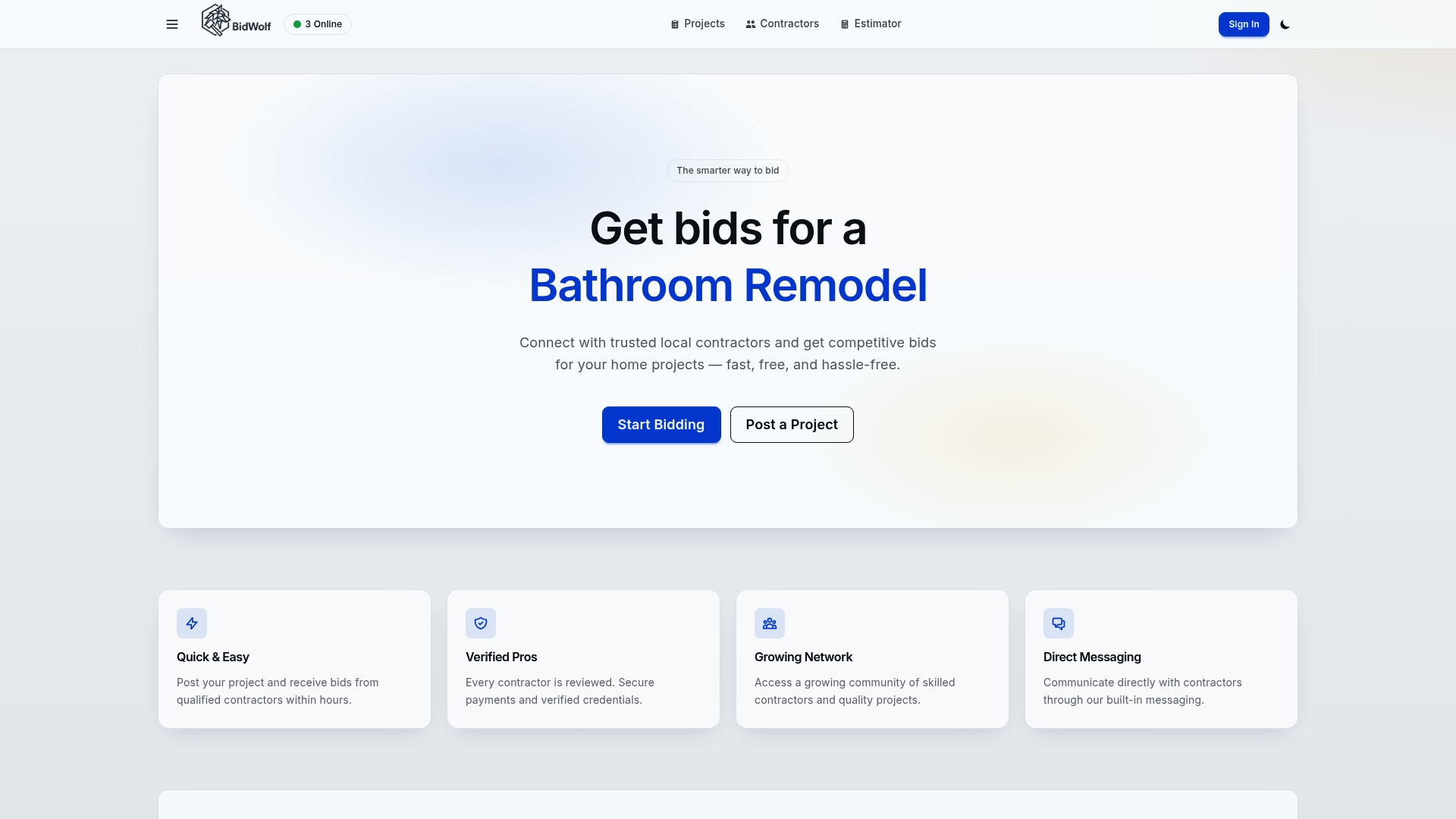
BidWolf connects Texas homeowners directly with license-verified local contractors who bid competitively on your specific project. Post your renovation or repair project on BidWolf, receive multiple bids from vetted professionals, and compare credentials, reviews, and pricing in one place. The platform’s built-in messaging keeps all communication documented, and secure payment tools support milestone-based structures. Find local contractors in your Texas city today, or post your project and let qualified tradespeople come to you.
FAQ
How do I verify a contractor’s license in Texas?
Use the Texas Department of Licensing and Regulation (TDLR) online database for trades like electricians, plumbers, and HVAC technicians. For other professions, search the relevant state board’s license lookup tool by name or license number.
How many bids should I get for a home project?
Get at least three bids using an identical written scope of work. Comparing three quotes focused on apples-to-apples scope and clear terms prevents pricing surprises and helps you identify outliers.
What should a contractor contract include?
A contract should include a detailed scope of work, itemized materials, a project timeline with milestones, a milestone-based payment schedule, a change-order clause requiring written approval, and warranty terms. TriStar Built recommends verifying insurance directly with the insurer before signing.
Are online platforms like Angi or Thumbtack reliable for finding tradespeople?
These platforms are useful for generating a list of candidates, but workers self-report credentials on many of them. Always verify licenses, bonding, and insurance independently before hiring anyone found through an online marketplace.
What is the safest payment structure for a home renovation?
Milestone-based payments tied to completed project phases carry the lowest risk for homeowners. Avoid paying more than 10 to 15 percent upfront, and never pay the final installment until you have inspected all completed work and confirmed it meets the agreed scope.