
How to Negotiate Project Contracts for Homeowners
TL;DR:
- Homeowners can protect themselves from disputes by carefully preparing and negotiating clear project contracts.
- Defining precise scope, setting objectives, and verifying terms in writing ensures a smoother renovation process.
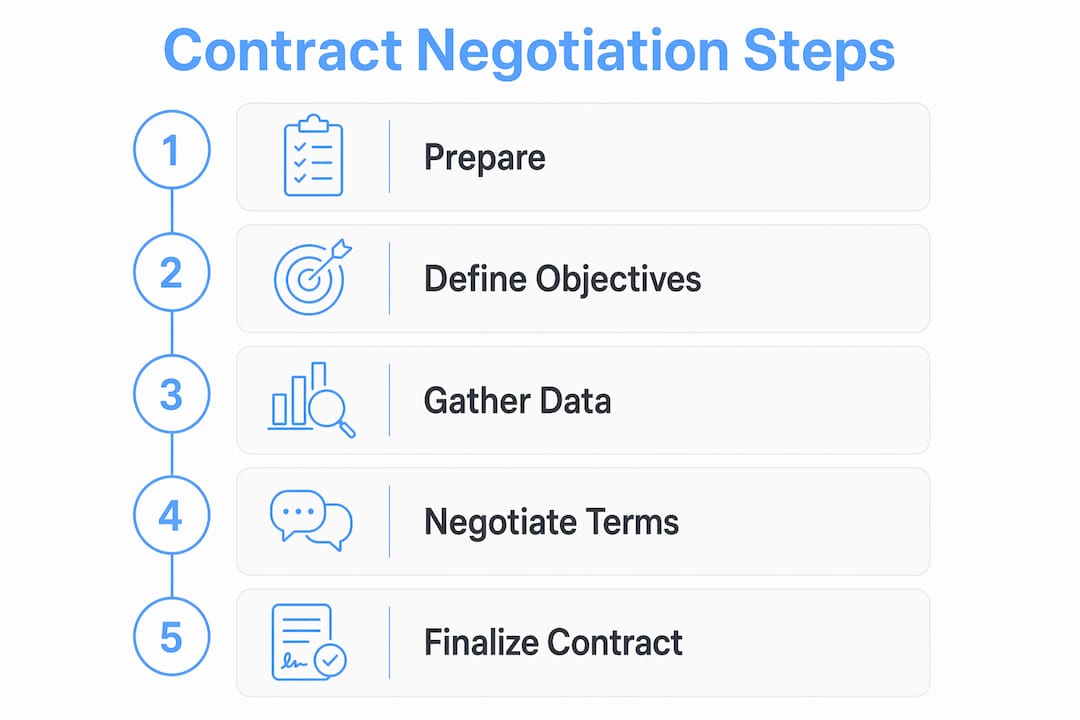
Negotiating a project contract is the process of reaching a written agreement with a contractor that defines scope, price, timeline, and responsibilities before any work begins. Homeowners who know how to negotiate project contracts protect themselves from cost overruns, vague deliverables, and disputes that derail renovations. The good news: you do not need a law degree to negotiate well. You need clear goals, market data, and a structured approach. This guide covers every step, from setting your walk-away point to verifying the final signed document.
What do you need to prepare before negotiating a home project contract?
Preparation is the single biggest factor in contract negotiation outcomes. Homeowners who walk into a contractor meeting without a clear position accept whatever terms they are offered.

Define your objectives and walk-away point
Start by identifying your must-haves, preferred terms, and tradeable items. Must-haves are non-negotiable: a fixed completion date, licensed workers, or a specific material brand. Preferred terms are things you want but could adjust, such as a payment schedule. Tradeable items are concessions you can offer in exchange for something more valuable.
Establishing your BATNA (Best Alternative to a Negotiated Agreement) before any conversation prevents you from accepting a bad deal under pressure. Your BATNA is simply your best option if this contractor negotiation fails. For a bathroom remodel, your BATNA might be a second contractor who quoted $2,000 less. Knowing that number gives you real leverage.
Pro Tip: Write your must-haves, preferred terms, and tradeables on a single sheet before meeting any contractor. Sharing a simplified version of this list signals that you are organized and serious, which often improves the contractor’s offer.
Gather market data and cost comparisons
Price claims carry weight only when backed by numbers. Research what similar projects cost in your area using resources like fair bidding benchmarks before you sit down to talk. Collect at least two or three competing bids so you can cite real figures.
Citing market data is more effective than expressing frustration about price. Telling a contractor that comparable roofing jobs in your zip code run 15% lower is a factual position. Saying “that feels too expensive” is not.
Build a trade table
A trade table is a simple document that maps your priorities against potential concessions. It lists what you are willing to give up (a faster start date, a smaller deposit hold-back) and what you want in return (a lower total price, a longer warranty). Preparing a trade table lets you make strategic concessions rather than random ones.
| Term | Your Priority | Tradeable? |
|---|---|---|
| Fixed completion date | Must-have | No |
| Payment schedule | Preferred | Yes, with conditions |
| Material brand | Preferred | Yes, if quality matches |
| Warranty length | Must-have | No |
| Project start date | Tradeable | Yes |
Align with anyone else in your household on which terms are truly unacceptable before the meeting. Disagreeing in front of a contractor weakens your position immediately.
How do you clarify and lock in project scope during negotiation?
Scope clarity protects you more than price negotiation does. A low bid with a vague scope almost always costs more in the end because contractors can interpret undefined work however they choose.
Why scope beats price in contract talks
Most renovation disputes trace back to scope ambiguity, not price disagreement. When a contract says “paint the living room,” it leaves open the number of coats, the brand of paint, the ceiling, the trim, and the prep work. Each of those gaps is a potential dispute. Precise deliverables and acceptance criteria protect you from contractors who interpret scope loosely during execution.
Defining explicit acceptance criteria before signing also reveals contractor intentions. A contractor who resists spelling out exactly what “complete” looks like may be planning to interpret the scope in their favor later.
Vague vs. precise scope language
The difference between a weak contract and a strong one often comes down to a few sentences. Compare these two scope descriptions for a kitchen tile installation:
| Vague scope | Precise scope |
|---|---|
| “Install kitchen floor tile” | “Install 200 sq. ft. of 12x12 porcelain tile, including removal of existing vinyl, leveling of subfloor, and grout sealing. Work complete when tile is level, grout is sealed, and no cracked tiles remain.” |
| “Paint exterior of home” | “Apply two coats of Sherwin-Williams Duration exterior paint to all siding, trim, and fascia boards. Prep includes pressure washing and spot priming. Work complete when no peeling, drips, or missed areas are visible.” |
| “Repair roof leak” | “Identify and repair leak source above master bedroom. Replace damaged shingles and underlayment within a 10 sq. ft. area. Provide 2-year workmanship warranty in writing.” |
Precise language removes the contractor’s ability to declare a job “done” before you agree it is.
Pro Tip: Ask the contractor to read the scope section aloud and confirm each item. If they hesitate on any line, that hesitation tells you exactly where the dispute will happen later.
Lock in change control before work starts
Change control processes must be defined in the contract before any work begins. A change control clause requires both parties to sign off on any modification to scope, cost, or timeline before the contractor proceeds. Without it, a contractor can add charges after the fact and claim you verbally approved the change. Change mechanisms are far harder to negotiate once disagreements have already started.
What are the best strategies for negotiating with contractors?
Effective contract negotiation with a contractor is a structured conversation, not a confrontation. The goal is a signed agreement both parties will honor, not a win at the other person’s expense.
Lead with data, not emotion
Present your position with numbers and facts. If a plumbing quote comes in above your research range, say: “I have two other quotes for this scope that are lower. Can you walk me through what drives your price?” That question invites explanation rather than defensiveness. Concrete data improves negotiation outcomes because it shifts the conversation from opinion to evidence.
Offer multiple options to move talks forward
Presenting a single counteroffer puts the contractor in a yes-or-no position. Presenting three alternatives creates room to move. For example:
- Option A: Accept the original price with an extended 3-year warranty added.
- Option B: Reduce the total price by 8% with a payment schedule tied to milestones.
- Option C: Keep the price but phase the project into two stages to reduce your upfront cost.
Offering multiple options shifts the dynamic from adversarial to collaborative. The contractor is no longer defending a position. They are choosing between paths forward. This approach consistently produces better outcomes than single-demand negotiations.
Confirm agreement aloud on each key point
After discussing each major term, state it back clearly: “So we agree the project completes by march 15, the total price is $14,500, and any change to scope requires a written change order. Is that right?” This technique forces the contractor to confirm or correct each point before you move on. Hesitation on any item signals a problem worth addressing now, not after signing.
Pro Tip: Take brief notes during the conversation and email a summary to the contractor the same day. That written record becomes your reference if the signed contract language later seems inconsistent with what was discussed.
Handle objections with trade-offs, not concessions
When a contractor pushes back on a term, do not simply drop your position. Offer a trade instead. If they resist a milestone-based payment schedule, offer to increase the first payment in exchange for a written completion guarantee. Aligning payment terms with milestones shares the incentive for on-time delivery between both parties. It also reduces your financial risk if the project stalls. Good homeowner-contractor communication throughout this process keeps the relationship productive.
How do you finalize and verify a home project contract?
A verbal agreement is not a contract. The finalization phase converts your negotiated terms into a signed, enforceable document you can actually use.
Lock agreements before project milestones
Lock key agreements at least 2 business days before any project milestone or start date. Last-minute contract reviews create pressure to sign without reading carefully. Give yourself time to compare the written document against your negotiation notes.
Read the contract in full, not just the price and timeline sections. Pay close attention to:
- Payment terms: Are payments tied to specific milestones or just calendar dates?
- Change order process: Does any scope change require written approval from both parties?
- Warranty terms: What is covered, for how long, and what voids the warranty?
- Exit clause: Under what conditions can either party terminate the contract, and what are the financial consequences?
- Escalation path: Who do you contact if a dispute arises, and what is the response timeframe?
Contracts must specify escalation paths with named contacts and response timeframes. A contract that says “disputes will be resolved by mutual agreement” gives you no real recourse. A contract that names a specific process, such as mediation within 10 business days, gives you a clear path forward.
Read back the summary and get clear consent
Before signing, read a one-sentence summary of each major term aloud and ask the contractor to confirm. This technique, recommended by negotiation practitioners, forces both parties to state any remaining doubts before the document is signed. Silence after a summary is not consent. You want a verbal “yes” on each point.
Pro Tip: If the contractor presents a contract that differs from what you negotiated, mark every discrepancy in writing before signing anything. Do not assume the differences are minor or unintentional.
Create a one-page contract summary
Legal contracts are dense and rarely referenced during daily project management. A concise contract summary created after signing gives you a quick-reference document for the life of the project. Include the completion date, payment schedule, key milestones, change order process, and warranty terms on a single page. Post it somewhere visible or save it to your phone. When a contractor says “that was not in the contract,” you can check in seconds.
Secure payment practices aligned with your contract milestones reduce the risk of paying for work that has not been completed. Never pay the full amount upfront. Structure payments so the final installment is large enough to matter to the contractor.
Key Takeaways
Homeowners who prepare clear objectives, define precise scope, and verify every term in writing before signing are the ones who avoid costly renovation disputes.
| Point | Details |
|---|---|
| Set your BATNA first | Know your walk-away point before any contractor meeting to avoid accepting a bad deal under pressure. |
| Scope clarity beats price | Define measurable deliverables and acceptance criteria to prevent disputes more effectively than negotiating price alone. |
| Use data, not emotion | Back every position with market comparisons or competing bids to shift conversations from opinion to evidence. |
| Offer multiple options | Present three alternatives instead of one counteroffer to move talks from adversarial to collaborative. |
| Verify before signing | Lock agreements 2 business days before milestones and create a one-page summary for daily project reference. |
Why the boring contract clauses matter most
Most homeowners focus almost entirely on price during contractor negotiations. That is understandable. Price is visible, concrete, and easy to compare. But in my experience, the clauses that feel tedious to read are exactly the ones that determine whether a project ends well or badly.
Exit terms, change control language, and escalation paths look like legal boilerplate until the project hits a problem. Then they become the only thing that matters. I have seen homeowners with perfectly negotiated prices end up paying thousands extra because their contract had no written change order requirement. The contractor added scope verbally, the homeowner agreed verbally, and there was no paper trail when the bill arrived.
The other mistake I see constantly is treating the negotiation as a zero-sum battle. Homeowners sometimes go in determined to “win,” which puts the contractor on the defensive from the first conversation. Treating contracts as foundations for working relationships rather than battles produces better outcomes. A contractor who feels respected is more likely to flag problems early, absorb small overruns, and prioritize your job when scheduling gets tight.
My honest advice: spend as much time on the scope and change control sections as you do on price. Ask the contractor to walk you through what happens if the project runs over budget or over schedule. Their answer tells you more about how the project will go than any number in the contract. And if you want to select service providers who are already vetted and accustomed to clear contract terms, that preparation pays off before the negotiation even starts.
— Devin
Bidwolf makes it easier to negotiate with confidence
Getting multiple bids is the fastest way to build negotiating leverage. When you know what three different contractors charge for the same scope, you walk into every conversation with real data.
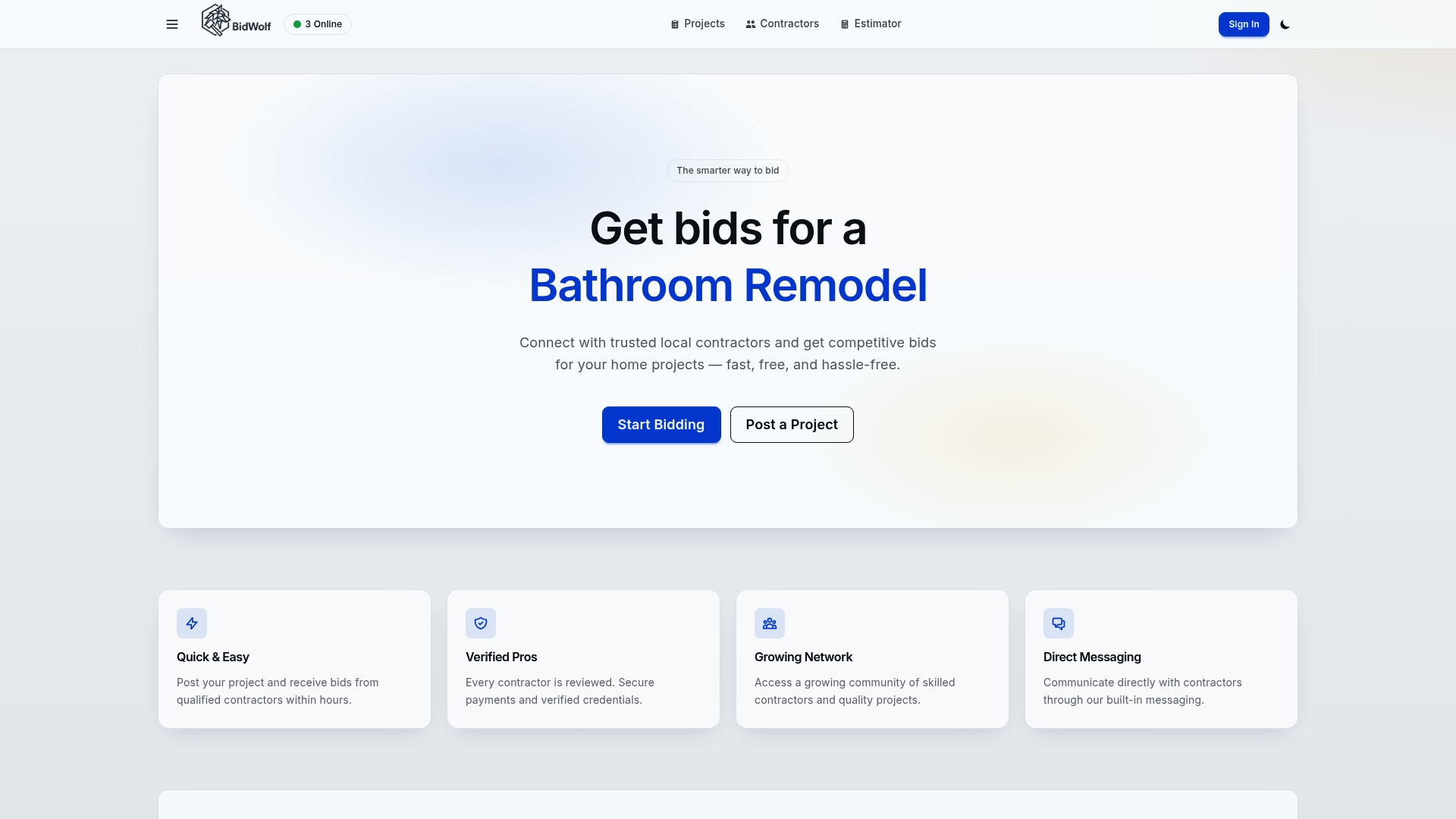
Bidwolf connects homeowners with vetted local contractors across Texas who compete for your project. You post your project, receive competitive bids, and compare them side by side. The platform’s built-in messaging lets you clarify scope and discuss terms directly before signing anything. Verified credentials and transparent pricing mean you are not negotiating blind. Post your project on Bidwolf today and get bids from qualified local pros, or find local contractors in your area to start comparing your options.
FAQ
What is BATNA in contract negotiation?
BATNA stands for Best Alternative to a Negotiated Agreement. It is your best option if the current negotiation fails, and knowing it prevents you from accepting unfavorable terms under pressure.
How do I avoid scope creep in a home renovation contract?
Define precise deliverables and acceptance criteria in writing before signing, and include a change control clause that requires written approval for any scope modification. Contractors who resist detailed scope language often plan to interpret it loosely later.
When should I lock in a contract before a project starts?
Lock all agreements at least 2 business days before the project start date or any major milestone. This gives you time to review the written document against your negotiation notes without last-minute pressure.
What should a one-page contract summary include?
A contract summary should list the completion date, payment schedule, key milestones, change order process, warranty terms, and escalation contacts. Keep it accessible throughout the project so you can reference it quickly.
Is it normal to negotiate payment terms with a contractor?
Yes. Aligning payment terms with project milestones is a standard and effective practice. It shares the incentive for on-time delivery between both parties and reduces your financial risk if the project stalls.