

Homeowner-Contractor Communication: a Clear Guide

TL;DR:
- Effective homeowner-contractor communication, including clear documentation and proactive updates, prevents costly misunderstandings during renovation projects. Utilizing structured principles like centralizing records, asking precise questions, and establishing a communication rhythm leads to smoother collaboration. Platforms like Bidwolf facilitate transparent, organized interactions, significantly reducing project delays and disputes.
Most homeowners go into a renovation expecting the work to speak for itself. Then the contractor shows up on the wrong day, installs the wrong tile, or adds $4,000 to the bill without warning. The ability to explain homeowner-contractor communication clearly and practically is what separates a smooth project from a costly disaster. Poor communication costs construction companies roughly $400,000 per year on average. That cost flows downstream. You pay it in rework, delays, and budget overruns. This guide gives you the tools to stop that cycle before it starts.
Table of Contents
- Key takeaways
- Common communication challenges between homeowners and contractors
- Key principles for effective homeowner-contractor dialogue
- Practical communication strategies for homeowners
- Managing changes, delays, and conflicts
- My take on what actually goes wrong
- How Bidwolf supports clearer project communication
- FAQ
Key takeaways
| Point | Details |
|---|---|
| Document everything in writing | Verbal agreements disappear; follow every conversation with a written summary to protect both parties. |
| Scope changes cost more mid-project | Change orders run 15–30% higher than original costs, so communicate changes early and in detail. |
| Proactive updates build trust | Contractors who share problems first rate 2.1x higher on communication than those who let clients find issues themselves. |
| Use the playback technique | Restate what you heard in your own words and ask for confirmation before work begins or changes are approved. |
| Centralize all project records | Keep messages, photos, contracts, and approvals in one place so there is no dispute about who said what. |
Common communication challenges between homeowners and contractors
Understanding where communication breaks down is the first step toward fixing it. The issues are rarely dramatic. They are small gaps that compound into real problems.
Vague instructions and missed expectations
A homeowner says “make it look modern.” A contractor hears “use gray cabinets and chrome fixtures.” Three weeks later, the homeowner expected something else entirely. Vague language is the most common source of frustration in home renovation communication. The solution is specificity. Reference photos, product model numbers, finish samples, and written scope documents eliminate ambiguity before a single nail is driven.
Contractors also define progress differently than clients. A builder marks a kitchen remodel as 60% complete after framing and rough plumbing are done. The homeowner walks in and sees an empty shell and feels like nothing has happened. Aligning your definition of “progress” at the start prevents this frustration entirely.
Scheduling and timing gaps
Contractors juggle multiple projects. If you assume they will always be on-site when you expect them without confirming in advance, you will be disappointed. Scheduling misunderstandings lead to idle days where trades are waiting on each other, which runs up your costs. Ignoring the project build sequence causes rework and labor inefficiencies that add real money to your final bill.
Scope changes and cost surprises
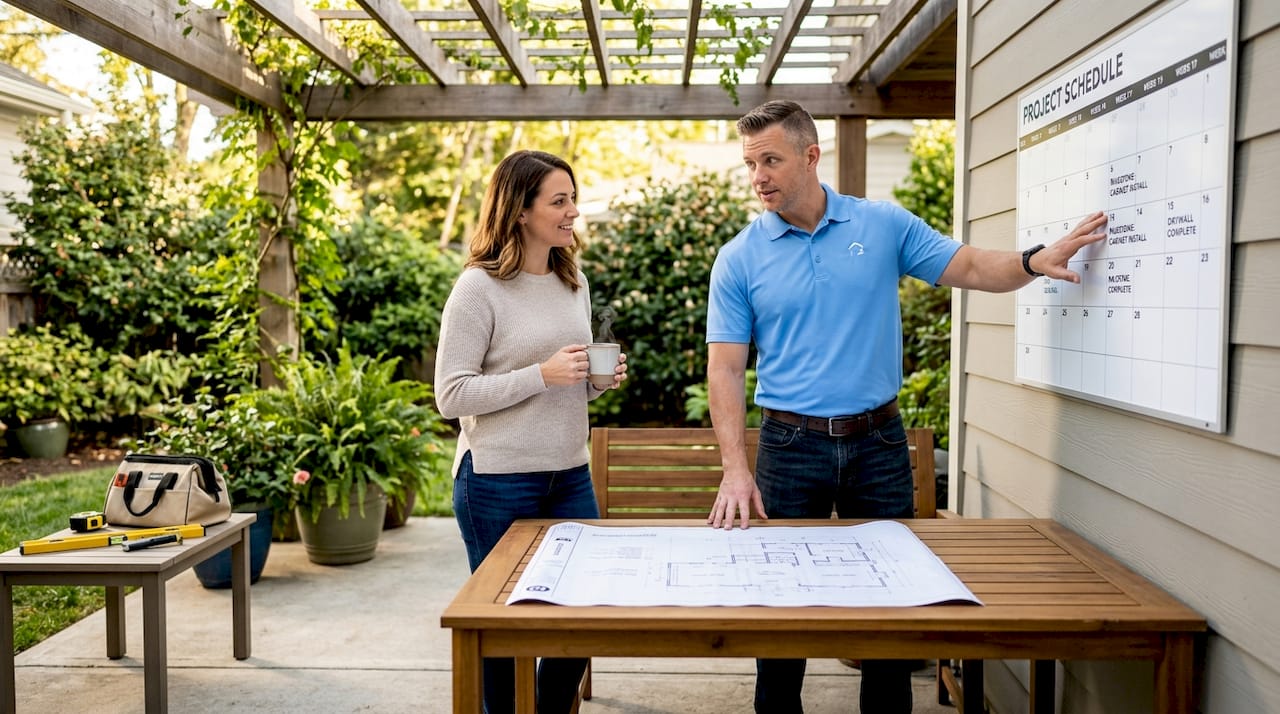
Change orders are one of the most contentious topics in any renovation. You decide you want under-cabinet lighting added after the electrician has already finished. That change will cost significantly more than it would have at the start. Mid-project scope changes typically run 15% to 30% higher than the original cost. Clear communication upfront about your wishlist, even items you are unsure about, gives the contractor a chance to price everything together.
Emotional tone and conflict traps
Renovations are stressful. When something goes wrong, it is easy to send a frustrated text or leave a sharp voicemail. That tone almost always makes resolution harder. Contractors are more likely to be defensive and less likely to problem-solve when they feel attacked. Keeping communication solution-focused, not blame-focused, gets better results every time.
Here is a quick breakdown of the most common communication pitfalls to watch for:
- Giving verbal-only approvals for design changes without any written record
- Assuming the contractor knows your preferences without stating them explicitly
- Waiting until a problem is severe before raising it
- Communicating through multiple channels (text, email, verbal) with no central record
- Letting small frustrations build until they become confrontations
Pro Tip: Every time you approve a change, send a follow-up text or email summarizing what was agreed. It takes 60 seconds and can save you thousands in disputes.
Key principles for effective homeowner-contractor dialogue
Effective contractor communication is not just about being polite or staying organized. There is a structure to it. When you understand the principles, the specific tactics make a lot more sense.
Transparency and centralized communication
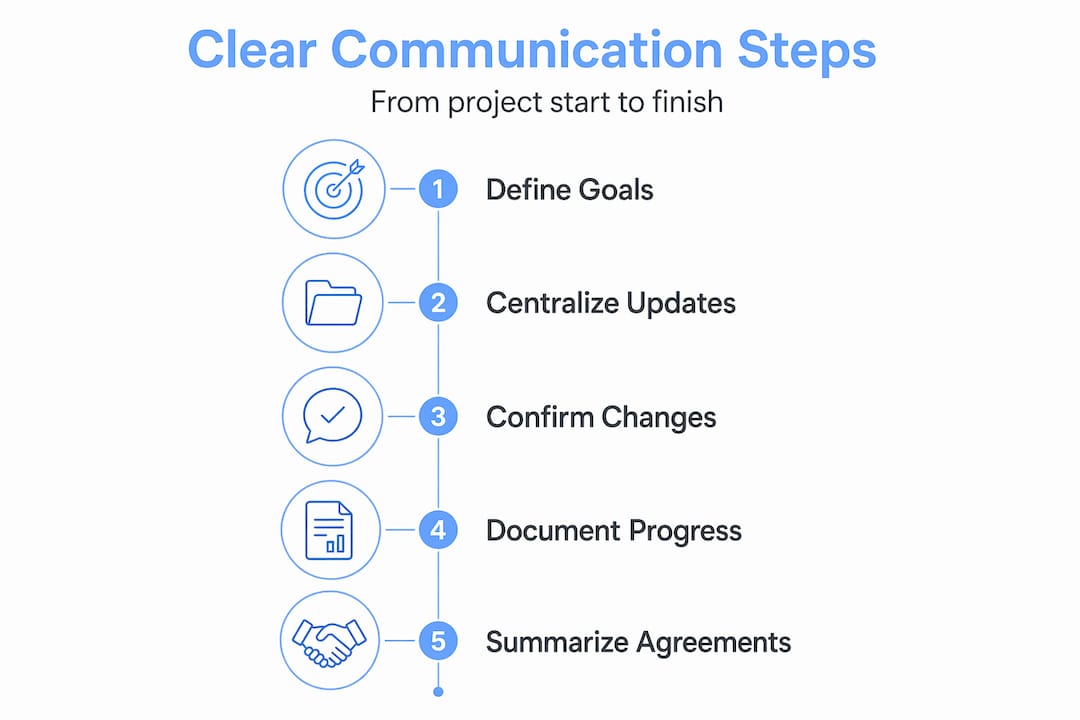
Fragmented communications through texts, emails, and verbal conversations without a centralized record create disputes. You need one place where everything lives. That might be a shared folder, a project management app, or a platform with built-in messaging. The format matters less than the consistency. Both you and your contractor should be able to review any commitment made on the project in under five minutes.
The three C’s: consultation, cooperation, coordination
This framework is used in commercial construction but applies equally well to residential renovation. Consultation means both parties share information freely before decisions are made. Cooperation means each party respects the other’s constraints and timeline. Coordination means you establish a clear process for how updates, approvals, and changes flow between you.
Most homeowner-contractor breakdowns happen when one of these three elements is missing. A contractor who never consults you on substitutions. A homeowner who does not cooperate with the build sequence. A project where no one has defined who approves what and how fast.
Defining progress and documenting agreements
The table below shows how approaching communication with and without these principles plays out in practice.
| Scenario | Without clear principles | With clear principles |
|---|---|---|
| Design change request | Verbal discussion, no follow-up | Written change order with cost and timeline impact |
| Progress update | Homeowner calls to check in | Contractor sends twice-weekly photo updates |
| Scheduling conflict | Homeowner finds out on the day | 48-hour advance notice with revised timeline |
| Dispute over scope | Competing recollections of verbal agreement | Written contract and message record reviewed |
| Material substitution | Contractor makes a call without asking | Contractor sends options and awaits written approval |
Pro Tip: Ask your contractor at the start of the project, “How do you prefer to communicate and how quickly do you respond?” This single question sets expectations on both sides and prevents a lot of the silence that creates anxiety.
Twice-weekly updates are considered optimal for residential projects. Clients who receive proactive updates rate their contractor’s communication 2.1 times higher than clients who have to ask for information. That number should tell you how much the rhythm of communication matters, not just the content.
Practical communication strategies for homeowners
Knowing the principles is one thing. Having a step-by-step approach for your actual project is what changes outcomes.
-
Set communication preferences on day one. Before work starts, agree on how and when you will communicate. Will you use email, a messaging app, or a platform like Bidwolf’s built-in messaging? How quickly is each party expected to respond? How often will you receive progress updates? Writing this down and including it in your initial project agreement removes ambiguity from the start.
-
Use the playback technique during conversations. After your contractor explains a plan or a change, restate it in your own words before the conversation ends. Something like: “So what I’m hearing is that the tile installation will start Monday, and you need me to confirm the grout color by Friday. Is that right?” The playback technique reduces misinterpretations during verbal exchanges and catches misunderstandings before they become problems. Follow every verbal agreement with a written summary sent the same day.
-
Learn about asking the right questions before hiring. Communication styles vary enormously between contractors. Some are excellent at documentation but slow to return calls. Others are responsive but informal. Knowing what you are getting into before you sign a contract saves friction later.
-
Centralize all project documentation. Create a single folder or project thread where you store the signed contract, all change orders, all approval texts or emails, material selections, and photos. When a dispute arises, and it might, you want to be able to resolve it with facts rather than competing memories. Centralized record keeping lets you review any commitment in minutes.
-
Leverage digital tools for real-time status. Client portals and project management platforms give both parties a live view of tasks, timelines, and approvals. Automated reporting workflows can reduce inbound status calls by 74% and save project managers over 40 hours per week. For a homeowner, that translates to fewer unanswered questions and less anxiety about where things stand.
-
Have a defined approval process for materials. Before any material is purchased, you should know who reviews options, who has final say, and how quickly approval is expected. A two-day approval window is reasonable for most decisions. State this upfront. Delays in your approval chain can push the entire project schedule back and cost you money in contractor wait time.
Pro Tip: Keep a dedicated email thread or chat group for the project. Forward any relevant texts or calls into that thread immediately after they happen. You will thank yourself if a dispute arises six weeks in.
Managing changes, delays, and conflicts
Even the best-planned renovation will hit unexpected moments. How you handle communication during those moments determines whether they become setbacks or disasters.
When a change comes up, whether from your side or the contractor’s, address it before any work proceeds. That means a written change order that describes the change, the revised cost, and the revised timeline. Never proceed on a verbal understanding alone for anything involving additional money or scope. The cost of a change order conversation is zero. The cost of a misunderstood verbal agreement can be thousands.
For delays, approach the conversation with practical questions rather than frustration. Ask what caused the delay, how long it is expected to last, and what the revised schedule looks like. Keep the focus on resolution, not accountability. Hard conversations are most productive in person, followed immediately by written follow-up to confirm what was agreed. A text-only approach for sensitive conversations often escalates tension because tone is easily misread.
Here are specific behaviors that keep communication healthy during project challenges:
- Schedule an in-person meeting with a clear agenda when a significant issue arises rather than trading messages back and forth
- State the problem factually without assigning blame: “The tile was installed in the wrong area” instead of “You ruined my bathroom”
- Give the contractor a chance to respond before deciding on a course of action
- Follow every in-person or phone conversation with a written summary of what was decided and who is responsible for what
- Request a revised project schedule in writing when a delay occurs so you have a documented baseline to work from
When it comes to scope changes, one of the most underused construction communication tips is simple: tell your contractor your full wishlist at the beginning, even the items you are unsure about. This lets them flag sequencing conflicts early and price potential additions before the trades are already on-site.
My take on what actually goes wrong
I’ve reviewed hundreds of renovation project outcomes, and the pattern is almost always the same. The homeowner assumed the contractor would “just get it.” The contractor assumed the homeowner would speak up if something was wrong. Neither party said what they actually meant, and both walked away from the project disappointed.
The biggest communication mistake I see homeowners make is not asking enough questions at the start. There is a social discomfort around seeming demanding or mistrustful. But asking your contractor how they handle scheduling conflicts, how they communicate material substitutions, and what their change order process looks like is not demanding. It is professional. Any contractor worth hiring will respect it.
What I’ve found is that the homeowners who get the best outcomes treat the project like a genuine partnership. They show up engaged. They review progress photos and give quick approvals. They raise concerns early instead of letting resentment build. And they document everything, not because they expect a dispute, but because clarity protects both parties.
The uncomfortable truth about building trust with contractors is that it requires you to do some of the work. You cannot outsource the communication. You can use better tools and processes, but the underlying discipline of staying informed, asking clear questions, and following up in writing is entirely on you. The contractors I’ve seen praised most in reviews are not always the ones with the fanciest tools. They are the ones whose clients felt informed every step of the way. And those clients made that possible by staying engaged.
— Devin
How Bidwolf supports clearer project communication
Managing a renovation is genuinely easier when you have the right platform behind you. Bidwolf was built specifically to address the friction points in homeowner-contractor communication by giving both parties a centralized, transparent space to work from.
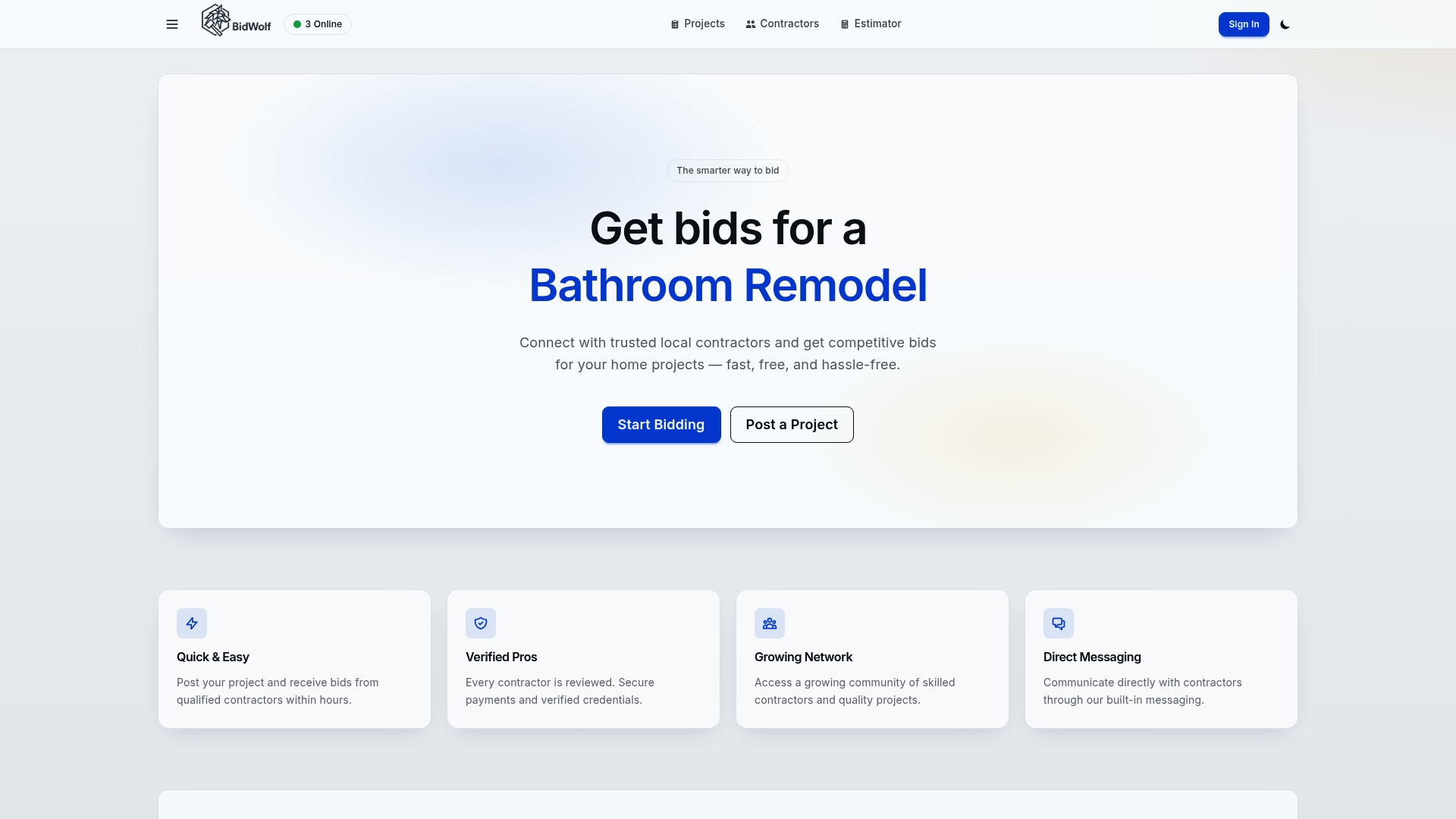
When you post a project on Bidwolf, you start the communication right. You describe your project in detail, set your expectations, and receive competitive bids from vetted, verified local contractors. Every bid arrives through the platform, which means you have a documented record of what each contractor proposed and at what price. No more comparing handwritten quotes or trying to remember who said what on the phone.
Bidwolf’s built-in messaging keeps all homeowner-contractor dialogue in one place. You are not chasing texts across three apps or searching through email threads for that approval you sent two weeks ago. The conversation history lives with the project. That single feature eliminates one of the most common sources of renovation disputes. If you want to see how direct messaging speeds up renovations, the difference is significant when all communication runs through one channel.
The platform’s mobile app gives Texas homeowners real-time access to project updates, contractor messages, and document records from anywhere. Whether you are at work or out of town, you stay informed without needing to make a status call. Bidwolf also verifies contractor credentials, so you know the person you are communicating with is licensed and accountable before the first message is sent.
Ready to start your next project with clear communication from day one? Find local contractors on Bidwolf and get competitive bids from verified professionals in your area.
FAQ
What does homeowner-contractor communication involve?
Homeowner-contractor communication covers all information exchanged between a property owner and their hired contractor, including project scope, scheduling, approvals, change orders, and progress updates. Effective communication keeps both parties aligned and prevents costly misunderstandings.
How often should a contractor update me on project progress?
Twice-weekly updates are considered optimal for residential projects. Clients who receive proactive updates rate their contractor’s communication more than twice as highly as those who have to follow up themselves.
What is the playback technique in contractor conversations?
The playback technique means restating what you heard in your own words and asking the contractor to confirm accuracy before any work proceeds. It catches misinterpretations early and should always be followed by a written summary.
How do I handle a contractor who is not communicating?
Schedule a direct in-person conversation with a written agenda rather than escalating over text. State the issue factually, ask for a revised communication plan in writing, and document the agreement. If the pattern does not change, the contractor review history you checked before hiring will tell you whether this is a known pattern.
Why do scope changes cost more mid-project?
Because the relevant trades have already been sequenced and paid, adding work requires rescheduling and often rework. Mid-project scope changes typically run 15% to 30% higher than the same work would cost if included from the start.
Recommended
- How to communicate effectively with Texas contractors | BidWolf Blog
- Direct Messaging with Contractors Speeds Texas Renovations | BidWolf Blog
- Texas homeowner’s checklist: smart tips for choosing contractors | BidWolf Blog
- Contractor marketplaces: a complete guide for Texas homeowners | BidWolf Blog