

How Texas homeowners can ensure true bid transparency

TL;DR:
- Budget overruns frequently catch Texas homeowners unaware, often due to bid inconsistencies and incomplete documentation. True bid transparency demands detailed, standardized responses covering scope, inclusions, exclusions, allowances, assumptions, and payment terms to enable accurate comparison and avoid disputes. Implementing verified contractor insurance, clear documentation, and structured bidding processes helps protect your renovation budget and ensures accountability from the start.
Budget overruns catch Texas homeowners off guard every year, even when they did everything right by gathering multiple contractor bids. Three bids come in, prices look different, and you pick the middle one assuming it is a fair deal. Then the change orders start. The problem is rarely the contractors themselves. It is that most bids are not structured to be truly comparable, and most homeowners do not know what real transparency looks like until a costly dispute forces the lesson. This guide explains exactly what bid transparency means in practical terms, what to demand in writing, and how to protect your renovation budget from the start.
Table of Contents
- What bid transparency really means for Texas homeowners
- The anatomy of a transparent bid: What to ask for
- Common pitfalls: Hidden gaps and unclear allowances
- How to secure bid transparency: Documentation, insurance, and verification
- Comparing and deciding: Analyzing bids side-by-side
- The reality: When is “full transparency” too much?
- Next steps: Simplify bid transparency for your Texas project
- Frequently asked questions
Key Takeaways
| Point | Details |
|---|---|
| Define your scope first | Use a detailed, written project scope as the baseline for all bids you receive. |
| Insist on itemized bids | Require contractors to separate costs, allowances, and exclusions for true comparability. |
| Watch for hidden risks | Vague or lump-sum bids often lead to costly change orders later—demand clarity up front. |
| Verify insurance and documents | Always get a valid certificate of insurance and match every bid against your full requirements checklist. |
What bid transparency really means for Texas homeowners
Bid transparency is a term that gets used loosely. Most homeowners assume it simply means getting a detailed breakdown with a clear total price. That assumption leads to trouble. Real transparency means every factor that could affect final cost is documented, defined, and comparable across all bids you receive.
Think about what happens when you ask three contractors to bid on a bathroom remodel. Contractor A gives you a clean one-page price. Contractor B sends a five-page itemized document. Contractor C delivers a verbal walk-through followed by an email total. All three have different prices. Which one do you trust? Without a standardized request, you are not comparing three bids on the same project. You are comparing three different contractors’ interpretations of what your project even is.
Texas homeowners face a different bidding environment than the public sector. Texas public procurement frameworks referenced in the Texas Local Government Code Chapter 252, Chapter 262, and Texas Government Code Chapter 2269 require formal sealed bids, public openings, and awards to the lowest responsible bidder. Private residential projects have no such rules. There is no legal requirement for a contractor to itemize anything. That makes your documentation requirements the only protection you have.
Here is what real bid transparency requires for your home project:
- Defined scope of work: Exactly what tasks will be performed, in what order, and to what finish standard.
- Inclusions: What materials, labor, permits, and services are covered by the quoted price.
- Exclusions: What is specifically not included, so you know what additional costs you may face.
- Allowances: Placeholder dollar amounts for items not yet specified, such as tile or fixtures.
- Assumptions: Conditions the contractor is assuming to be true, such as no existing water damage behind walls.
- Payment and change order terms: When payments are due and how changes to scope will be priced.
When every bidder answers all six categories, you can streamline project bidding and actually compare what each contractor is offering. Without this structure, you are guessing.
“The lowest price is only a good deal if it includes the same scope as every other bid on the table. A number without context is not a bid. It is a guess.”
Homeowners who insist on this level of documentation before work begins are far less likely to face mid-project disputes or surprise invoices. The documentation creates accountability for both sides.
The anatomy of a transparent bid: What to ask for
Once you understand what transparency means, you need to know exactly what to request. Treating bid transparency as a documentation problem is the right mindset. Your job before collecting bids is to write a clear scope of work that every contractor must respond to using the same format.
A properly structured bid should cover every cost category in your project. Detailed estimates should separate labor, materials, equipment, and overhead clearly so you can track and audit costs at every stage. When those categories are broken apart, cost overruns become much easier to spot and challenge.
Here is what every transparent bid should include:
- Scope of work: Specific tasks listed by trade or phase, not a general description.
- Material specifications: Brand, grade, and model numbers where relevant, not just “tile” or “lumber.”
- Labor breakdown: Hours or phases attributed to each task or trade involved.
- Allowances: Clearly labeled dollar amounts with a description of what they cover and what they do not.
- Exclusions: A dedicated section listing everything the contractor will not supply or perform.
- Timeline: Estimated start date, phase milestones, and projected completion.
- Payment schedule: Deposit amount, progress payment triggers, and final payment terms.
- Change order policy: How price changes are authorized and documented in writing.
Pro Tip: Write your scope of work once, before you send requests to any contractor. Hand every bidder the same document and require them to respond to each item specifically. This forces apples-to-apples comparison from the start and makes it immediately obvious which contractors are thorough and which are cutting corners on detail.
Use a comparison table like this when reviewing bids:
| Bid component | Contractor A | Contractor B | Contractor C |
|---|---|---|---|
| Scope of work defined | Yes | Partial | No |
| Material specs included | Yes | Yes | No |
| Allowances labeled | Yes | No | No |
| Exclusions listed | Yes | Yes | No |
| Timeline provided | Yes | Yes | Partial |
| Change order policy | Written | Verbal | None |
| Payment schedule | Yes | Partial | No |
Any column with “No” or “Partial” entries signals that you need more information before that bid is comparable to the others. Review contractor bid examples to see what well-structured proposals look like in practice. You can also use a structured framework when you compare contractor bids across multiple Texas tradespeople.
Common pitfalls: Hidden gaps and unclear allowances
Even experienced homeowners get surprised by what slips through in poorly written bids. Some of these gaps are accidental. Some are not. Either way, they cost you money.

The most common source of budget overruns is allowances that are too low or too vague. An allowance is a placeholder amount the contractor uses when a material or product has not been selected yet. For example, a kitchen remodel bid might include a $2,000 allowance for countertops. If you end up choosing a countertop that costs $4,500 installed, you owe an additional $2,500 on top of the original quote. The bid was technically transparent about the allowance. But if you did not notice it, you may have accepted the bid believing $2,000 was the full countertop cost.
Lump-sum bids are another major risk area. When contractors bundle everything into a single total without itemizing, you have no way to know what is included until something goes wrong. Vague or lump-sum proposals require you to normalize allowances, exclusions, and timelines before you can reasonably compare them. This extra work falls entirely on you unless you require itemization upfront.
Watch out for these specific warning signs in any bid you receive:
- Vague material descriptions: “Standard fixtures” or “contractor-grade materials” with no brand, model, or grade specified.
- TBD line items: Any cost listed as “to be determined” without a corresponding allowance amount and description.
- Missing permit costs: Permits for electrical, plumbing, and structural work are real costs that should appear on every bid.
- No exclusions section: If a contractor does not list what they are NOT doing, you have no protection when disputes arise about who was supposed to handle a specific task.
- No change order process: A bid that does not explain how scope changes get priced and authorized in writing is an open invitation for unexpected charges.
- Overlapping scope assumptions: When two contractors assume they are each handling different parts of the same task, someone ends up doing it twice or not at all.
Pro Tip: When you spot a vague line item, do not ignore it. Ask the contractor to replace every “TBD” or “standard material” description with a specific product name, grade, or allowance amount before you sign anything. Learn the right questions to ask contractors so you are prepared to push back effectively.
The design-build approach used in some specialty projects like landscaping or additions can also affect how bids are structured. Review how design-build bidding differences apply to your specific project type, especially when a contractor is handling both design and construction under a single contract.
“Allowances are the single biggest driver of budget overruns on residential projects. If the allowance amount does not reflect what you actually plan to buy, the gap comes out of your pocket at the worst possible time.”
How to secure bid transparency: Documentation, insurance, and verification
Knowing what to watch for is only half the work. The other half is taking active steps to require the right information before any bids arrive. For Texas homeowners, that means making documentation and verification part of your hiring process from day one.
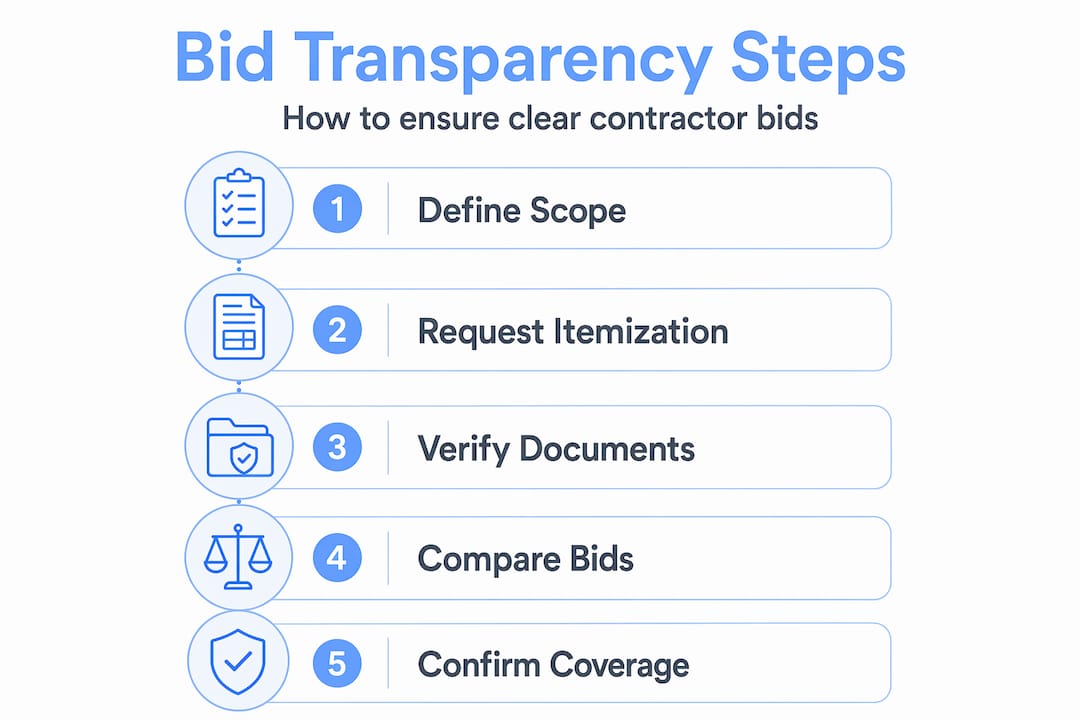
Start with insurance. Requesting a certificate of insurance directly from the issuer before you share project details is a standard recommendation for Texas homeowners. You need to verify both general liability coverage and workers’ compensation. If a worker is injured on your property and the contractor carries no workers’ compensation, you may be exposed to liability. Do not accept a contractor’s verbal assurance or a photocopy. Request the certificate directly from the insurance provider to confirm it is current and accurate.
Here is a complete verification checklist before you accept any bid:
- Confirm the contractor’s Texas license or registration status through the relevant state agency for their trade.
- Request a current certificate of insurance from the issuing agent, not just from the contractor.
- Check that liability coverage is sufficient for your project size.
- Verify workers’ compensation coverage if the contractor employs workers on site.
- Ask for references from Texas projects completed within the last two years.
- Search the contractor’s name and business with the Better Business Bureau and any local review platforms.
- Confirm the contractor pulls required permits for your specific project type.
Use this documentation checklist when reviewing each bid package:
| Document | Required before bid review | Required before signing contract |
|---|---|---|
| Certificate of insurance | Yes | Yes |
| License or registration | Yes | Yes |
| Itemized scope of work | Yes | Yes |
| Material specifications | Yes | Yes |
| Allowances listed | Yes | Yes |
| Exclusions section | Yes | Yes |
| Timeline with milestones | No | Yes |
| Payment schedule | No | Yes |
| Change order policy in writing | No | Yes |
| References provided | No | Yes |
Review our guide to hiring contractors securely for a full breakdown of the steps Texas homeowners should follow. You can also use the contractor selection checklist to stay organized throughout the process.
Comparing and deciding: Analyzing bids side-by-side
You have gathered your bids. Each one follows the format you requested. Now comes the most important step: evaluating what you actually have in front of you before making your final decision.
Surface price comparison is the most common mistake homeowners make at this stage. A bid that looks $3,000 lower than the competition may simply exclude tasks that the other bids include. When you account for the missing scope, the lower bid often costs more in the end. Bid comparability requires you to normalize each proposal against your original scope before any price comparison is meaningful.
Here is how to build an effective side-by-side comparison:
| Comparison category | Contractor A | Contractor B | Contractor C |
|---|---|---|---|
| Total bid price | $28,500 | $24,200 | $31,000 |
| Scope matches your request | Full | Partial | Full |
| Allowances total | $3,500 | $1,200 | $4,000 |
| Exclusions flagged | 2 items | 5 items | 1 item |
| Timeline provided | 6 weeks | 4 weeks | 7 weeks |
| Change order policy | Written | Verbal | Written |
| Warranty terms | 1 year | None stated | 2 years |
In the example above, Contractor B looks cheapest. But five exclusions and only $1,200 in allowances suggest a significantly narrower scope. The actual comparable cost of Contractor B’s proposal, once missing scope is added back in, could easily exceed Contractor A’s price.
Use this numbered checklist when making your final decision:
- Confirm every bid responds to your full original scope, line by line.
- Add up all allowances in each bid and compare them to realistic market costs for those items.
- List and price out each exclusion to understand the true out-of-pocket cost for each bid.
- Evaluate warranty terms and what they cover.
- Review each contractor’s proposed timeline against your actual schedule needs.
- Read change order policies and understand how each contractor handles scope additions.
- Contact references and ask specifically about budget accuracy and communication quality.
- Select the bid that best matches your full scope at the most realistic total cost.
You can use the structured approach described in our comparing contractor bids guide to make this process repeatable for any project size. The goal is always the best match for your full scope, not simply the lowest number on the page.
The reality: When is “full transparency” too much?
Here is something most guides will not tell you. Demanding exhaustive documentation from every contractor is not always the right move. There is a real cost to over-specifying your bid requirements, and smart homeowners need to know when to apply pressure and when to ease up.
Some transparency practices like requiring fully itemized pricing for every labor hour and material unit are homeowner-friendly but add significant administrative burden to the contractor. A seasoned, busy contractor with a full schedule may simply decline to bid on your project if your documentation requirements exceed what the job size justifies. That means you could lose access to the best people in your market.
The real purpose of bid transparency is not perfect paperwork. It is preventing costly misunderstandings. Every documentation requirement you impose should map directly to a real risk on your project. Large projects with complex scopes, significant allowances, or multiple subcontractors justify the most rigorous documentation. A simple fence replacement or minor repair does not require the same level of detail.
We believe the most practical approach to transparency is risk-proportionate. Ask for full itemization and written change order policies on projects over a certain dollar threshold. For smaller work, focus on the three highest-risk areas: scope clarity, allowances, and insurance verification. This protects you without making you an unattractive client.
Platforms that standardize bid requests help both sides of this equation. They reduce the contractor’s administrative workload while giving you the comparability you need. The goal is practical transparency, not theoretical perfection. Check out the bidding platform benefits that come from using a structured digital environment for your bid requests.
Insisting on documentation you do not actually need does not make you a better informed buyer. It makes the process slower and may cost you access to the most qualified contractors in your area.
Next steps: Simplify bid transparency for your Texas project
Getting bid transparency right requires the right structure from the start. That means standardized requests, verified contractors, and tools that make side-by-side comparison easy. BidWolf was built specifically to solve these problems for Texas homeowners.
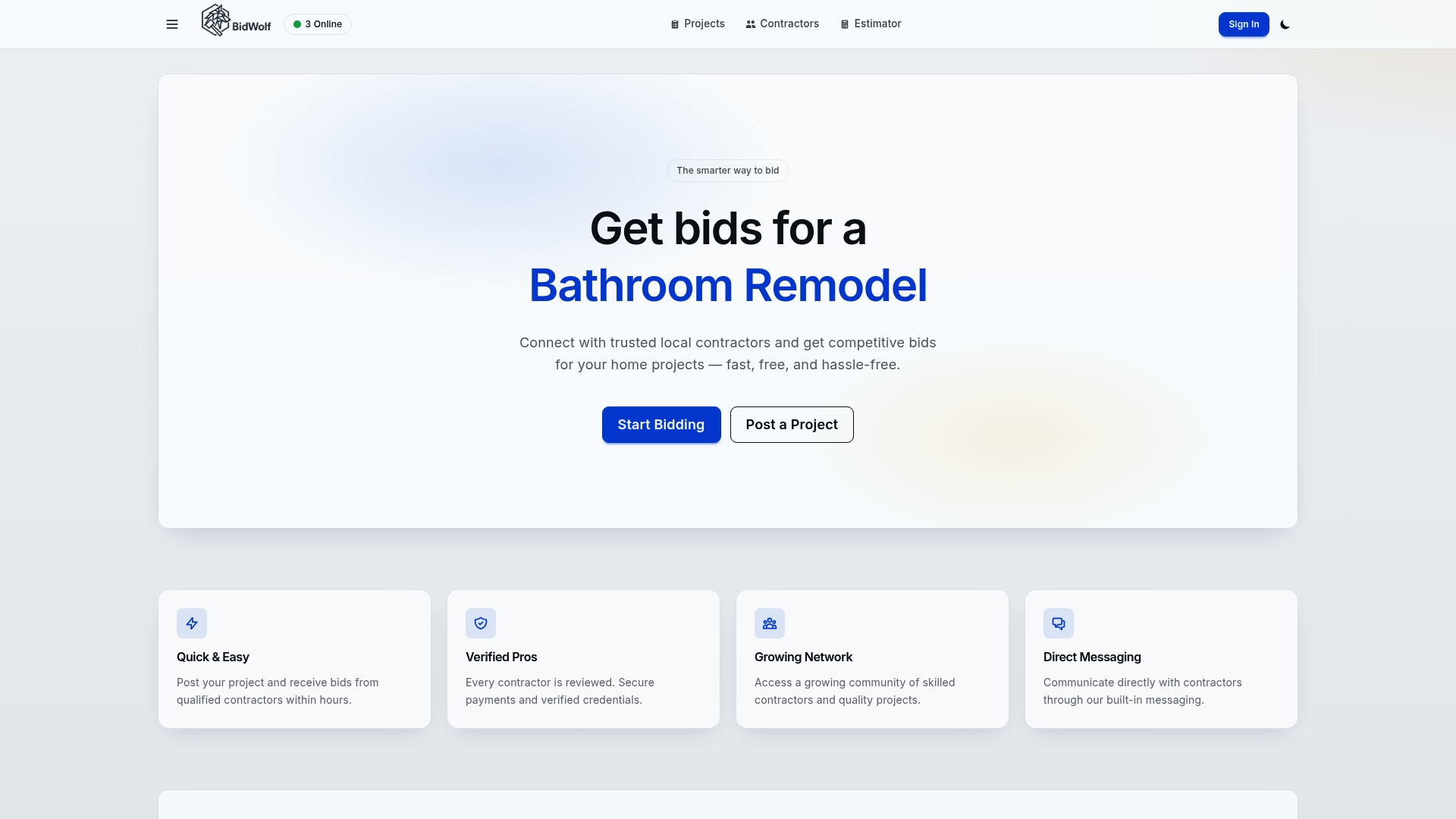
When you post your project for bids on BidWolf, your project details go out to a network of vetted, license-verified local contractors who respond with structured proposals. Every contractor in the network has been verified for credentials and insurance, which removes the manual verification steps that slow most homeowners down. The platform’s built-in comparison tools let you review bids side by side, message contractors directly, and manage your project from your phone. You find vetted Texas contractors in your area without the guesswork. The entire process is designed to give you the transparency this guide describes, without requiring you to build the system yourself.
Frequently asked questions
What should I always include in a contractor bid request?
Always include a detailed scope of work, inclusions and exclusions, allowances, timeline, payment schedule, and change order terms. Treating bid transparency as a documentation problem from the start ensures every contractor responds on equal footing.
How do I tell if a contractor bid is actually transparent?
A transparent bid is fully itemized and documents all inclusions, exclusions, and allowances so you can compare it line by line. Detailed estimates that separate labor, materials, equipment, and overhead are the clearest sign of a well-structured proposal.
Are lump-sum bids risky for Texas homeowners?
Yes. Lump-sum proposals make it impossible to normalize allowances, exclusions, and timelines for fair comparison, and they are more likely to result in change orders that blow your budget.
Should I verify contractor insurance before getting bids?
Yes. Requesting a certificate of insurance directly from the issuing agent confirms that liability and workers’ compensation coverage are current before you share any project details or sign any agreement.
Recommended
- Top benefits of contractor bidding platforms for Texas homeowners | BidWolf Blog
- Winning contractor bid examples: secure quality projects in Texas | BidWolf Blog
- How to compare contractor bids for home projects in Texas | BidWolf Blog
- Texas homeowner’s checklist: smart tips for choosing contractors | BidWolf Blog