

Contractor Hiring Trends in 2026: What You Need to Know

TL;DR:
- The construction labor shortage in 2026 is driven by demographic shifts, rising costs, and a leadership gap, leading to longer wait times and higher project expenses. Contractor hiring models have shifted toward flexible, technology-driven solutions, such as squad-based teams and consolidated vendor management, to improve efficiency and reduce costs. Building early relationships, using vetted platforms, and prioritizing digital tools help homeowners and property managers secure quality contractors amid ongoing market tightness.
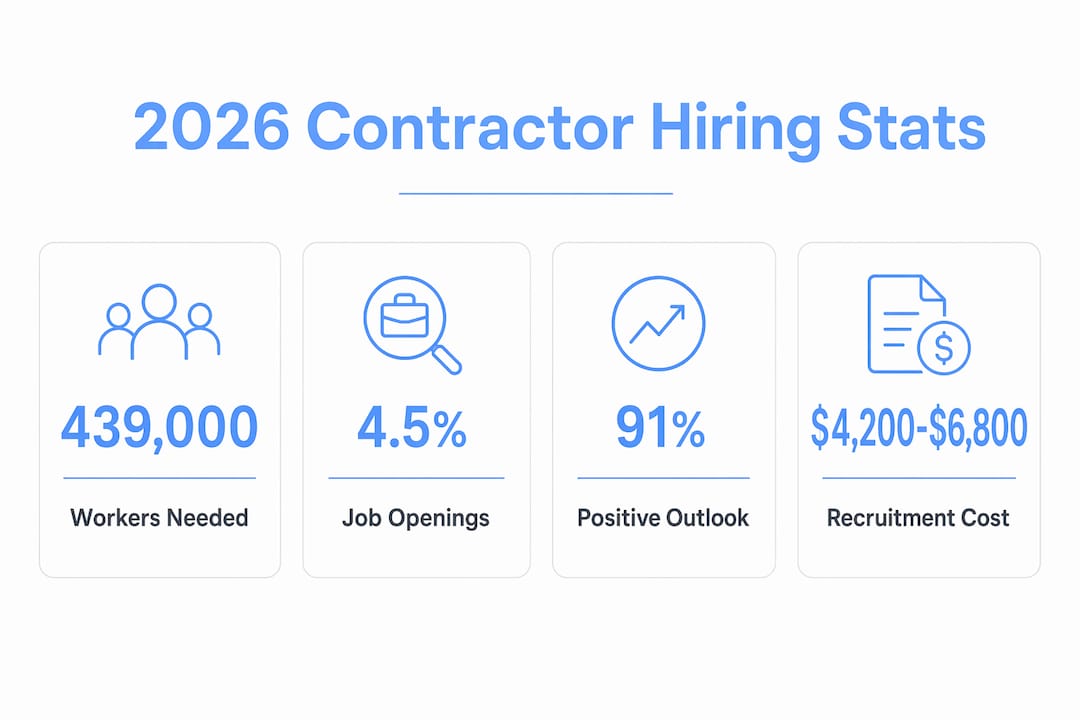
Trends in contractor hiring 2026 are defined by three forces reshaping every renovation and repair project: a critical labor shortage, rising recruitment costs, and a structural shift toward flexible workforce models. The construction industry now needs 439,000 additional workers to meet demand, and that gap directly affects how quickly you can book a qualified plumber, roofer, or remodeling crew. For homeowners, property managers, and investors, understanding these shifts is not optional. Your project timelines, budgets, and contractor quality all depend on how well you adapt to the new hiring reality. This guide breaks down what is driving these changes, how contractor recruitment strategies 2026 have evolved, and what you can do right now to stay ahead.
What are the key workforce challenges driving hiring trends in 2026?
The 2026 labor market for skilled trades is defined by scarcity, not just competition. The construction sector carries a 4.5% job opening rate as of Q2 2026, and 91% of contractors report moderate-to-high difficulty filling craft roles. That number translates directly to longer waits for homeowners trying to schedule bathroom remodels, roof replacements, or electrical upgrades.
Several structural forces are compounding the shortage:
- Demographic shift: A large wave of experienced tradespeople is retiring, and the pipeline of younger workers entering the trades has not kept pace.
- Immigration decline: Reduced immigration has tightened the labor pool that historically filled entry-level construction roles across Texas and other high-growth states.
- Recruitment cost surge: Hiring a skilled tradesperson now costs between $4,200 and $6,800 per hire, with senior leadership roles taking an average of 63 days to fill.
- Leadership gap: Senior construction leadership compensation increased roughly 12% year-over-year, signaling that experienced project managers and superintendents are in short supply.
The construction hiring rate hit 3.3% by February 2026, a record low, while job openings fell 53,000 year-over-year. This is not a temporary dip. It reflects a market where contractors are holding onto their best workers and competing aggressively for the rest.
“The labor shortage has shifted from a volume problem to a quality and leadership crisis. Firms that win in 2026 compete on speed, career path, and leadership quality, not just pay.” — 2026 Construction Salary Survey, The Birmingham Group
Retention has become as important as recruitment. Senior-level turnover is stagnant, meaning the highest leverage for contractors comes from keeping early-career workers through their first four years. For homeowners and property managers, this matters because contractors with stable, experienced crews deliver better work, fewer delays, and lower rework rates. Asking a contractor about their crew retention is now a legitimate and smart screening question.
How have contractor hiring models evolved in 2026?
Traditional hiring in construction relied on a simple model: post a job, screen applicants, hire full-time. That model is breaking down under the weight of labor scarcity and project volatility. The future of contractor hiring is built on flexibility, technology, and consolidated vendor management.

Here is how the old and new models compare:
| Dimension | Traditional model | 2026 evolved model |
|---|---|---|
| Labor sourcing | Full-time hires via job boards | Hybrid: direct hires plus contingent labor pools |
| Vendor management | Multiple staffing agencies, fragmented | Managed service providers (MSPs) with consolidated oversight |
| Hiring speed | Weeks to months | Targeted outreach, referral pipelines, faster onboarding |
| Technology use | Spreadsheets, email | AI screening, real-time workforce visibility platforms |
| Cost control | Fixed payroll costs | 22% reduction in contingent labor costs via vendor consolidation |
Flexible workforce strategies have moved from a backup plan to a core operational requirement. Contractors who consolidate vendors and use managed service providers report a 22% reduction in contingent labor costs. That savings does not stay with the contractor alone. It creates room for more competitive bids on your projects.
Squad-based hiring is one of the most significant shifts in contractor recruitment strategies 2026. Instead of hiring individuals one by one, firms now assemble pre-vetted teams with defined roles, from lead carpenter to site supervisor, and deploy them as a unit. This approach reduces onboarding friction, improves coordination, and cuts the time between project start and productive output.
AI and data analytics are also changing how contractors find and screen workers. Platforms now use predictive scoring to flag candidates with high retention risk before an offer is made, reducing costly offer collapses. Real-time workforce visibility tools let project managers see crew availability, certifications, and performance data in one place rather than across three or more disconnected systems.
95% of firms currently use 3 or more tools to manage contractors, and only 18% report being satisfied with those solutions. This fragmentation is why 60% of companies plan to adopt purpose-built contractor management platforms by the end of 2026. For homeowners, this signals that the contractors most likely to deliver on time are the ones investing in better systems, not just more workers.
Pro Tip: When evaluating contractors for a major renovation, ask directly whether they use a centralized project management or workforce platform. Contractors with real-time crew visibility and digital payment systems tend to have fewer scheduling gaps and communication breakdowns.
What practical strategies help you hire contractors effectively in 2026?
Knowing the market conditions is useful. Acting on them is what protects your project. The following strategies reflect the best practices for hiring contractors that are working right now for property owners and investors managing active renovation pipelines.
-
Start outreach before you need it. Top candidates rarely appear on public job boards and are mostly found through referrals and targeted outreach. If you wait until your project is ready to start, the best contractors are already booked. Build relationships with two or three quality contractors in your area before your next project begins.
-
Use a vetted contractor marketplace. Platforms like Bidwolf connect homeowners with license-verified local contractors who submit competitive bids. This cuts the time you spend sourcing and screening, and it gives you comparable bids in one place rather than chasing quotes by phone. Explore contractor marketplaces for Texas homeowners to understand how these platforms work and what to look for.
-
Vet for retention risk upfront. Early vetting of retention risk factors during initial conversations prevents costly project disruptions later. Ask contractors about their current workload, crew stability, and how they handle scheduling conflicts. A contractor who is overextended will tell you indirectly through vague answers and slow responses.
-
Understand total value, not just price. A low bid from a contractor with high crew turnover often costs more in the end through delays, rework, and supervision gaps. Factor in licensing status, insurance coverage, communication responsiveness, and past project reviews when comparing bids.
-
Plan for compliance from day one. Contractors integrated into core workflows for extended durations can trigger misclassification risks under IRS rules and regulations like California’s AB5. While this applies more directly to businesses managing large contractor pools, property investors with multiple active projects should confirm that their contractors carry proper workers’ compensation and liability coverage.
-
Use digital payment and communication tools. Contractors who receive fast, secure payments are more likely to prioritize your project over others. Platforms with built-in messaging and payment processing reduce friction on both sides. Read Bidwolf’s guide to secure contractor payment processes for a practical breakdown of what this looks like in practice.
Pro Tip: If you manage multiple rental properties or investment units, consider building a short list of preferred contractors across key trades: plumbing, electrical, roofing, and general remodeling. Repeat relationships mean faster scheduling, better pricing, and crews who already know your properties.
How do 2026 hiring trends affect your project timelines, costs, and quality?
The labor market conditions described above do not stay abstract. They show up in your renovation schedule, your final invoice, and the quality of work delivered. Here is how the key contractor employment trends 2026 translate into real project outcomes.
Time-to-hire is now a competitive advantage for property owners. Homeowners who have pre-established relationships with contractors or use platforms with fast bid turnaround are booking projects weeks ahead of those who start from scratch. In markets like Dallas, Houston, and Austin, where construction demand remains high, a two-week head start in contractor outreach can mean the difference between a Q3 project start and a Q4 delay.
Rising recruitment costs are reflected in contractor pricing. Skilled trades recruitment now costs between $4,200 and $6,800 per hire. Contractors pass a portion of these costs into their project bids, particularly for specialized work like HVAC installation, structural framing, and licensed electrical work. Understanding this context helps you evaluate bids more accurately. A bid that is 15% higher than a competitor may reflect a more stable, experienced crew rather than price gouging.
The quality and safety picture is also shifting:
- Contractors with stable, retained crews produce fewer errors and require less rework.
- Firms using AI-assisted screening and purpose-built management platforms report faster onboarding and better compliance tracking.
- Companies investing in contractor management solutions gain faster onboarding, improved retention, and reduced compliance risks.
- Property managers overseeing multiple units benefit most from contractors who use digital tools, since coordination across sites requires real-time visibility.
Managed service providers and technology platforms are reducing risk for larger property portfolios. A property management company overseeing 50 units in the Dallas-Fort Worth area, for example, can use a consolidated contractor platform to track bid history, payment records, and project completion rates across all vendors. This data-driven approach to contractor management is no longer reserved for large commercial developers. It is accessible to individual investors and property managers through platforms built for the residential market.
56% of companies plan to expand their contractor workforce over the next three years, which signals continued demand pressure. For homeowners planning major renovations in 2026 or 2027, acting now rather than waiting is the practical response to a market that is not loosening anytime soon.
Key takeaways
The 2026 contractor hiring market rewards homeowners and property managers who plan early, use technology platforms, and build lasting contractor relationships rather than searching from scratch each project.
| Point | Details |
|---|---|
| Labor shortage is structural | The industry needs 439,000 additional workers in 2026, making early outreach critical for any project. |
| Flexible models reduce costs | Vendor consolidation and managed service providers cut contingent labor costs by 22% for contractors. |
| Speed wins qualified contractors | Top candidates come through referrals, not job boards, so build relationships before your project starts. |
| Technology improves outcomes | Purpose-built platforms improve onboarding speed, retention, and compliance tracking for all project sizes. |
| Compliance matters from day one | Misclassification risks under IRS rules and AB5 require upfront vetting of contractor insurance and independence. |
What I have learned about hiring contractors in a tight market
I have watched homeowners and property managers make the same mistake repeatedly: they treat contractor hiring as a transaction rather than a relationship. You post a project, pick the lowest bid, and hope for the best. In a market with 439,000 unfilled construction roles, that approach leaves you at the back of every good contractor’s queue.
The property managers I have seen succeed in 2026 do two things differently. First, they communicate clearly and pay fast. Contractors talk to each other, and a reputation for prompt payment and organized project specs travels quickly through local trade networks. Second, they use platforms that give contractors a reason to bid. A well-structured project posting on a marketplace like Bidwolf, with clear scope, timeline, and budget range, attracts better bids than a vague phone inquiry.
I also think the compliance piece is underestimated by residential property owners. Most homeowners assume that hiring a contractor means they have no legal exposure. But if you are managing multiple units and using the same contractor repeatedly for extended periods, the line between contractor and employee can blur under IRS guidelines. Checking that your contractors carry their own workers’ compensation and liability insurance is not bureaucratic overhead. It is basic risk management.
The honest truth about the future of contractor hiring is that the homeowners who treat contractors as partners rather than vendors will get better work, faster scheduling, and more loyalty when projects compete for limited crew time. That is not sentiment. It is how tight labor markets work.
— Devin
Find and hire contractors faster with Bidwolf
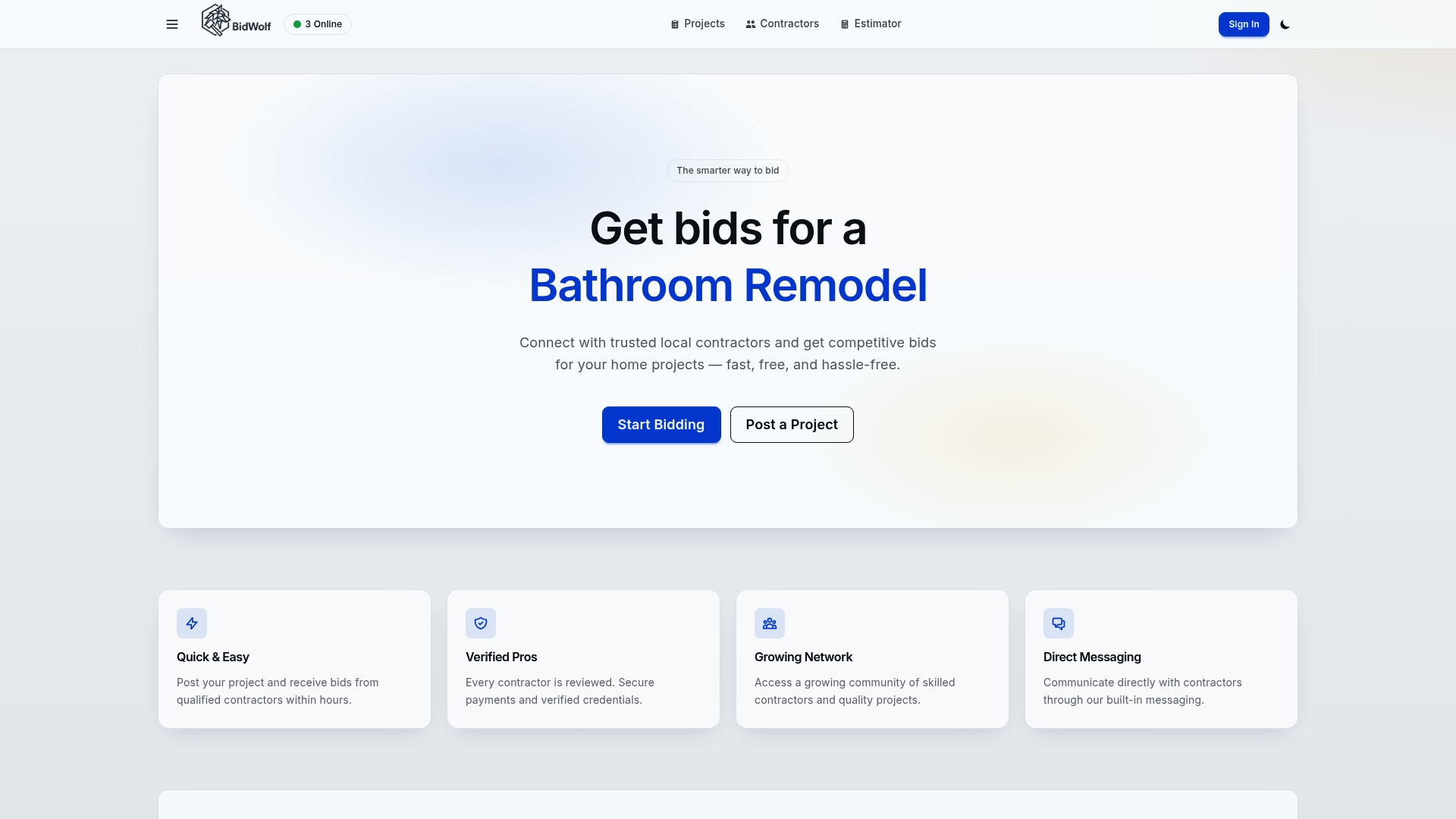
Bidwolf is built for exactly the market conditions described in this article. The platform connects homeowners and property managers across Texas with vetted, license-verified contractors who submit competitive bids directly on your project. You post your renovation or repair project, receive bids from qualified local professionals, and compare them side by side with built-in messaging and secure payment tools. There is no chasing quotes by phone or guessing at credentials. Post your project on Bidwolf and receive bids from verified contractors in your area, or browse local contractors by trade and location to start building your preferred vendor list before your next project begins.
FAQ
How many workers does the construction industry need in 2026?
The construction industry needs approximately 439,000 additional workers in 2026, with a 4.5% job opening rate and 91% of contractors reporting difficulty filling craft roles.
What does it cost to hire a skilled contractor in 2026?
Recruitment costs for skilled trades range from $4,200 to $6,800 per hire, and senior leadership roles take an average of 63 days to fill due to the tight labor market.
What are the best practices for hiring contractors in 2026?
Start outreach before your project begins, use a vetted contractor marketplace, vet for crew stability and retention, and prioritize contractors who use digital project management and payment tools.
How do contractor hiring trends affect renovation project timelines?
Labor shortages mean qualified contractors are booked weeks in advance. Homeowners who use platforms with fast bid turnaround or maintain pre-established contractor relationships consistently start projects earlier than those who search from scratch.
What compliance risks should homeowners know about when hiring contractors?
Contractors integrated into long-term or recurring workflows can trigger misclassification risks under IRS rules. Always confirm that your contractors carry independent workers’ compensation and liability insurance before work begins.