
What Is a Project Listing for Home Renovation Bids?

TL;DR:
- A project listing is a structured, outcome-focused description of a home renovation or maintenance task used to invite bidding from qualified contractors. It should clearly define objectives, deliverables, constraints, timeline, budget, and completion criteria to attract accurate bids and reduce disputes. Regularly updating the listing improves visibility and attracts quality contractors, especially when detailed and outcome-based.
A project listing is a structured, outcome-focused description of a home renovation or maintenance task that invites qualified contractors to submit competitive bids. Think of it as the foundation of every successful hire. Without a clear listing, you get vague bids, mismatched contractors, and costly miscommunications before work even begins. Platforms like Bidwolf are built around this concept, giving homeowners and property managers a structured way to post projects, from bathroom remodels to roofing repairs, and receive bids from vetted local professionals. A well-written project listing does not just describe work. It defines success.
What is a project listing and why does it matter?
A project listing is the formal document or digital post that communicates your renovation project to potential contractors. In project management, this is sometimes called a project brief or scope document. For homeowners and property managers, it serves the same purpose: telling contractors exactly what you need, what success looks like, and what constraints apply.

The project listing definition goes beyond a simple description. A high-converting listing must clearly answer five core questions for contractors: the ultimate goal, existing assets on site, required deliverables, tools or formats needed, and success criteria. Each of these answers removes guesswork for the contractor. Less guesswork means more accurate bids and fewer disputes after the job starts.
Clear listings also filter out unqualified contractors before they ever contact you. A roofer who sees a vague post saying “need roof work” cannot price accurately. A roofer who sees a listing specifying “replace 24 squares of 3-tab shingles on a single-story home, complete by a set date, with debris removal included” can submit a precise, competitive bid. That specificity is the core value of a well-structured project listing.
The importance of project listings extends to your timeline and budget. Contractors who understand the full scope upfront do not come back mid-project asking for more money or more time. That protection alone makes the effort of writing a thorough listing worthwhile.
What are the key elements of a project listing?
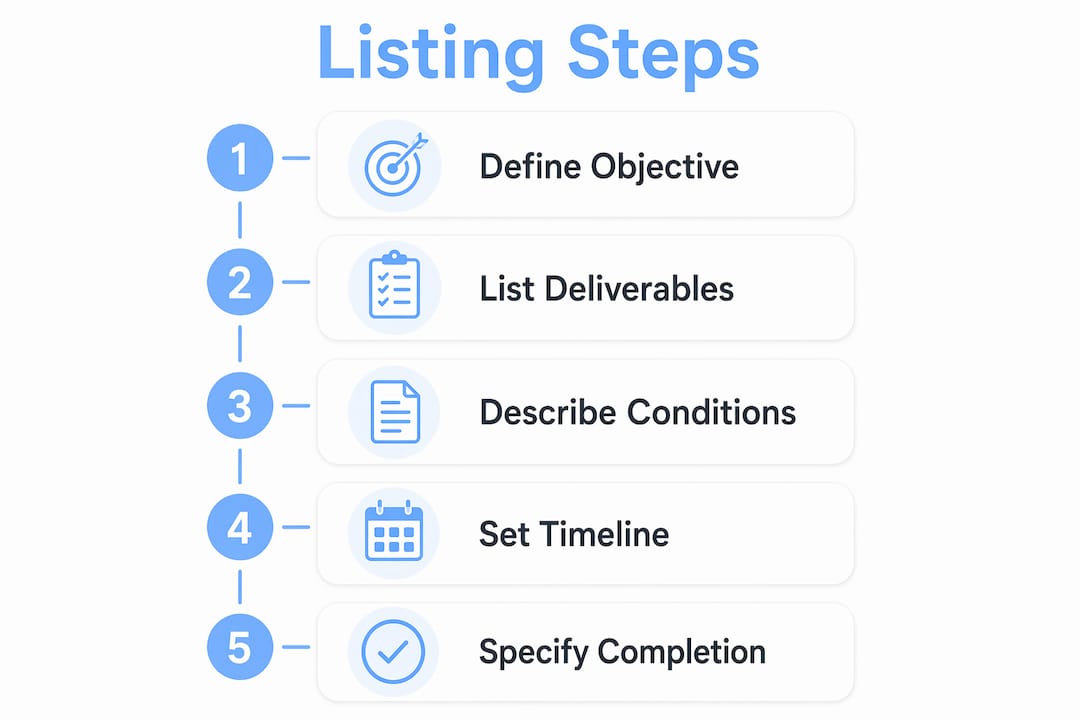
A project listing that attracts quality bids contains eight specific fields. Each one serves a distinct purpose, and skipping any one of them creates gaps that contractors will fill with assumptions.
- Project objective: State the end goal in one or two sentences. “Replace the master bathroom tile floor with 12x24 porcelain tile” is an objective. “Fix the bathroom” is not.
- Deliverables: List every item the contractor must complete. Use bullet points. Ambiguity here is the leading cause of scope disputes.
- Existing assets: Describe what is already on site. If you have purchased materials, say so. If the subfloor needs inspection first, note that too.
- Constraints: Include access restrictions, HOA rules, noise ordinances, or required permits. Contractors price risk, and constraints are risk.
- Timeline: Give a start date and a firm completion date. Setting a reliable turnaround window filters top contractors and improves bid quality.
- Budget: Listing a budget range is optional but recommended. It prevents bids that are wildly outside your expectations.
- Examples: Photos of the current condition and reference images of the desired outcome reduce misinterpretation more than any written description can.
- Revision policy: Define what changes are acceptable after work begins and what requires a new agreement.
One field that homeowners consistently overlook is the “definition of done.” Explicit completion criteria in a listing reduce disputes and improve project outcomes. This means stating not just what gets built, but what condition it must be in when the contractor leaves. A tile job is not done when the last tile is set. It is done when grout is cured, excess is cleaned, and the space is left broom-clean.
Pro Tip: Write your listing as if you are previewing a contract. Every detail you include now is a detail you will not need to argue about later.
Outcome-first language is the single biggest upgrade most homeowners can make to their listings. Listing work in outcome terms rather than effort terms allows contractors to price bids accurately and reduces scope creep. Replace “need help painting the living room” with “two coats of client-supplied paint on 480 square feet of wall space, including trim, with all prep and cleanup included.” That shift changes everything about the bids you receive.
How to create a project listing that attracts the right contractors
Writing an effective project listing follows a clear process. Skipping steps produces the vague posts that attract low-quality bids or no bids at all.
-
Write the title first. A compelling listing title front-loads the key outcome in the first three words to capture contractor attention. “Tile Replacement: Master Bath Floor” outperforms “Need Bathroom Help” every time. Titles are the first filter contractors use when scanning available projects.
-
Draft the objective in plain language. Describe what the finished project looks like, not what you want someone to do. One to two sentences is enough. If you need more, the scope may need to be broken into separate listings.
-
List deliverables as bullet points. Each bullet should be one specific, measurable item. If a deliverable cannot be measured, it is not specific enough. Reference your home renovation checklist to make sure nothing is missing.
-
Add photos. Upload current condition photos and reference images. Contractors who can see the space bid more accurately and ask fewer questions.
-
Set a realistic timeline. Be honest about your start date and deadline. Unrealistic timelines push qualified contractors away and attract those who overpromise.
-
Review and publish. Read the listing as if you are a contractor seeing it for the first time. If anything is unclear, clarify it before posting.
Once your listing is live, treat it as a living document. Active maintenance boosts listing competitiveness and contractor engagement. If a week passes with no bids, revisit the title, add more photos, or sharpen the deliverables. A static listing that never gets updated is a missed opportunity.
Pro Tip: Start your listing more detailed than you think necessary, then edit down. Detailed initial listings prevent dozens of unnecessary clarifying questions from bidders, reducing delays and improving scope understanding.
Project listings also function as digital marketing assets for your project. A well-written post on a platform like Bidwolf works around the clock, attracting contractor interest even when you are not actively managing it. The quality of your listing directly determines the quality of the contractors who respond.
Common project listing mistakes and how to fix them
Most homeowners make the same handful of errors when posting a project. Recognizing them before you post saves time, money, and frustration.
The most common mistake is describing effort instead of outcomes. Compare these two examples:
| Weak listing | Strong listing |
|---|---|
| “Need someone to help with deck work” | “Replace 200 sq ft of rotted deck boards with pressure-treated lumber, stain to match existing structure” |
| “Fix the kitchen sink” | “Replace kitchen faucet and P-trap, confirm no leaks under pressure before completion” |
| “Paint the exterior” | “Two coats exterior latex on 1,800 sq ft of siding, including all prep, caulking, and cleanup” |
| “Landscaping help needed” | “Remove four overgrown shrubs, grade front bed, install 3 inches of hardwood mulch across 120 sq ft” |
The difference is not just clarity. Outcome-based descriptions improve bid quality and align expectations before work begins. Effort-based listings force contractors to guess at scope, which means they either overbid to protect themselves or underbid and come back for more money.
A second common mistake is treating the listing as a static post. Many homeowners write a listing once and never touch it again. If bids are not coming in, the listing needs attention, not patience. Update the title, add a photo, or clarify a deliverable. Listings that get updated regularly stay visible and competitive.
A third mistake is omitting constraints. Contractors who discover mid-project that a permit is required, that parking is limited, or that work can only happen on weekdays will adjust their pricing or walk away. State every constraint upfront. It protects both parties.
- Avoid vague titles like “home project” or “renovation help needed.”
- Never skip the timeline. Open-ended projects attract contractors who are not in demand.
- Do not list a budget of zero or leave it blank if you have a firm ceiling. Contractors will assume the worst.
- Always include at least one photo. Text descriptions alone leave too much to interpretation.
Thoroughness at the listing stage reduces bidder questions and speeds the project initiation timeline. The time you invest writing a clear listing pays back in faster bids, fewer phone calls, and smoother project execution.
How project listings fit into the contractor marketplace
A project listing and a contractor service profile are two different things. A service profile describes what a contractor can do. A project listing describes what you need done. Both must exist for a marketplace to function, but they serve opposite purposes.
On platforms like Bidwolf, your project listing is the entry point for every contractor interaction. Contractors search available listings, evaluate fit, and submit bids based entirely on what your listing communicates. A strong listing attracts multiple competitive bids. A weak one attracts silence or low-quality responses.
Clear listings produce measurable benefits for both sides of the transaction:
- Fewer disputes: When scope is defined upfront, there is nothing to argue about after the fact.
- Accurate pricing: Contractors who understand the full scope price the job correctly the first time.
- Faster matching: Specific listings filter out contractors who are not equipped for the work, leaving only qualified candidates.
- Better contractor trust: A detailed, professional listing signals that you are a serious client. Experienced contractors prioritize clients who communicate clearly.
Listing quality also affects your reputation on marketplace platforms. Property managers who consistently post clear, detailed listings build a track record that attracts better contractors over time. Contractors talk, and a client known for clear communication gets priority attention. You can learn more about how contractors evaluate opportunities by reviewing best practices for contractor profiles to understand what they look for on their end.
Choosing the right platform matters too. Bidwolf focuses specifically on home renovation and maintenance projects in Texas, connecting homeowners with verified local contractors across multiple trades. That specialization means the contractors reviewing your listing are already relevant to your project type. For guidance on evaluating the contractors who respond, see how to select service providers after your listing goes live.
A useful benchmark from project management practice: effective project lists cover 5–20 specific deliverables, linking each to a responsible party and a deadline. That range applies directly to home renovation listings. Fewer than five deliverables usually means the scope is underspecified. More than twenty usually means the project should be split into phases.
Why I think most homeowners underestimate the listing stage
Most homeowners treat the project listing as a formality. They write a sentence or two, upload one blurry photo, and wait for bids. Then they wonder why the responses are either too expensive or too vague to act on.
The listing is not a formality. It is the most leveraged document in the entire hiring process. Every hour you spend writing a clear, detailed listing saves you two or three hours of back-and-forth with contractors who are trying to understand what you actually need. I have seen projects stall for weeks because the initial listing was too vague to generate usable bids.
The shift that changes everything is treating the listing as a contract preview. When you write with that mindset, you naturally include the details that matter: completion criteria, constraints, what happens if something unexpected comes up. That level of clarity does not just attract better bids. It attracts better contractors, the ones who read carefully and price honestly.
One thing I have noticed is that homeowners who include reference photos and a clear definition of done get responses faster and with less follow-up. Contractors are busy. They scan listings quickly. A listing that answers their questions before they ask them gets a bid. One that raises more questions gets skipped.
The platforms that work best for this, including Bidwolf, are designed around structured listing formats that prompt you to fill in the right fields. Use every field. Do not leave anything blank because it feels optional. The contractors reading your listing will notice what is missing, even if you do not.
— Devin
Post your project on Bidwolf and get competitive bids fast
A clear project listing is the first step. The second is getting it in front of the right contractors.
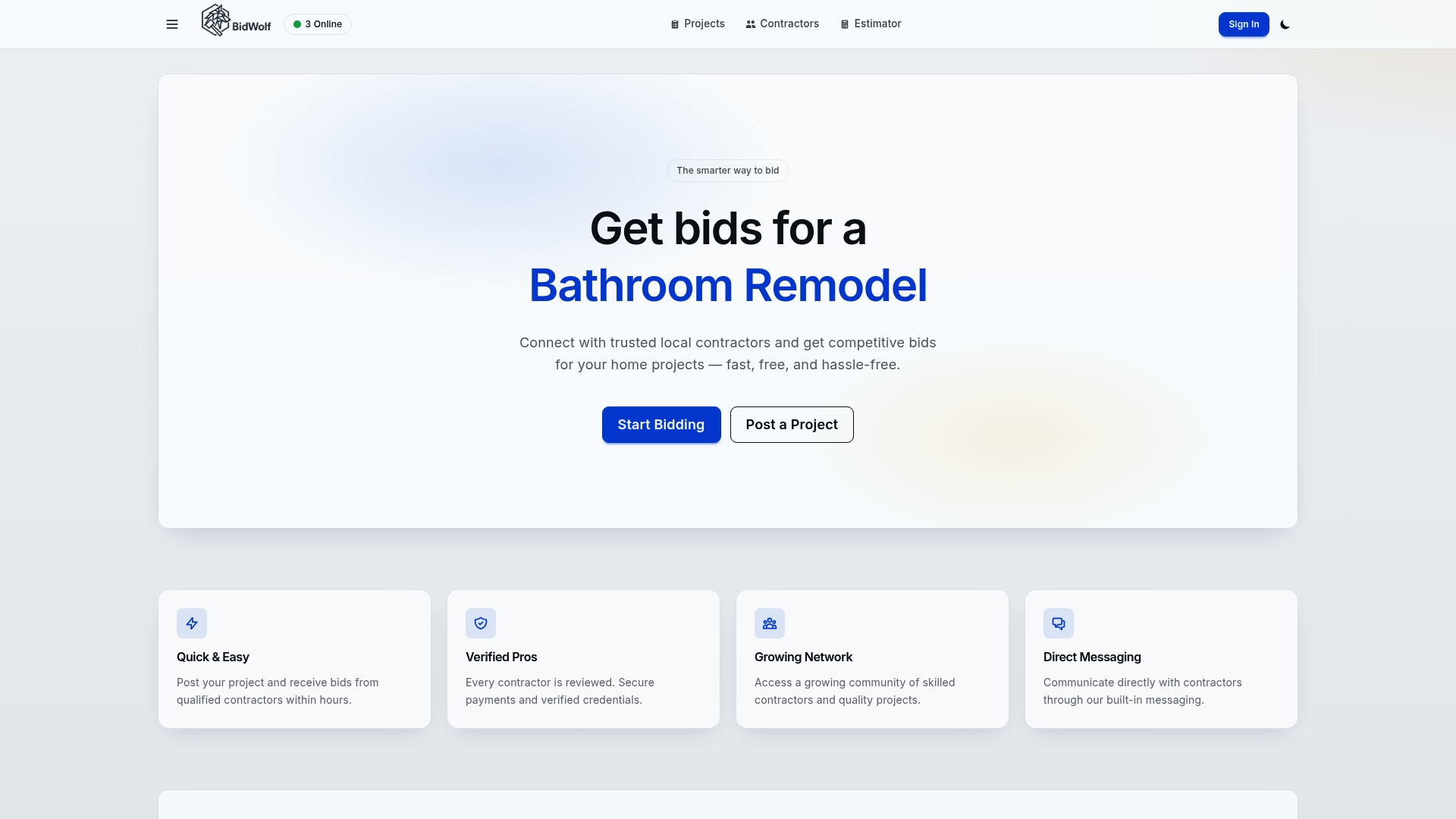
Bidwolf makes it straightforward to post your home project and receive bids from verified local contractors across Texas. The platform guides you through each field of your listing, from project objective to timeline and budget, so nothing gets left out. Built-in messaging lets you communicate directly with contractors, and verified credentials mean every bid comes from a qualified professional. Whether you are managing a single bathroom remodel or coordinating multiple properties, Bidwolf gives you the tools to post clearly, compare bids confidently, and hire with confidence. You can also find local contractors by trade if you want to browse available professionals before posting.
Key takeaways
A project listing is the single most important document in the contractor hiring process. Its quality determines the accuracy of every bid you receive.
| Point | Details |
|---|---|
| Define outcomes, not effort | Describe what the finished project looks like, not what you want someone to do. |
| Include all eight core fields | Objective, deliverables, assets, constraints, timeline, budget, examples, and revision policy all belong in every listing. |
| Define “done” explicitly | State completion criteria so there is no ambiguity about when the job is finished. |
| Treat listings as living documents | Update titles, photos, and deliverables regularly to stay competitive and attract quality bids. |
| Platform choice matters | Specialized platforms like Bidwolf connect you with verified, trade-specific contractors who are relevant to your project. |
FAQ
What is a project listing in home renovation?
A project listing is a structured post that describes a home renovation or maintenance task, including scope, timeline, and budget, so contractors can submit accurate bids. It serves as the primary communication tool between a homeowner and potential contractors on marketplace platforms.
What should be included in a project listing?
A complete project listing includes the project objective, a bulleted list of deliverables, existing site conditions, constraints, timeline, budget range, reference photos, and a clear definition of done. Explicit completion criteria reduce disputes and improve project outcomes.
How is a project listing different from a project proposal?
A project listing is written by the homeowner to attract contractor bids. A project proposal is written by the contractor in response to that listing. The listing defines the need; the proposal defines how a specific contractor plans to meet it.
How do I improve my project listing to get better bids?
Replace effort-based language with outcome-based descriptions, add photos of the current condition and desired result, and set a firm timeline. Outcome-based descriptions improve bid quality and align contractor expectations before work begins.
How often should I update a project listing?
Update your listing any time it has been live for more than a week without quality bids. Refresh the title, add new photos, or clarify deliverables. Active listing maintenance boosts visibility and keeps contractor engagement high.