

Why Use Online Bidding for Home Projects

TL;DR:
- Online bidding simplifies homeowner contractor selection by fostering competition, saving time, and increasing transparency. It expands access to qualified professionals, reduces costs through competitive bids, and provides a clear record of communications and agreements. This process empowers homeowners to make informed, confident decisions while streamlining project management.
Finding a reliable contractor at a fair price is one of the most frustrating parts of owning a home. You call around, wait days for callbacks, receive wildly different estimates with no explanation, and often end up choosing someone based on gut feeling rather than facts. That’s exactly why use online bidding for home projects has become the smarter approach for homeowners who want control, clarity, and real competition. This article breaks down how online bidding works, what makes it better than traditional hiring methods, and how you can use it to get qualified contractors competing for your business.
Table of Contents
- Key takeaways
- Why use online bidding for home projects
- Key advantages of online bidding for home renovations
- Addressing common concerns about online bidding
- How to get started with online bidding
- My take on how online bidding changes the contractor relationship
- Start your project with Bidwolf today
- FAQ
Key takeaways
| Point | Details |
|---|---|
| Online bidding saves time | Digital platforms cut bid preparation time significantly, freeing you to focus on project decisions instead of paperwork. |
| Competitive bids lower costs | Multiple contractors submitting bids creates pricing competition that consistently leads to better deals for homeowners. |
| Transparency protects you | Automated audit trails and documented bid histories give you a clear, verifiable record of every interaction. |
| Contractor verification matters | Reputable platforms vet credentials before contractors can submit bids, reducing your risk of hiring unqualified workers. |
| Getting started is straightforward | Post your project scope, review bids, communicate through the platform, and select the best fit — all in one place. |
Why use online bidding for home projects
The traditional process of hiring a contractor works against you from the start. You rely on word of mouth, post in neighborhood groups, or scan local ads. Then you spend days chasing callbacks, scheduling separate walkthroughs, and comparing estimates that don’t even list the same line items. There is no standard format, no accountability, and no easy way to know if the price you’re getting is reasonable.
Online bidding flips that process. Instead of you pursuing contractors, contractors compete for your project. The mechanics are straightforward. You post your project on a digital platform, describing the scope of work, your timeline, and your budget range. That posting goes out to a network of local, vetted professionals. Contractors who are interested and qualified submit bids directly through the platform.
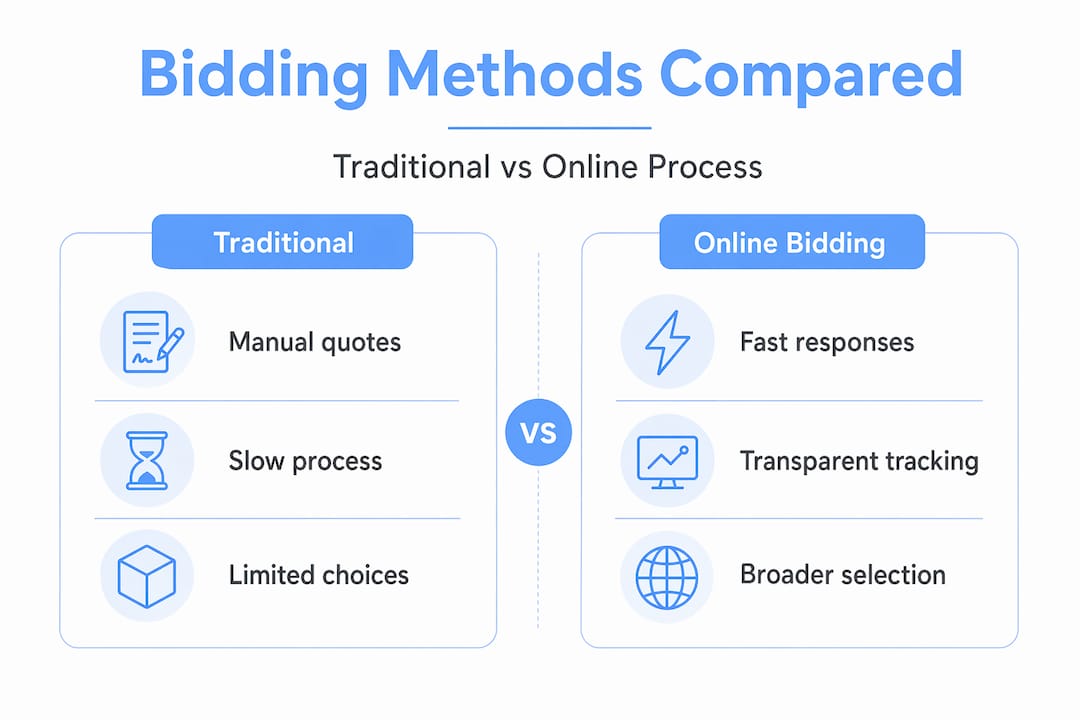
Once bids come in, you compare them side by side. You can see not just the price, but also the contractor’s credentials, past reviews, response time, and any notes they included about your specific project. Built-in messaging lets you ask questions or request clarification without exchanging personal contact information upfront.

The difference from traditional hiring is significant. Electronic bidding systems centralize all activity into one structured platform, improving visibility and reducing the confusion that comes with managing multiple contractors through texts, emails, and phone calls. Everything lives in one place.
Pro Tip: Before posting your project, write a clear scope of work that includes the specific materials you want, the timeline you need, and any access restrictions like HOA rules or limited parking. The more detail you provide, the more accurate and comparable your bids will be.
Automation also plays a big role. Platforms automatically notify contractors when a relevant project is posted, track all submissions, and log every communication. Modern procurement software reduces bid preparation time by 60 to 70 percent and improves bid accuracy by 40 to 50 percent. That kind of efficiency matters when you’re trying to get a bathroom remodel or roof repair done within a set timeline.
Key advantages of online bidding for home renovations
Understanding why use online bidding for renovations goes beyond convenience. The advantages are real, measurable, and directly tied to money, time, and peace of mind.
Genuine cost savings through competition
When multiple contractors know they are competing for the same job, pricing becomes honest. There’s no padding a quote because you seem like an easy mark. Online bidding platforms provide greater access to diverse bidders and increase competitive tension, leading to better pricing outcomes for buyers. Real pricing data also helps you recognize outliers — both suspiciously low bids and inflated ones.
Wider access to qualified contractors
Without an online platform, your contractor options are limited to whoever shows up in your local search results or who your neighbor happens to recommend. Online bidding expands that pool dramatically. Digital bidding is more accessible and cost-effective than traditional methods, eliminating barriers for smaller contractors who don’t spend heavily on marketing. That means you get bids from skilled, experienced tradespeople who simply wouldn’t have found you otherwise.
Full transparency and documented accountability
One of the strongest home project bidding advantages is the paper trail. Every bid, every message, every revision is logged automatically. Digital transformation in procurement automates document tracking and audit logging to enhance transparency and accountability. If a dispute arises later about what was agreed upon, you have clear, verifiable records to reference. That protection is almost impossible to achieve through informal phone calls and email chains.
Time savings you can actually feel
The administrative work of traditional contractor hiring is exhausting. Scheduling callbacks, re-explaining your project to each person, organizing separate email threads — it adds up fast. Online bidding platforms reduce administrative workload for both parties by automating notifications, submissions, and documentation. You post once and manage everything from a single dashboard.
Here is a quick summary of the core benefits:
- Cost control: Competitive bids prevent price inflation and give you negotiating leverage.
- Wider selection: Access local contractors who are actively looking for projects like yours.
- Documented history: All communications and bids are recorded automatically.
- Faster decisions: Compare bids side by side without chasing down separate quotes.
- Built-in communication: Message contractors directly through the platform without giving out your personal contact information.
- Data-driven choices: Real-time tracking tools help you identify trends and make informed decisions when selecting contractors.
“Digital procurement is about rethinking workflows to build resilient, transparent, and strategic processes — not just adopting new technology.” — Procurement industry experts
Pro Tip: When comparing bids, create a simple spreadsheet that lists each contractor’s price, timeline, included materials, and license status. That side-by-side view makes the best overall value much easier to spot than scanning bids one at a time.
Addressing common concerns about online bidding
If you’re new to why use online bids for home repairs, you probably have a few hesitations. Those concerns are reasonable. Here’s what you need to know.
Concern 1: How do I know contractors are qualified?
Reputable platforms require contractors to submit credentials before they can bid on projects. This includes license verification, insurance documentation, and sometimes background checks. You should never rely on a platform that allows anonymous or unverified bidding. When you use a verified network, you start with a pre-screened pool rather than hoping a random search result is legitimate.
Concern 2: Is my project information secure?
Established platforms use encrypted systems to protect your personal details and project data. Your contact information is typically not shared with contractors until you choose to move forward with one. The built-in messaging system handles communication without exposing your phone number or email address to anyone you haven’t approved.
Concern 3: Is the process actually fair?
Centralized bidding systems notify all eligible vendors automatically and reduce confusion by standardizing how bids are submitted. Every contractor sees the same project description. No one gets a heads-up before others. That consistency protects you and ensures that the bids you receive are based on the same scope of work.
Here’s a direct comparison of how traditional and online bidding stack up:
| Factor | Traditional bidding | Online bidding |
|---|---|---|
| Contractor discovery | Limited to referrals or search results | Access to a broad verified network |
| Bid comparison | Manual, inconsistent formats | Standardized, side-by-side comparison |
| Communication record | Scattered across calls and emails | Centralized and automatically logged |
| Document security | Easy to lose or misfiled | Stored digitally with full audit trail |
| Contractor verification | Up to you to research independently | Pre-screened by the platform |
| Time to first bid | Days to over a week | Often within hours |
Homeowners face real challenges with lost documents, confusing communications, and delayed approvals in manual contractor selection. Online platforms eliminate those vulnerabilities with centralized, automated workflows. The advantages of digital bidding aren’t theoretical. They solve problems that homeowners run into every single time they hire a contractor the old way.
How to get started with online bidding
Applying the advantages of digital bidding to your own project takes less setup than you might expect. Here’s how to do it right from the beginning.
-
Choose a reputable platform. Look for a platform with verified contractor profiles, built-in secure messaging, and transparent bid comparison tools. Check that it serves your area and covers the type of work you need done. For homeowners in Texas, Bidwolf covers a growing network of cities and trades.
-
Prepare a clear project description. Write out the full scope of work before you post. Include dimensions, materials preferences, any existing issues to address, and your expected timeline. A vague posting attracts vague bids. Specificity gets you accurate, comparable numbers. You can also use a free cost estimator to set a realistic budget range before bids come in.
-
Post your project and wait for bids. Once posted, qualified local contractors in your network will be notified automatically. Most platforms start delivering bids within 24 to 48 hours. You don’t need to call anyone or follow up manually.
-
Evaluate bids beyond the price. Look at each contractor’s license status, reviews from previous clients, how they communicate, and how clearly they described their approach to your project. A slightly higher bid from a contractor with a strong track record is often worth more than the lowest number from an unknown.
-
Use the platform’s messaging tools. Before making a decision, ask clarifying questions through the built-in messaging system. This keeps everything documented and lets you gauge how responsive and professional each contractor is before you commit. Direct messaging with contractors reduces delays and keeps your project moving forward efficiently.
-
Select your contractor and manage the project digitally. Once you’ve chosen, use the platform to manage contracts, payment milestones, and ongoing communication. Digital project management keeps everyone on the same page and creates a clear record if any issues arise.
-
Leave a review after completion. Your feedback helps other homeowners make confident decisions and holds contractors accountable for the quality of their work. It also strengthens the network for everyone who uses the platform after you.
My take on how online bidding changes the contractor relationship
I’ve seen a lot of homeowners go through the contractor hiring process the hard way. They spend two weeks collecting quotes, get burned by someone who seemed trustworthy, and then feel like there was no way to protect themselves. The frustration is real, and it’s not because those homeowners did anything wrong. The old process just wasn’t built in their favor.
What I find genuinely compelling about online bidding isn’t the technology. It’s the shift in power. When contractors compete openly for your project, you are no longer hoping someone gives you a fair price. You are watching the market tell you what your project is worth. That is a fundamentally different dynamic.
I’ve also noticed that homeowners who take the time to write detailed project descriptions get dramatically better results. Not just better prices, but better contractors. The professionals who take poorly written postings seriously and ask good follow-up questions are usually the ones worth hiring. The process itself becomes a filter.
My honest advice: don’t treat the lowest bid as the goal. Treat the process as a way to gather enough information to make a confident decision. Price matters, but so does communication style, response time, and how clearly a contractor can explain their plan. Those signals tell you a lot about what the actual project experience will be like.
The transparency that digital bidding enables isn’t just about protecting yourself from bad actors. It’s about building enough context to choose the right person for your home. That distinction matters more than most homeowners realize until after a project goes sideways.
— Devin
Start your project with Bidwolf today
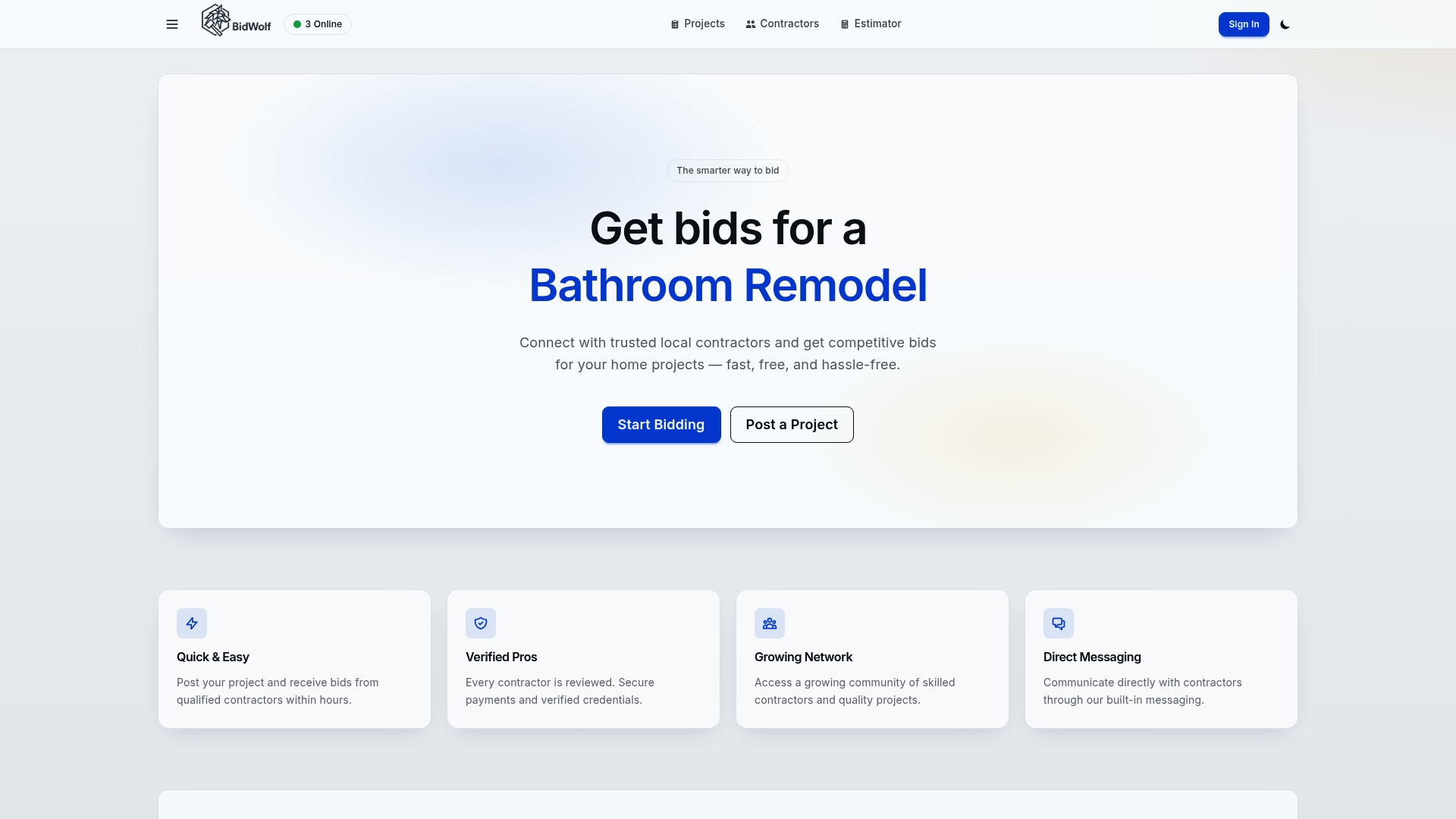
Bidwolf makes it straightforward to post your home project, receive competitive bids from verified local contractors, and manage the entire process from one platform. Whether you’re planning a kitchen remodel, roof repair, electrical work, or landscaping, you can post your project and start receiving bids from vetted professionals in your area within hours. The built-in messaging system keeps all communication documented, and transparent bid comparison tools let you evaluate every option without the guesswork. You can also find local contractors by trade if you want to browse your options before posting. With Bidwolf, you get the pricing competition, the transparency, and the verified credentials that make online bidding worth using. Get started today and let qualified contractors compete for your business.
FAQ
What is online bidding for home projects?
Online bidding for home projects is a process where homeowners post their renovation or repair project on a digital platform and receive competitive bids from local, verified contractors. It replaces the traditional method of collecting separate quotes manually.
How does online bidding save homeowners money?
Online bidding creates pricing competition among contractors, which prevents inflated quotes and pushes bids toward fair market value. Homeowners can also compare bids side by side to identify the best overall value, not just the lowest number.
Are contractors on online bidding platforms verified?
Reputable platforms require contractors to submit license documentation, insurance, and other credentials before they can submit bids. This pre-screening process reduces the risk of hiring unqualified or unlicensed workers significantly.
How long does it take to receive bids after posting a project?
Most online bidding platforms deliver initial bids within 24 to 48 hours of posting. The speed depends on how detailed your project description is and how many contractors in your area cover the type of work you need done.
Is online bidding suitable for small home repairs?
Yes. Online bidding works well for projects of any size, from minor repairs to full renovations. Smaller jobs still benefit from contractor competition, transparent pricing, and documented communication that protects both parties.