

Direct Messaging with Contractors Speeds Texas Renovations

TL;DR:
- Effective communication in Texas home renovations hinges on centralized, clear, and documented messaging to prevent delays and disputes. Using structured digital platforms and disciplined habits ensures timely approvals, accurate records, and legal clarity throughout the project. Maintaining organized chat histories and confirming every decision in writing protect homeowners and streamline project completion.
Most homeowners assume that sending more messages to their contractor automatically leads to faster results. In practice, the opposite is often true. Scattered texts, missed calls, and email chains that span weeks are among the most common reasons Texas renovation projects run over budget and over schedule. Direct messaging speeds approvals and reduces delays caused by late or fragmented communication, but only when you use it with a clear plan. This guide walks you through why messaging matters, what risks to watch for, and exactly how to use it to keep your next Texas project on track.
Table of Contents
- Why clear, fast communication matters in home projects
- How direct messaging speeds up decisions and reduces errors
- Legal risks and compliance for texting with contractors in Texas
- Best practices for direct messaging with contractors
- Why most guides miss the real story: Messaging is only as good as the habits behind it
- Take the next step with smart, direct communication
- Frequently asked questions
Key Takeaways
| Point | Details |
|---|---|
| Direct messaging speeds projects | Efficient texting and app chat help Texas homeowners avoid delays by enabling quick approvals and updates. |
| Legal risks exist | Even informal messages can count as contract instructions or approvals, so careful recordkeeping is essential. |
| Compliance matters for texts | Marketing texts in Texas require proper registration or contractors risk legal penalties. |
| Centralized chat reduces confusion | Keeping all project messages in one thread helps prevent miscommunication and lost details. |
| Best habits maximize value | Organized messaging and frequent summaries ensure direct communication works in your favor. |
Why clear, fast communication matters in home projects
Renovation delays rarely happen because of bad materials or unskilled contractors. More often, they happen because someone waited two days for an approval, or a change order was discussed over the phone but never put in writing. Miscommunication is one of the leading causes of cost overruns and schedule slippage in residential remodels across Texas.
Think about a typical bathroom remodel in Houston or a roofing replacement in Dallas. The contractor needs to confirm a tile choice before ordering materials. If the homeowner is unreachable by phone, the work stops. If the homeowner sends a quick approval in an app chat, work continues the same afternoon. That single interaction can be the difference between finishing on time and pushing the project into a second or third week.
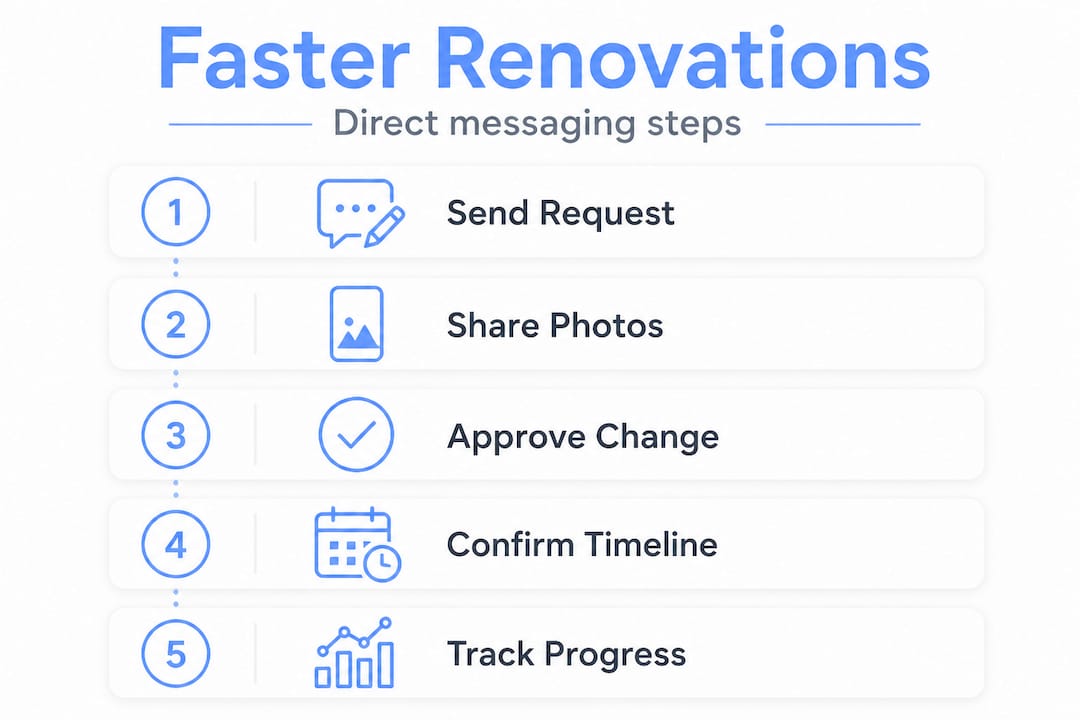
Direct messaging in renovation projects is favored precisely because it speeds up these micro-decisions. Every approved change, every material confirmation, and every schedule adjustment happens in real time instead of sitting in a voicemail inbox.
Common communication problems in Texas home projects:
- Phone calls that go unanswered and are never followed up in writing
- Email threads that get buried or sent to spam folders
- Verbal agreements on site that are later disputed by both parties
- Text messages scattered across personal phones without any organized record
- Contractors waiting for approvals before ordering materials, causing supply delays
The solution is not simply to send more messages. It is to centralize communication so that every decision has a clear record. Using online platforms for Texas renovations helps you consolidate these conversations in one place, giving both you and your contractor a shared reference point for every project detail.
“Poor communication is not just an inconvenience in construction projects. It creates measurable financial and schedule consequences that compound throughout a project’s lifecycle.”
The benefits of bidding platforms extend well beyond simply comparing prices. They also give homeowners a structured communication environment where messages are logged, timestamped, and attached to the correct project file. That structure alone prevents a significant portion of the disputes that Texas homeowners encounter during renovation work.
How direct messaging speeds up decisions and reduces errors
Once you understand why communication failures are so costly, the case for structured direct messaging becomes straightforward. The question is not whether to use it, but how to use it in a way that keeps your project moving efficiently and accurately.
Centralized chat tools help project teams standardize a single source of truth, complete with photo and video context and timestamps, so that decisions are faster and the chance of errors or rework drops significantly. In practical terms, this means everyone involved in your project sees the same information at the same time, with a record of exactly when it was sent and who acknowledged it.
How a typical approval looks before and after direct messaging:
| Stage | Without centralized messaging | With centralized messaging |
|---|---|---|
| Homeowner sees change needed | Calls contractor, no answer | Sends message in project app |
| Contractor receives information | Returns call next morning | Reads message within the hour |
| Approval or denial issued | Verbal approval, no written record | Written approval with timestamp |
| Materials ordered | Delayed 1 to 2 days | Same day or next morning |
| Risk of dispute | High, no documentation | Low, full message thread saved |
| Total time to resolution | 24 to 48 hours | 2 to 6 hours |
The difference in approval time is not trivial. On a project with dozens of these micro-decisions, saving even one day per decision can cut weeks from your total project timeline.
Here is how a typical approval process now works when you use a centralized messaging platform:
- You notice a change is needed, such as a different cabinet finish than originally specified.
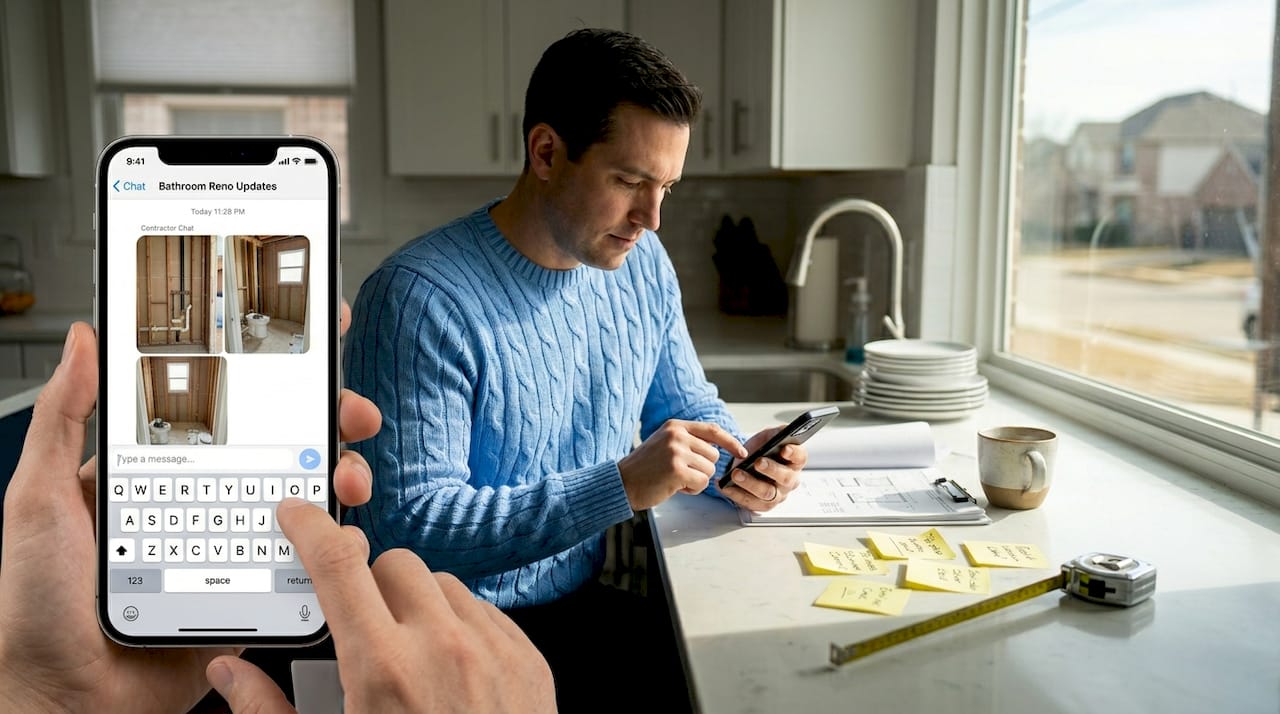
- You snap a photo of the issue and send it in the project chat with a clear written description.
- Your contractor receives an instant notification and can review the photo immediately.
- The contractor responds with a cost adjustment and a revised timeline, all in the same thread.
- You approve the change in writing, and the timestamp on that message creates an automatic record.
- The contractor orders materials the same day, and work continues without interruption.
This six-step process, which once took two or three days of phone tag and follow-up emails, now resolves in a single afternoon.
Pro Tip: Always set up a group chat that includes you, your contractor, and any project manager or subcontractor lead. Keeping all parties in the same thread eliminates the “I didn’t know about that” problem that causes so many disputes.
Using mobile apps to manage your renovation gives you this capability from anywhere. Whether you are at work in Austin or traveling outside the state, you can review photos, approve changes, and keep your project moving without needing to be on-site. And streamlining the bidding and project process from the start means your communication channels are already organized before the first nail is driven.
Legal risks and compliance for texting with contractors in Texas
Speed and convenience are real benefits of direct messaging. But Texas homeowners need to understand that informal digital communication carries legal weight that many people overlook entirely.
Courts may treat texts and chat threads as valid notice, direction, or evidence of waiver or authorization, depending on the contract language and the specific facts of a dispute, as legal experts have confirmed. In plain terms, if you send your contractor a casual message saying “yeah, go ahead and add the extra room” without reviewing what that approval actually covers, you may have just authorized thousands of dollars in additional work with no formal documentation of what was agreed.
This is a risk that surprises many homeowners because they treat text messages as informal conversation. Texas courts do not always see it that way.
Comparison: What types of messages count as formal direction or notice
| Message type | Likely considered formal | Notes |
|---|---|---|
| Written letter or email | Yes | Strong documentation |
| In-app project chat (timestamped) | Usually yes | Depends on contract terms |
| Standard SMS/text message | Sometimes | Courts may treat as notice |
| Verbal conversation | Rarely | Hard to prove without a record |
| Paper change order | Yes | Most legally secure option |
On the marketing side, there is another layer of compliance that Texas homeowners should know about. Texas SB 140 expands the state’s telephone solicitation law to cover text messages, meaning contractors who send you marketing texts must now register under this law or face financial penalties. This matters to you as a homeowner because if a contractor is cutting corners on legal compliance in how they market their services, they may be cutting corners elsewhere too.
Top compliance tips for Texas homeowners using direct messaging:
- Review your contract to see which communication forms are defined as official notice or direction
- Confirm in writing at the start of the project which channel (app, email, SMS) is the designated official communication tool
- Never approve a significant cost change or scope addition without a written follow-up summary in the same thread
- Save or export chat transcripts at regular intervals, especially after milestone decisions
- If a contractor sends you unsolicited marketing texts, ask whether they are registered under Texas SB 140
Pro Tip: At the very beginning of your project, send your contractor a message asking them to confirm in writing which types of messages both parties will treat as official approvals. That one step protects you from ambiguity for the entire duration of the project.
Learning how to communicate effectively with Texas contractors means understanding both the efficiency side and the legal side of digital communication. The two go hand in hand for any homeowner who wants a smooth renovation experience without unwanted surprises.
Best practices for direct messaging with contractors
Now that you understand both the advantages and the risks, you can use direct messaging as a genuine project management tool rather than just a convenience. The homeowners who get the best results are the ones who treat their messaging habits with the same discipline they bring to selecting materials or reviewing contracts.
The most important habit is keeping everything in one thread. When you scatter conversations across personal texts, email, and a project app, you recreate the fragmentation problem that direct messaging is supposed to solve. Pick one channel with your contractor at the start and stick with it for all project-related communication.
Here are five communication habits that make a measurable difference on Texas home renovation projects:
- Keep a single project thread. All communication about a specific project stays in one place. No side conversations, no switching to personal texts for “quick questions” that turn into major decisions.
- Use clear subjects in your messages. Start each message with what it is about, such as “Kitchen tile selection” or “Roof repair scope update,” so both parties can scan the thread quickly when reviewing past decisions.
- Confirm every approval in writing. Even if you discussed something by phone, follow up immediately in the chat with a written summary: “Confirming our call from today, I approve the addition of…” This creates a record even when verbal conversations happen.
- Attach photos whenever possible. A photo of the area in question eliminates the ambiguity that written descriptions alone can create. If you are describing a plumbing issue, show it. If you are approving a tile sample, photograph it in the space.
- Confirm receipt for important messages. For any approval or significant decision, ask your contractor to reply with a simple acknowledgment. A “confirmed” or “understood” reply proves the message was received and reviewed.
Messages to avoid sending your contractor:
- Vague approvals like “looks good” without specifying what you are approving
- Approvals sent without reading the full scope of what is being proposed
- Emotional or reactive messages sent in frustration, which can be used out of context in a dispute
- Off-channel messages that bypass your agreed communication platform
- Approvals that reference verbal conversations without summarizing what was actually decided
“Messaging platforms reduce the number of calls and speed up coordination, but they shift real responsibility to homeowners and contractors to manage communication discipline, including what constitutes authorization, and to maintain organized records.” This perspective, supported by construction communication research, is a reminder that tools only work as well as the habits behind them.
When you communicate effectively with Texas contractors using these habits, you create a project record that protects both parties and keeps the work moving efficiently from start to finish.
Why most guides miss the real story: Messaging is only as good as the habits behind it
Most articles about contractor communication focus on finding the right app or the best platform. That is useful advice, but it misses the bigger issue. The tool is not the problem. The habits are.
We have seen Texas homeowners with the most sophisticated project management apps still end up in disputes because they approved changes without reading them carefully, or because they let important decisions happen in casual text threads that were never saved. On the flip side, we have seen homeowners using nothing more than a well-organized email chain manage a full kitchen remodel without a single significant dispute, because they were disciplined about what they sent, when they sent it, and how they saved it.
Here is what actually works in Texas renovations, based on real project patterns. Single-thread conversations, where all parties communicate in one channel from day one, dramatically reduce the chance of missed information. Regular check-ins, even brief weekly summaries of what was decided and what is coming next, keep everyone aligned and prevent the slow drift of scope creep. And saving screenshots or exporting chats at every major project milestone, including the start of work, the framing stage, the finishing stage, and final inspection, gives you a complete record that is easy to reference if any question arises later.
Most disputes in renovation projects do not start because a contractor was dishonest or a homeowner was unreasonable. They start because two parties had different memories of what was agreed, and neither had a clear written record to refer to. Bad digital habits, not bad tools, are responsible for the majority of these situations.
The uncomfortable truth is that direct messaging puts more responsibility on you as the homeowner, not less. When communication was limited to formal letters and signed change orders, the process enforced its own discipline. Now that you can approve a $5,000 scope addition with a three-word text, the burden of careful communication falls entirely on how you choose to manage those interactions.
Pro Tip: At every project milestone, export or screenshot your key chat history and store it in a labeled folder. Create one folder per project phase: demo, rough work, finishing, and final walkthrough. If a dispute ever arises, you will have organized, date-stamped records ready to review.
Referencing effective contractor messaging practices regularly throughout your project keeps you focused on what matters most: clear, organized, and documented communication that protects your investment.
Take the next step with smart, direct communication
If you are planning a renovation or repair project in Texas, having the right platform behind you makes a genuine difference in how smoothly your communication runs.
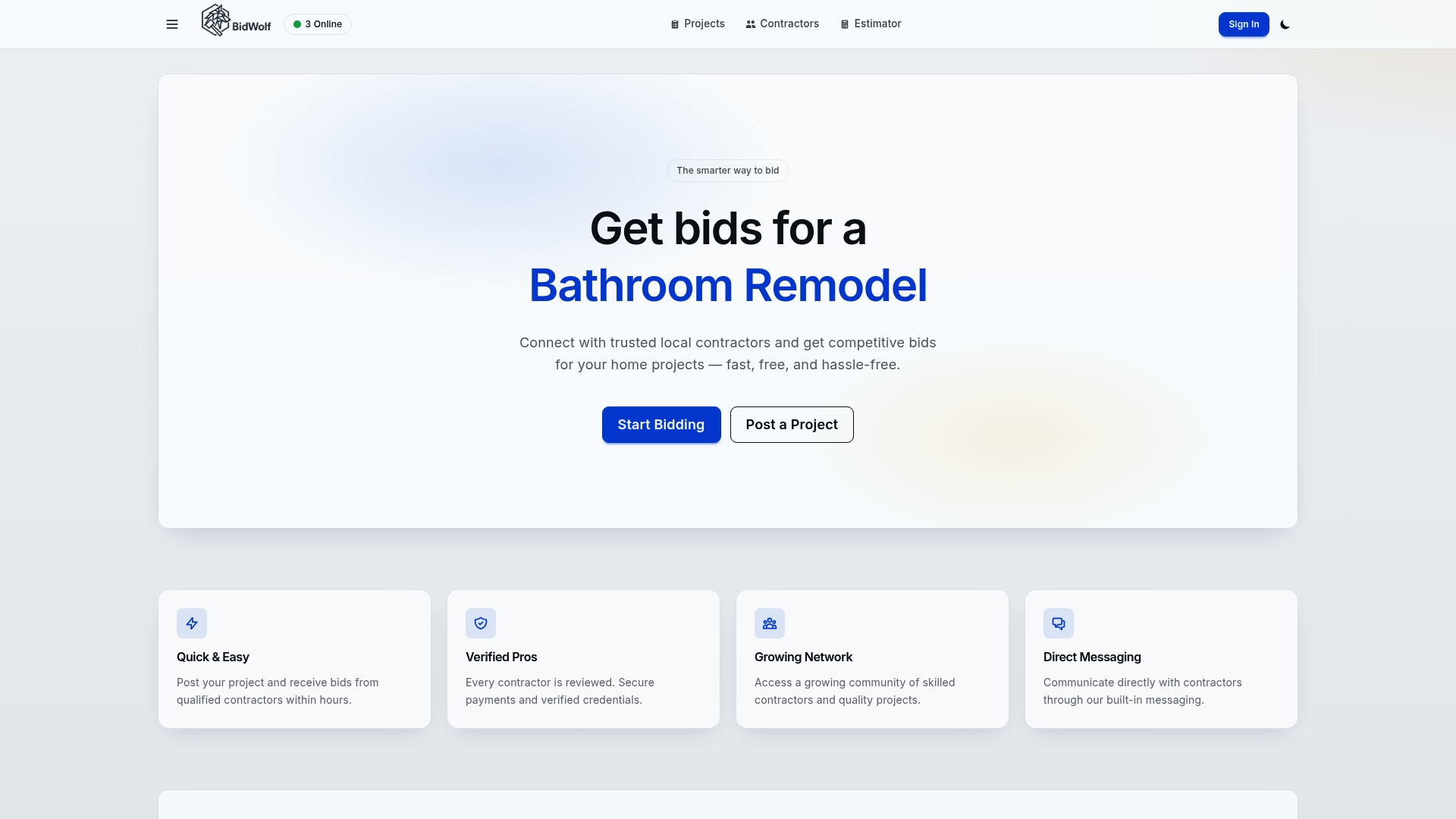
BidWolf gives Texas homeowners an all-in-one environment where you can manage your projects, track messages, and keep organized records of every decision made with your contractor. The platform connects you directly with vetted, verified local professionals and keeps all your project communication in one secure, timestamped location. You can find Texas contractors who are ready to receive your project details, submit competitive bids, and communicate with you through a built-in messaging system designed for exactly this kind of work. Ready to get started? Get a project estimate and see how streamlined and clear your next renovation can be from day one.
Frequently asked questions
Can screenshot texts or chat messages be used as evidence if there’s a dispute with my contractor?
Yes, Texas courts may treat texts and chat threads as valid evidence of instructions, approvals, or notice in a dispute, as confirmed by construction law guidance. Always save your messages and export chat records at key project milestones.
Is it legal for contractors to market to me using text messages in Texas?
Contractors must now register under Texas SB 140 to send marketing texts to Texas residents, or they risk penalties for non-compliance. If you receive unsolicited marketing texts from a contractor, you can ask them to confirm their registration status.
Does using direct messaging cut down on project delays?
Yes, direct messaging speeds approvals and reduces delays compared to phone calls and scattered email chains. The biggest gains come from keeping all communication in a single thread where both parties can respond quickly.
How can I keep a clear record of direct messages with my contractor?
Summarize every important decision in writing immediately after it is made, even if the original discussion happened by phone or in person. Export or screenshot your chat transcripts regularly and organize them by project phase so they are easy to locate if any question comes up later.