
Your Complete Guide to Finding Local Clients
TL;DR:
- Focusing on local SEO, review building, and partnerships is essential for sustainable local client growth. Avoid rushing into paid advertising until a strong organic presence and trust signals are established first. Consistent profile updates, personalized outreach, and local alliances dramatically improve visibility and conversion rates.
Local client acquisition is the practice of using targeted strategies like local SEO, direct outreach, and community networking to connect with paying customers in your immediate area. For freelancers and local service providers, this guide to finding local clients is the most direct path to building a stable, growing business. 78% of consumers search online for local businesses at least weekly, with 21% searching every day. That frequency means local demand is constant. The providers who show up consistently, earn trust quickly, and follow up deliberately are the ones who win the work.
How to build your online presence to attract local clients
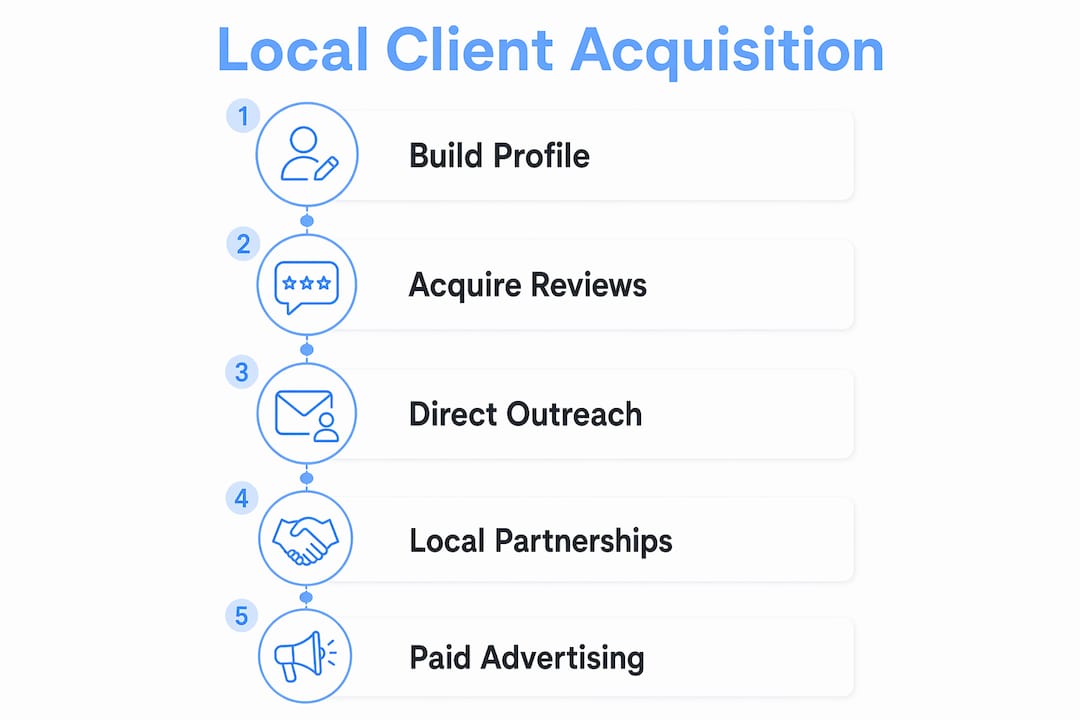
Your Google Business Profile is the single most important asset for finding customers in your area. It determines whether you appear in the local “3-pack” on Google Maps, which is the cluster of three businesses that shows up at the top of local search results. Contractors and freelancers who skip this step are invisible to the majority of local buyers.

Optimize your Google Business Profile weekly
Weekly updates to your profile, including new photos, offers, and event posts, can increase conversion by 10–25%. Google’s algorithm treats fresh content as a signal that your business is active and relevant. A profile that sits untouched for months loses ground to competitors who post consistently.
Set a recurring calendar reminder every Monday to add one photo and one short post. The post can be as simple as a completed project photo with a two-sentence description. That habit alone separates you from the majority of local providers who set up their profile once and forget it.
Pro Tip: Add a “What’s New” post to your Google Business Profile every week. Profiles that show consistent activity rank higher in local map results and convert more profile views into calls.
Build a review acquisition system
Reviews are the currency of local trust. Text-based review requests after each completed job generate five times higher open rates than email requests. That gap is significant. If you are sending review requests by email, you are leaving the majority of your potential reviews on the table.
Standardize your process. After every job, send a short text message with a direct link to your Google review page. Keep the message under three sentences. Clients who are satisfied rarely decline a simple, personal request sent within 24 hours of project completion.
You can read more about how contractor reviews build trust and directly influence hiring decisions for local service providers.
Establish NAP consistency and local citations
NAP stands for Name, Address, and Phone number. Every directory listing, social profile, and website where your business appears must show identical NAP information. Inconsistencies confuse Google’s local ranking algorithm and reduce your chances of appearing in map results.
Submit your business to directories like Yelp, Angi, the Better Business Bureau, and your local Chamber of Commerce. Each listing acts as a citation that reinforces your geographic relevance. The more consistent citations you accumulate, the stronger your local SEO signal becomes.
For a deeper look at local SEO for service businesses, including citation building and map ranking tactics, the strategies apply directly to contractors and freelancers in any trade.
Online presence checklist
| Action | Frequency |
|---|---|
| Add photo or post to Google Business Profile | Weekly |
| Send text-based review request after each job | After every project |
| Audit NAP consistency across all directories | Monthly |
| Respond to all new reviews (positive and negative) | Within 48 hours |
| Update business hours and service areas | As needed |
What direct outreach methods get local clients fast?
Direct outreach is the fastest way to land your first local clients. The key is targeting the right prospects before you write a single message. Sending generic pitches to random businesses wastes time and produces almost no results.
Build a qualified prospect list first
Effective outreach starts with research. Identify 20–30 local businesses that have clear digital gaps: missing or incomplete Google Business Profiles, few or no reviews, slow-loading websites, or no social media presence. These gaps are your opening. You are not selling a vague service. You are offering a specific fix to a visible problem.
Search Google Maps for businesses in your trade category within your city or zip code. Look at their profiles critically. Note missing photos, unanswered reviews, and outdated information. Build a simple spreadsheet with each business’s name, contact information, and the specific issues you found.
Offer a free audit as your opening move
Free initial audits help freelancers land first clients in one to two weeks, compared to six to ten weeks for general outreach. The audit gives the prospect something concrete to react to. It shifts the conversation from “here is what I do” to “here is what I found in your business.”
Keep the audit focused and visual. A one-page PDF showing three to five specific issues with screenshots is more persuasive than a lengthy report. The goal is to demonstrate competence and create urgency, not to overwhelm the prospect.
Pro Tip: End every free audit with one specific recommendation the business owner can act on immediately, even without hiring you. That generosity builds trust faster than any sales pitch.
Execute your outreach in a structured sequence
- Research the prospect. Spend 10 minutes reviewing their online presence before any contact. Know their business name, their gaps, and one specific improvement you can deliver.
- Send a personalized first message. Reference a specific finding from your audit. Avoid templates that could apply to any business.
- Follow up once after five days. Keep the follow-up short. One sentence referencing your first message is enough.
- Offer the free audit in your second contact. Attach the PDF or offer to walk through it on a 15-minute call.
- Propose a paid engagement after the audit conversation. The audit creates the context for a natural next step.
- Close with a clear, low-risk offer. A one-month trial or a single-project scope reduces the perceived risk for a first-time client.
This sequence works because each step builds on the previous one. You are not asking for trust upfront. You are earning it incrementally.
How do local partnerships generate a steady referral pipeline?
Referral leads from complementary local businesses convert at higher rates than cold advertising. Partnerships between complementary providers, such as plumbers and remodelers working in the same local market, generate pre-qualified leads who already trust the referring business. That borrowed trust dramatically shortens the sales cycle.
Despite this advantage, most local service providers neglect partnerships entirely. They focus on ads and cold outreach while leaving the highest-converting channel untouched. That gap is your opportunity.
Identify the right partners
The best partners serve the same clients you do but offer different services. A landscaper pairs naturally with a fence installer. A house painter pairs with a general contractor. A freelance web designer pairs with a local marketing consultant. The overlap in clientele is the foundation of the referral relationship.
Look for partners who:
- Serve the same geographic area you target
- Work with clients at a similar budget level
- Have a strong local reputation and active client base
- Do not compete directly with your core service offering
- Are open to a mutual, two-way referral arrangement
Engage local networks and community groups
Local business networking groups, Chamber of Commerce events, and neighborhood Facebook groups are underused channels for local business client outreach. Showing up consistently at these events builds the familiarity that referrals depend on. People refer businesses they know and trust, not businesses they have heard of once.
Referral leads arrive pre-sold. The referring partner has already vouched for your credibility, which means the prospect calls you ready to hire, not ready to shop around. That distinction changes every conversation you have with a new client.
Attend at least two local networking events per month. Introduce yourself with a clear, one-sentence description of who you help and what problem you solve. Follow up with every meaningful contact within 48 hours. Consistency over months builds a referral network that generates leads without ongoing ad spend.
You can explore how local networks in contracting create sustainable client pipelines for home service providers in Texas and beyond.
When should you add paid local advertising to your strategy?
Paid advertising works best as the final layer of a client acquisition strategy, not the first. Building your acquisition channels in order means establishing your Google Business Profile and local SEO first, then building a review engine, then developing referral partnerships, and only then adding paid ads. Skipping steps makes paid campaigns expensive and ineffective.
Why organic trust signals must come first
Without an optimized Google Business Profile, paid campaigns underperform because there is no trust foundation to convert the traffic they generate. Paid ads become two to three times more cost-effective when layered on a strong organic presence. That multiplier effect is the reason sequence matters.
A prospect who clicks a paid ad and lands on a profile with no reviews, outdated photos, and incomplete information will leave immediately. The same prospect clicking the same ad and landing on a profile with 40 reviews, recent photos, and a clear service description is far more likely to call.
Pro Tip: Before running any paid ads, check that your Google Business Profile has at least 15 reviews and a post from the past seven days. Those two signals alone significantly improve your paid ad conversion rate.
Paid ad formats that work for local providers
| Ad Format | Best Use Case | Key Advantage |
|---|---|---|
| Google Local Service Ads | High-intent service searches | Pay per lead, not per click |
| Google Search Ads | Specific service keywords | Precise geographic targeting |
| Meta neighborhood ads | Awareness in defined zip codes | Visual format, low cost per impression |
| Retargeting ads | Website visitors who did not convert | Re-engages warm prospects |
Set geographic targeting to your actual service radius, not your entire city. Tighter targeting reduces wasted spend and increases the relevance of every impression. Combine your ads with a steady flow of fresh Google Business Profile content and new reviews to maintain the organic trust signals that make paid campaigns perform.
Key Takeaways
The most effective approach to finding local clients combines a well-maintained online presence, structured direct outreach, and consistent partnership development before adding paid advertising.
| Point | Details |
|---|---|
| Google Business Profile is foundational | Weekly updates increase conversion by 10–25% and improve local map ranking. |
| Text-based review requests outperform email | Text requests generate five times higher open rates, building review volume faster. |
| Free audits accelerate client acquisition | Offering a free audit cuts the typical outreach timeline from 6–10 weeks to 1–2 weeks. |
| Partnerships convert better than cold ads | Referral leads from complementary businesses arrive pre-qualified and ready to hire. |
| Paid ads require an organic foundation | Campaigns perform two to three times better when built on strong reviews and an active profile. |
What I have learned from years of watching local providers win and lose clients
The contractors and freelancers who grow fastest are not the ones running the most ads. They are the ones who show up consistently in the places their clients already look. That sounds obvious, but most providers underinvest in the basics and overspend on paid campaigns before they have earned the trust that makes those campaigns work.
The single biggest mistake I see is treating the Google Business Profile as a one-time setup task. Providers spend an afternoon filling it out, then never touch it again. Meanwhile, a competitor who posts weekly and responds to every review within a day climbs past them in local rankings without spending a dollar on ads.
Niche specialization is the other underused advantage. Specializing in one vertical, say kitchen remodels or commercial electrical work, builds category authority that generalists cannot match. Clients searching for a specialist are also less price-sensitive than clients searching for the cheapest available option. That distinction matters for your margins.
My honest recommendation: spend your first 90 days on your Google Business Profile, your review system, and two or three referral partnerships. Only add paid ads after you have at least 20 reviews and a referral relationship generating at least one lead per month. That sequence produces sustainable growth. Skipping it produces expensive lessons.
— Devin
How Bidwolf connects local service providers with ready clients
Local service providers who want a faster path to verified client projects can use Bidwolf to get in front of homeowners who are actively posting work. Bidwolf operates as a digital marketplace where homeowners post home improvement projects and receive competitive bids from vetted local contractors.
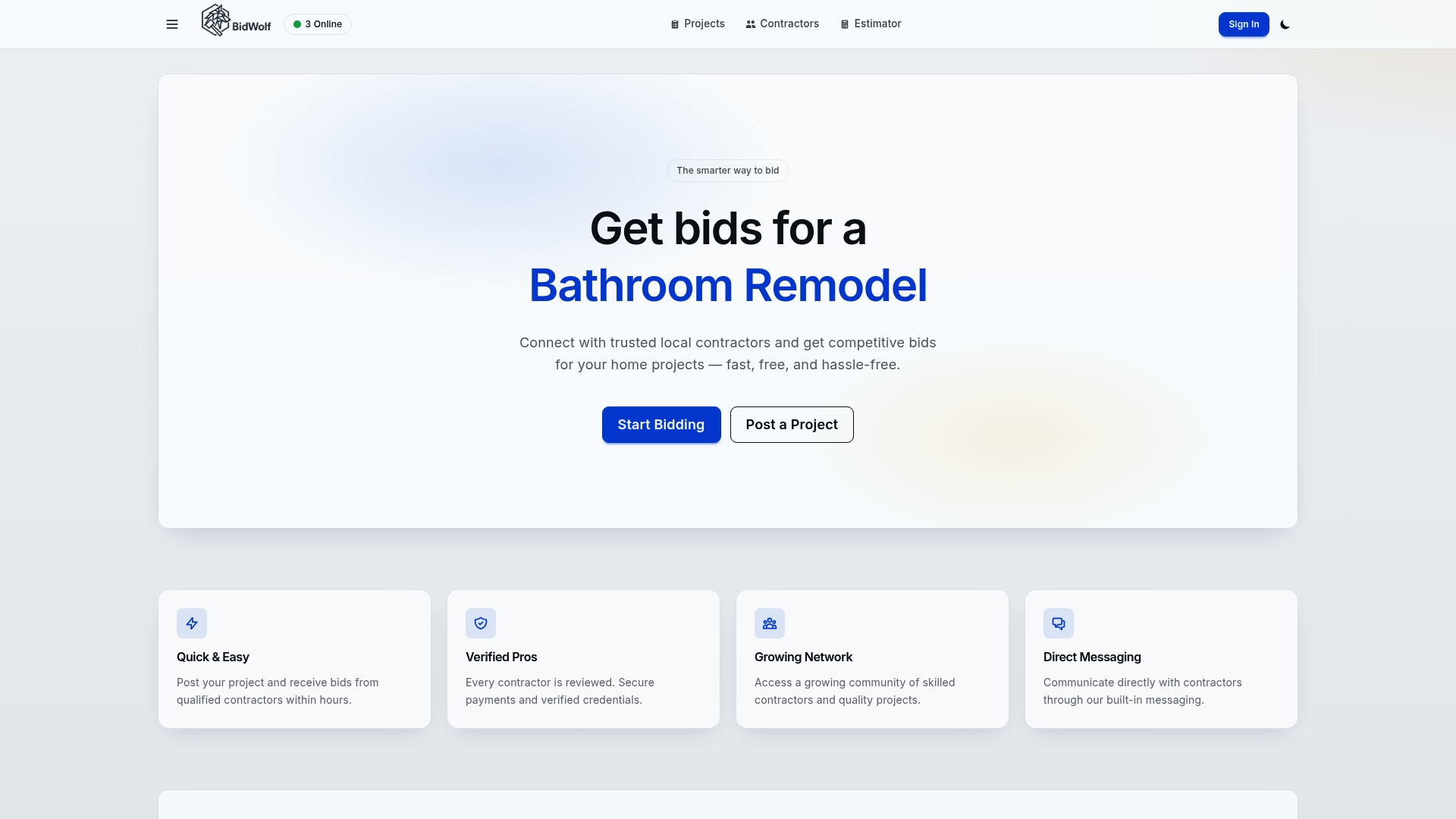
The platform covers projects ranging from roofing and electrical work to landscaping and bathroom remodels. Contractors on Bidwolf benefit from built-in messaging, verified credentials, and a growing network of homeowners across Texas. You can browse active local projects to see what work is available in your area right now, or join as a verified contractor to start receiving project bids directly from homeowners looking for your specific trade.
FAQ
What is the fastest way to get local clients?
Offering a free audit to 20–30 targeted local businesses is the fastest method. Free audits reduce the typical client acquisition timeline from 6–10 weeks to 1–2 weeks by giving prospects a concrete reason to respond.
How does Google Business Profile help attract local clients?
Google Business Profile places your business in local map results where high-intent buyers search. Weekly profile updates with photos and posts increase conversion by 10–25% and signal algorithmic freshness to Google.
Why do referral partnerships convert better than paid ads?
Referral leads arrive with built-in trust from the referring business. Complementary local partnerships generate pre-qualified prospects who are already inclined to hire, which shortens the sales cycle compared to cold advertising.
When should a local service provider start running paid ads?
Paid ads work best after you have established a strong Google Business Profile, a steady flow of reviews, and at least one referral partnership. Running ads prematurely without those trust signals reduces campaign effectiveness by two to three times.
How many reviews does a local business need to compete?
There is no fixed minimum, but profiles with at least 15 reviews consistently outperform those with fewer in local search results. Sending text-based review requests after every completed job is the most reliable way to build review volume quickly.