
Why Manage Maintenance Projects Online: A 2026 Guide
TL;DR:
- Managing maintenance projects online centralizes task coordination, saving time and reducing costs through digital scheduling. It replaces paper logs with real-time data, automates preventive work, and improves accountability. The main barrier is cultural resistance, which can be overcome with structured onboarding and strong leadership.
Managing maintenance projects online is defined as the centralized digital coordination of tasks, resources, schedules, and communications for property upkeep through cloud-based platforms. For property managers and homeowners, this approach replaces scattered spreadsheets, phone calls, and paper logs with a single source of truth accessible from any device. The industry term for this practice is digital maintenance management, often supported by a Computerized Maintenance Management System (CMMS). Research shows that digital tools increase wrench time by 20–25% and improve on-time delivery rates by 35%. Those numbers represent real hours saved and real costs avoided on every project you oversee.
Why manage maintenance projects online: the core efficiency case
Digital maintenance management delivers measurable gains in productivity and cost control. Formal digital tools improve on-time delivery by 35% compared to manual processes. That gap exists because digital systems remove the guesswork from scheduling, task assignment, and follow-up.

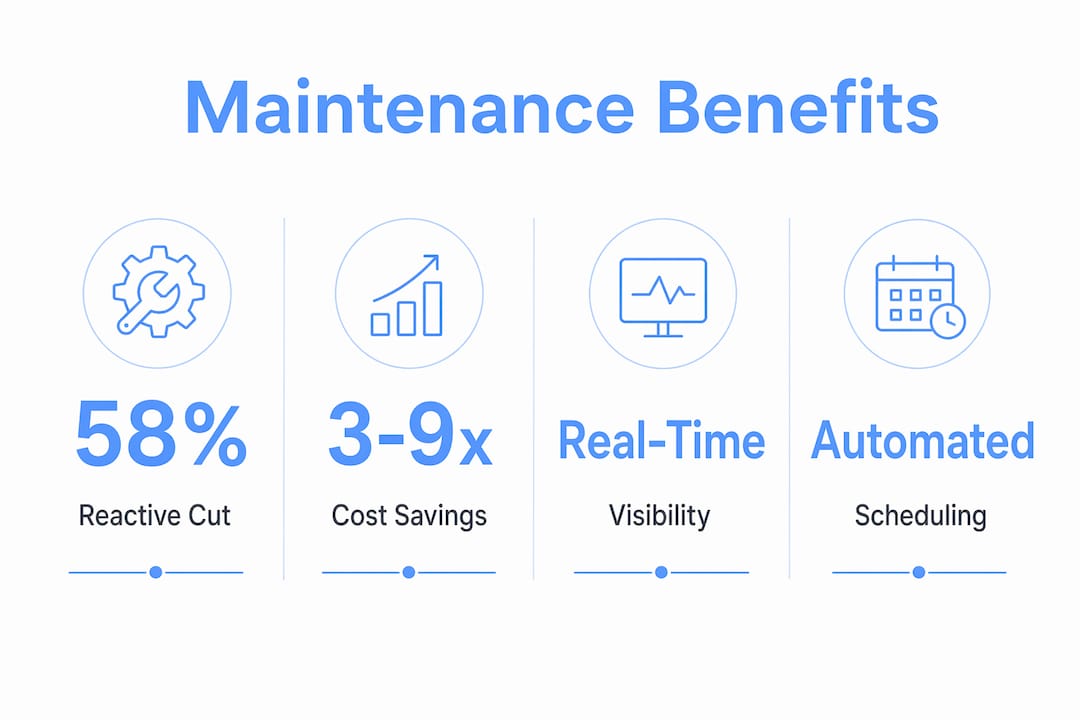
The cost argument is equally direct. Reactive maintenance costs 3 to 9 times more per task than planned preventive maintenance. When you manage projects digitally, you shift from reacting to problems to preventing them, and that shift has a direct impact on your budget.
Paper-based systems make reactive maintenance the default. Paper-based plants run 58% reactive maintenance on average, while digital-first operations run only 26%. That 32-point gap represents missed inspections, emergency repair calls, and contractor overtime that you pay for when no system exists to flag issues early.
Online platforms automate preventive maintenance scheduling by sending alerts when a task is due, assigning it to the right contractor, and tracking completion. A property manager overseeing 20 units, for example, can set recurring HVAC filter checks every 90 days and receive automatic reminders without manually tracking each unit’s service history. The system does the remembering so you can focus on decisions.
Pro Tip: Set condition-based triggers in your digital platform, such as a work order that fires automatically when a tenant reports a leak, rather than waiting for a scheduled inspection. This single change cuts the gap between problem detection and repair start.
Faster repair cycles also reduce repeat failures. When every completed work order captures the technician’s notes, parts used, and time on site, the next technician arrives informed rather than starting from scratch. That institutional memory lives in the platform, not in someone’s head.
What features make online maintenance platforms worth using?
The most effective digital maintenance platforms share a core set of capabilities that directly address the problems property managers and homeowners face daily.
- Centralized data with real-time access. All work orders, asset records, photos, and communications live in one place. You can check project status from a phone, tablet, or laptop without calling anyone.
- Automated notifications and scheduling. The platform sends alerts for upcoming tasks, overdue work orders, and contractor confirmations. Missed deadlines become visible before they become problems.
- Customizable work orders. Each work order can include standard operating procedures, photos of the issue, and the full service history for that specific asset. A contractor arriving to fix a water heater sees every previous repair on record.
- IoT sensor integration. Advanced platforms connect to sensors that monitor temperature, pressure, or energy consumption. When a reading falls outside the normal range, the system creates a work order automatically.
- Digital audit trails. Every action in the system is timestamped and tied to a user. Traceable activity increases accountability across the entire team and supports compliance reporting.
- Mobile and offline access. Mobile-enabled platforms with offline access let field technicians log work in basements and mechanical rooms where connectivity is poor, then sync automatically when signal returns.
One underrated feature is standardized data entry. Requiring fields like asset ID and time on site eliminates the back-and-forth clarification cycle that paper workflows create. When every work order captures the same data points, your reports become reliable and your decisions become faster.
The table below shows how these features translate into practical outcomes for property managers and homeowners.
| Platform Feature | Practical Outcome |
|---|---|
| Centralized work orders | No duplicate requests or conflicting information |
| Automated scheduling | Preventive tasks completed on time, not after failure |
| Asset-linked history | Technicians arrive informed, reducing repeat visits |
| Digital audit trail | Compliance documentation ready without extra effort |
| Mobile offline access | Field teams log work anywhere, no connectivity required |
| Standardized data entry | Cleaner reports and faster decision-making |
How to overcome the challenges of switching to digital maintenance management
The biggest barrier to adopting online maintenance management is not technology. The main barrier is cultural resistance, not the software itself. Teams accustomed to paper logs and phone calls often resist change, and that resistance can stall even the best platform rollout.
A structured transition plan addresses this directly. The steps below reflect what works in practice.
- Run paper and digital systems in parallel for the first 30 days. This reduces the fear of losing information and gives your team time to build confidence in the new system before paper is retired.
- Appoint floor champions. Identify one person per property or team who learns the platform first and supports colleagues. Peer-to-peer training drives adoption faster than top-down mandates.
- Start with a limited asset scope. Migrating every asset record at once creates delays and errors. Begin with your highest-priority assets, prove the system works, then expand.
- Set measurable KPIs from day one. Track metrics like work order completion rate, average repair time, and preventive versus reactive task ratio. Visible progress builds buy-in.
- Choose a mobile-first platform. Field teams adopt tools they can use on a phone without friction. A platform that requires a desktop login for every update will be abandoned quickly.
Connectivity is a real technical challenge worth planning for. Mechanical rooms, basements, and parking structures often have poor signal. Offline data capture with automatic syncing solves this problem without requiring infrastructure upgrades.
Asset integration is the other common pitfall. Without linking work orders to asset records, warranty visibility and maintenance history disappear. This harms first-time fix rates and increases repeat visits. Build asset linking into your setup process from the start, not as an afterthought.
Pro Tip: Limit your initial data migration to the 20% of assets that generate 80% of your work orders. Getting those records right first delivers immediate value and builds team confidence before you tackle the full asset catalog.
For homeowners managing a single property, the learning curve is shorter. A practical guide to managing home projects can help you set up a simple digital workflow without the complexity of an enterprise system.
How online tools improve resource management and project oversight
Real-time visibility is the defining advantage of managing maintenance tasks online. When every task has a status, an owner, and a deadline visible on a shared dashboard, resource conflicts surface before they cause delays. A property manager can see at a glance that two urgent repairs are assigned to the same contractor on the same day and reassign one before the schedule breaks.
Budget tracking improves in parallel. Digital platforms calculate actual costs against estimates automatically as work orders close. You see variance in real time rather than discovering it at month end when nothing can be done. Cloud-based project management decouples geography from productivity, which means a property manager overseeing buildings across multiple locations can review all project statuses from a single screen without traveling to each site.
Communication also centralizes. Instead of updates scattered across text messages, emails, and voicemails, all project communications live inside the platform. Change requests, risk flags, and contractor confirmations are logged automatically. This matters most when a dispute arises. The full record of who approved what and when is already documented.
The table below compares traditional and online resource management outcomes directly.
| Management Area | Traditional Approach | Online Approach |
|---|---|---|
| Task visibility | Phone calls and manual check-ins | Real-time dashboard, accessible anywhere |
| Budget tracking | End-of-month reconciliation | Live cost vs. estimate comparison |
| Communication | Scattered emails and texts | Centralized platform log |
| Scheduling | Manual calendars, prone to conflicts | Automated scheduling with conflict alerts |
| Compliance records | Paper files, easy to lose | Digital audit trail, always accessible |
The advantages of online maintenance tracking extend to scenario planning as well. When your data is centralized, you can model the cost of deferring a repair versus completing it now. That kind of analysis is impossible with paper records. It turns maintenance from a cost center into a managed function with predictable outcomes.
For homeowners managing renovation alongside routine upkeep, digital project oversight provides the same visibility benefits at a smaller scale. Knowing which contractor is scheduled, what they will do, and what it will cost removes the anxiety that comes with managing tradespeople manually.
Key Takeaways
Managing maintenance projects online reduces costs, improves accountability, and shifts property upkeep from reactive firefighting to planned, data-driven operations.
| Point | Details |
|---|---|
| Digital tools cut reactive maintenance | Paper-based systems run 58% reactive maintenance; digital-first operations run only 26%. |
| Preventive scheduling saves money | Reactive maintenance costs 3 to 9 times more per task than planned preventive work. |
| Cultural resistance is the real barrier | Technology deploys in weeks; the main challenge is getting teams to abandon paper habits. |
| Asset integration is non-negotiable | Linking work orders to asset records protects warranty visibility and improves first-time fix rates. |
| Real-time visibility drives better decisions | Live dashboards let property managers catch scheduling conflicts and budget overruns before they escalate. |
What I’ve learned from watching maintenance management change
The shift from paper to digital maintenance management is not really about software. It is about whether a property owner or manager is willing to treat maintenance as a planned function rather than a series of emergencies. I have seen well-funded teams fail at digital adoption because no one changed the underlying habit of calling a contractor the moment something broke, then logging it after the fact. The platform became a documentation tool instead of a planning tool, and the efficiency gains never materialized.
The homeowners who get the most value from managing projects online are the ones who use the data to ask better questions. Not “why did this break?” but “when was this last serviced, and what does the history tell me about what comes next?” That shift in thinking is worth more than any feature list.
Emerging technologies like augmented reality for remote diagnostics and enhanced IoT asset tracking will make online maintenance management even more powerful in the next few years. But the organizations and homeowners who benefit most will be the ones who have already built the habit of working from a central digital record. The technology rewards discipline, not just adoption.
If you are considering using a home project app for the first time, start with one property and one category of maintenance. Prove the value to yourself before scaling. The data you collect in the first 90 days will tell you more about your maintenance costs than years of paper records ever did.
The role of maintenance scheduling is often underestimated by first-time adopters. Scheduling is not just about knowing when tasks are due. It is the mechanism that converts your maintenance budget from a guess into a plan.
— Devin
Bidwolf makes online maintenance project management practical
Bidwolf connects property managers and homeowners with vetted, local contractors through a digital platform built for transparency and speed. You post your maintenance project, receive competitive bids from verified professionals, and manage all communication in one place.
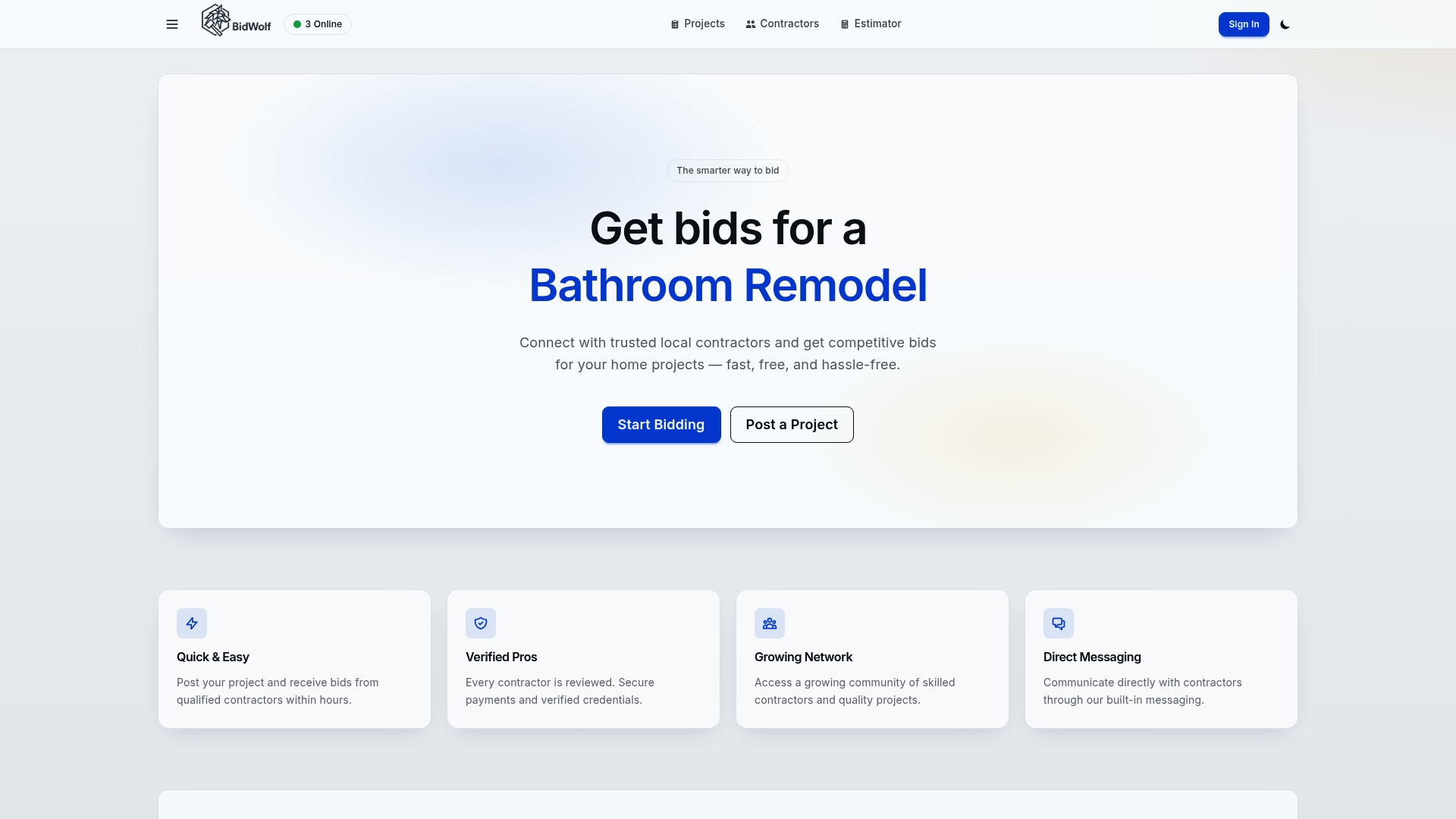
The platform supports the full project lifecycle, from initial bid comparison to contractor selection and payment, without the back-and-forth of phone-based coordination. Bidwolf’s mobile app lets you manage your maintenance projects remotely, whether you are overseeing a single home or multiple properties. You can also find vetted local contractors for specific trades, from roofing and electrical to plumbing and landscaping, all with verified credentials and transparent pricing.
FAQ
What does managing maintenance projects online mean?
Managing maintenance projects online means coordinating tasks, schedules, contractors, and communications through a cloud-based platform rather than paper logs or phone calls. The industry term is digital maintenance management, often supported by a CMMS.
How much can digital maintenance tools reduce costs?
Reactive maintenance costs 3 to 9 times more per task than planned preventive maintenance. Switching to digital scheduling and work order management shifts the balance toward lower-cost planned work.
What is the biggest challenge when switching to online maintenance management?
The main barrier is cultural resistance, not technology. Teams accustomed to paper systems resist change, and adoption requires floor champions, parallel running periods, and measurable KPIs to succeed.
Do online maintenance platforms work without a reliable internet connection?
Yes. Mobile-enabled platforms with offline access let field technicians log work in low-connectivity areas like basements and mechanical rooms, then sync automatically when connectivity returns.
Is online maintenance management useful for homeowners, or just property managers?
Both groups benefit. Homeowners gain real-time visibility into contractor schedules, costs, and project status. Property managers gain the same benefits across multiple units or buildings from a single dashboard.