

What Is Multi-City Contractor Access for Texas Owners

TL;DR:
- Multi-city contractor access centralizes credential management, permissions, and work tracking across Texas properties, reducing compliance gaps and administrative costs. It provides real-time logs and role-based controls that enhance security, coordination, and liability protection for property managers overseeing multiple locations. Implementing this system involves standardizing requirements, adopting a cloud platform, and ensuring immediate offboarding to secure every project site effectively.
Multi-city contractor access is a centralized digital system that manages contractor credentials, permissions, and work scope across multiple properties and geographic locations under one standardized record. For Texas homeowners and property managers overseeing renovations in Houston, Dallas, Austin, or San Antonio, this approach replaces scattered spreadsheets and phone calls with a single source of truth. It covers everything from certificate of insurance verification to role-based site permissions, all tracked in real time. The result is less administrative chaos, fewer compliance gaps, and a documented trail that protects you when something goes wrong.
What is multi-city contractor access and why does it matter?
Multi-city contractor access is the industry term for what many property professionals also call multi-location contractor management. It refers to the practice of standardizing how contractors are credentialed, permitted, and tracked across every property you own or manage, regardless of city. Rather than treating each renovation project in Austin as separate from your Dallas roofing job, you manage both under one protocol, one contract format, and one reporting system.

The concept matters because Texas property managers face a specific challenge: the state has no single statewide contractor licensing requirement, which means verification standards vary by city and trade. Houston requires electrical and plumbing licenses at the city level. San Antonio has its own permitting office. Without a centralized system, you end up running separate compliance checks for every contractor at every location. That duplication is where errors, delays, and liability gaps appear.
A centralized contractor access system solves this by creating a master digital profile for each contractor. That profile holds their license numbers, insurance certificates, induction records, and work history. When you assign them to a new property, the system checks their credentials automatically rather than requiring you to start from scratch. This is not a luxury for large property management firms. It is a practical necessity for anyone managing more than two active projects across different Texas cities at the same time.
What benefits does multi-city contractor access offer Texas property managers?
The practical advantages of centralized contractor access fall into four categories: liability reduction, scheduling efficiency, compliance improvement, and cost savings. Each one compounds the others.
Liability and insurance protection
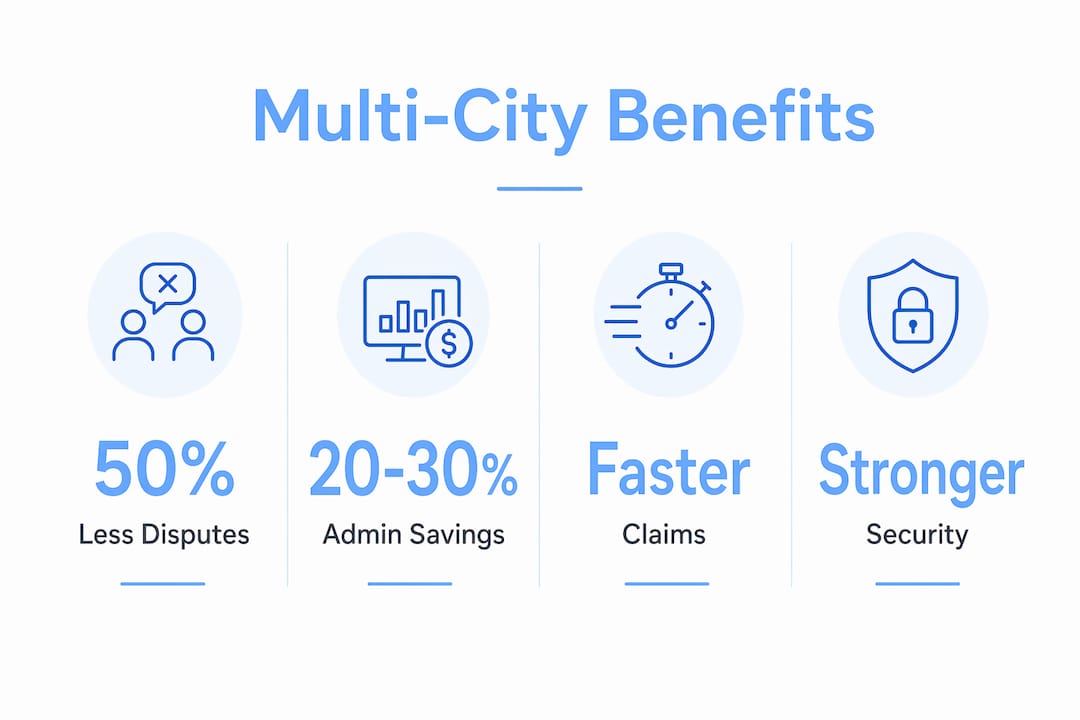
Digital log systems shorten insurance claim investigations from weeks to days by providing timestamped records of who was on site, when, and what work they performed. For Texas property managers, this matters because contractor-related incidents, a fall at a rental property or damage to a neighboring unit, trigger insurance investigations that rely heavily on documentation. Without an access log, you are relying on contractor self-reporting, which insurers treat as weak evidence. Structured access documentation is now part of how insurers assess underwriting risk, meaning gaps in your records can directly raise your premiums.
Scheduling and coordination across properties
Managing contractors across Houston and Fort Worth simultaneously without a shared system means you are constantly playing phone tag to confirm who is where. Centralized platforms sync project status across cities in real time, so you know when a plumber in Plano finishes rough-in work and whether the tile contractor in Corpus Christi is on schedule. This visibility prevents the most common and costly coordination failure: two crews showing up at the same property on the same day with conflicting scopes.
Compliance tracking
- Automatic alerts when a contractor’s insurance certificate is about to expire
- City-specific permit requirements stored per property, not per contractor
- Induction records confirming contractors have reviewed site safety protocols
- Work history logs that satisfy audit requirements without manual compilation
Cost savings through reduced overhead
Verifying contractor insurance and safety documentation without a centralized system increases administrative costs by 20 to 30 percent. That overhead comes from repetitive paperwork, inconsistent verification, and the staff time required to chase down documents before each project. A single digital protocol eliminates most of that repetition.
Pro Tip: Before selecting a contractor access platform, confirm it can store city-specific permit requirements as separate fields. A system that treats all locations identically will still require manual workarounds for Texas’s city-by-city licensing rules.
How does multi-city contractor access work?
The system operates through four interconnected components: digital onboarding, credential verification, role-based access control, and real-time tracking. Understanding each component helps you evaluate which platforms fit your specific portfolio.
Digital onboarding and credential verification
Every contractor entering your network completes a digital onboarding process before they set foot on any property. This includes uploading their license documentation, certificate of insurance, and any trade-specific certifications. The platform stores these documents centrally and flags expiration dates automatically. For a Texas property manager with contractors in multiple cities, this means you verify credentials once and deploy that contractor across your portfolio without repeating the process.
Role-based access control
Role-based access control, commonly called RBAC, is the mechanism that ensures contractors access only authorized zones. A roofing crew assigned to a Dallas duplex has no permission to view project files or enter areas related to your Austin condo renovation. RBAC applies both to physical site access, through digital badge or PIN systems, and to data access within the project management platform. This restriction prevents unauthorized data exposure and physical site breaches, both of which create liability.
Cloud-based syncing across locations
The following steps describe how a typical multi-city contractor access workflow operates from project start to finish:
- Post the project with location-specific requirements, including city permit details and scope of work.
- Onboard the contractor digitally, collecting license, insurance, and induction confirmation before any site visit.
- Assign role-based permissions that limit the contractor’s access to their specific task and property.
- Track entry and exit through digital logs that record timestamps and work completed.
- Sync status updates across all active properties so you see real-time progress from a single dashboard.
- Offboard the contractor immediately upon project completion, revoking all digital and physical access.
Real-time tracking and reporting
| Feature | Traditional management | Centralized access system |
|---|---|---|
| Credential verification | Manual, per project | Automated, stored centrally |
| Scheduling visibility | Phone calls and emails | Real-time dashboard |
| Compliance documentation | Paper files per location | Digital audit trail |
| Access revocation | Often delayed or forgotten | Immediate upon offboarding |
| Insurance claim support | Self-reported records | Timestamped digital logs |
Automated digital access logs reduce payroll disputes and invoicing discrepancies by up to 50 percent compared to self-reported hours. For property managers paying contractors across multiple cities, this accuracy directly reduces billing errors and the time spent resolving them.
Multi-city access versus traditional single-site contractor management
Traditional single-site contractor management treats every project as independent. You hire a contractor for your Houston bathroom remodel, collect their paperwork, and manage that relationship separately from the plumber you hired in Austin last month. This approach works when you have one property. It breaks down at two or three.
The core problem with decentralized management is duplication. You verify the same contractor’s insurance three times across three projects because there is no shared record. You negotiate separate contract terms for each job because there is no master agreement. You compile compliance documentation manually for each property because there is no unified audit trail. Repetitive paperwork and inconsistent verification raise overhead and delay projects, and the delays compound across locations.
The security risk is equally significant. Access control deters theft and unauthorized entry by monitoring entry points and personnel credentials. Traditional management rarely includes formal access logging, which means expensive materials and equipment on your Dallas renovation site have no documented chain of custody. Insurers now expect access documentation as part of their underwriting assessments, so the absence of logs is a direct financial exposure.
| Factor | Traditional management | Multi-city access system |
|---|---|---|
| Contract format | Separate per project | Single master agreement |
| Insurance verification | Repeated manually | Verified once, stored centrally |
| Compliance audits | Time-consuming, incomplete | Instant digital retrieval |
| Scheduling conflicts | Common, resolved reactively | Prevented through real-time sync |
| Offboarding process | Informal, often missed | Automated and immediate |
Pro Tip: If you are currently managing contractors across two or more Texas cities using email threads and PDF attachments, calculate how many hours per month you spend on credential verification alone. That number, multiplied by your hourly rate, is your baseline cost for staying with a decentralized system.
Centralized systems also create audit trails that improve insurance outcomes. Many property managers face insurance penalties due to poorly integrated contractor access systems. A unified record that shows consistent safety inductions, verified credentials, and documented site access gives your insurer evidence that you manage risk proactively. That evidence translates into lower premiums over time.
How to implement multi-city contractor access for your Texas properties
Adopting a centralized contractor access system does not require a large IT budget or a dedicated operations team. The following three steps apply directly to Texas homeowners and property managers working with contractors across multiple cities.
-
Standardize your compliance requirements into a master digital protocol. Before selecting any platform, list every compliance requirement across your properties. This includes city-specific permit requirements for Houston, Dallas, Austin, and any other Texas city where you operate, plus trade-specific licensing, insurance minimums, and safety induction requirements. Consolidate these into a single checklist that every contractor must complete before starting work. This master protocol becomes the foundation of your digital onboarding process. Without it, even the best platform will have inconsistent data.
-
Adopt a cloud-based project management platform that syncs status across cities. Platforms that support multi-location project coordination give you a single dashboard showing the status of every active project, regardless of city. Look for platforms that include contractor credential storage, scheduling tools, and direct messaging. The ability to communicate with contractors through the platform, rather than through personal email or text, keeps all project communication in one searchable record. This matters when you need to resolve a dispute or respond to an insurance inquiry. Centralized cloud syncing can eliminate the 30% increase in project delays that typically results from miscommunication in decentralized systems.
-
Apply role-based access to restrict contractor permissions per task and location. Once your contractors are onboarded, assign permissions that match their specific scope. A landscaping crew in San Antonio should not have access to your electrical project files in Beaumont. Configure your platform so that each contractor sees only the properties, documents, and communication threads relevant to their assignment. Review these permissions at the start of each new project phase and revoke them immediately when a phase ends.
Onboarding contractors effectively
When onboarding a new contractor, collect their license number, certificate of insurance with your property listed as an additional insured, and a signed acknowledgment of your site safety protocols. Store all three documents in the contractor’s digital profile before their first site visit. For hiring contractors securely in Texas, verifying credentials before work begins is the single most effective step you can take to reduce liability.
Offboarding and access revocation
Failing to revoke digital access after a contractor’s project ends creates unauthorized data and site access vulnerabilities. Build offboarding into your project completion checklist. When a contractor finishes work, revoke their platform access, deactivate any site entry credentials, and archive their project files. This step takes less than five minutes in a well-configured system and closes the most common security gap in multi-property contractor management.
Key takeaways
Multi-city contractor access is the single most effective system for Texas property managers who need to coordinate contractors across multiple locations without sacrificing compliance, security, or cost control.
| Point | Details |
|---|---|
| Core definition | A centralized system managing contractor credentials, permissions, and work scope across multiple Texas properties under one record. |
| Primary benefit | Reduces insurance liability and administrative overhead by replacing repetitive manual verification with automated digital logs. |
| Security requirement | Role-based access control limits each contractor to authorized zones and data, preventing unauthorized site and data breaches. |
| Offboarding is critical | Revoking all digital and physical access immediately after project completion closes the most common multi-site security vulnerability. |
| Implementation starting point | Standardize compliance requirements into a master digital protocol before adopting any platform to avoid inconsistent data across cities. |
Why centralized contractor access is infrastructure, not administration
I have watched property managers in Texas treat contractor access as a paperwork problem rather than a risk management system. That framing is the root cause of most of the compliance failures and insurance headaches I see. When you think of access management as something you do after you hire a contractor, you are already behind. The credential check, the permission assignment, the access log — these are not administrative tasks. They are the infrastructure that makes everything else defensible.
The property managers who handle multi-city projects well share one habit: they set up their access system before they post the first project, not after a problem forces them to. They know that a timestamped digital log of who was on site in Fort Worth last Tuesday is worth more than any verbal assurance when an insurer is asking questions.
Technology has made this genuinely accessible. You do not need enterprise software or a dedicated compliance officer. You need a platform that stores contractor credentials, syncs across your properties, and sends you an alert when an insurance certificate expires. The benefits of contractor bidding platforms extend well beyond finding the lowest bid. The best platforms double as access management tools that keep your documentation current without manual effort.
My honest advice to Texas property owners managing more than one active project: treat your contractor access system as the first line of defense, not the last. The cost of setting it up correctly is a fraction of the cost of one insurance dispute, one unauthorized site entry, or one compliance audit you are not prepared for.
— Devin
Manage your Texas contractor projects with Bidwolf
Bidwolf gives Texas homeowners and property managers a centralized platform for coordinating contractors across multiple cities, from Houston to El Paso. You post your project, receive competitive bids from verified local contractors, and manage all communication, scheduling, and documentation in one place.
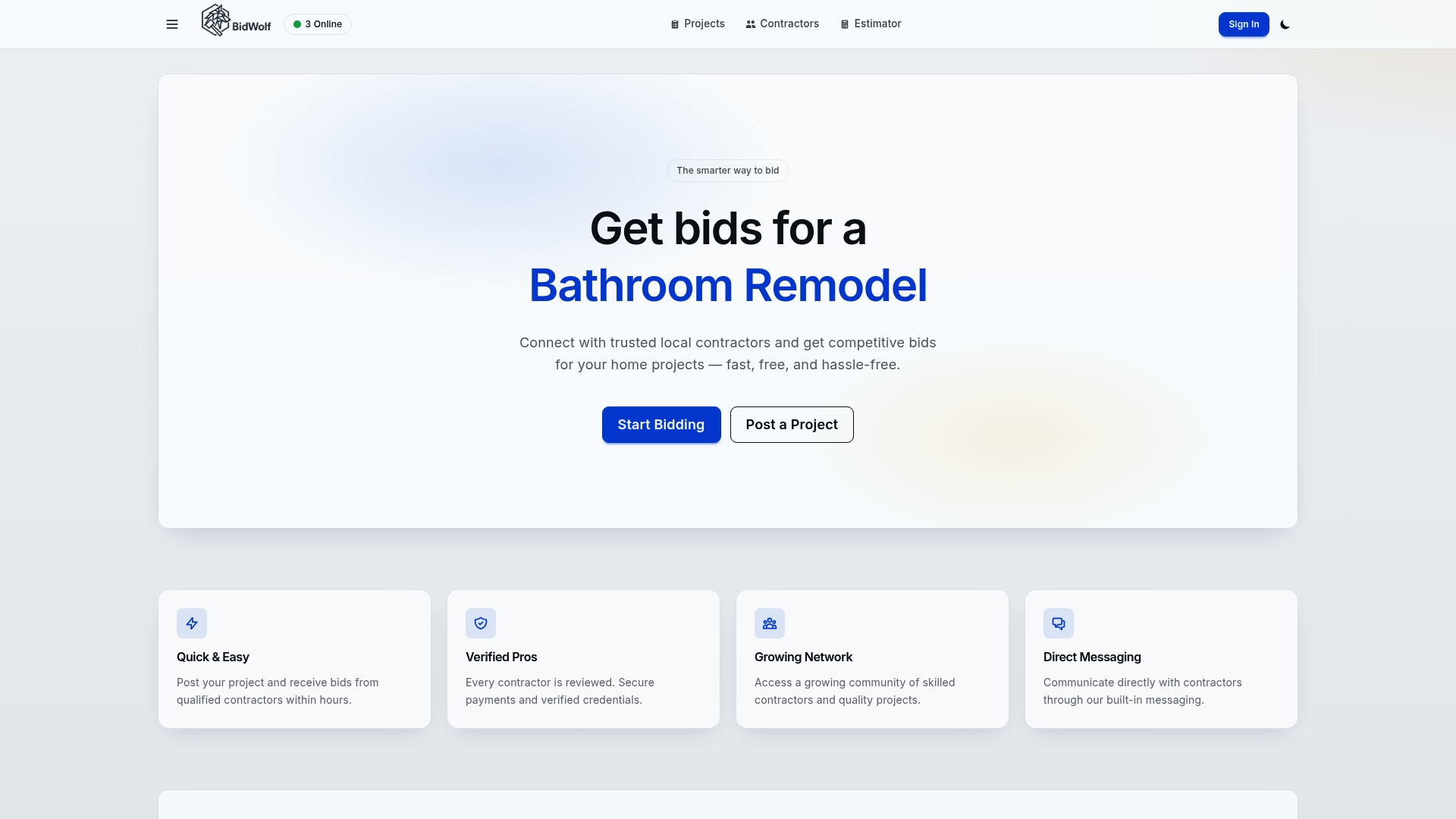
Bidwolf’s verified contractor network covers roofing, electrical, plumbing, landscaping, and full renovations across Texas. Every contractor in the network carries verified credentials, so your compliance documentation starts the moment you hire. Whether you are managing a single remodel or coordinating maintenance across multiple rental properties, post your project on Bidwolf to connect with qualified contractors and keep every job on track from a single dashboard.
FAQ
What is multi-city contractor access in simple terms?
Multi-city contractor access is a centralized system that manages contractor credentials, permissions, and work records across multiple properties and cities under one standardized digital record. It replaces separate paperwork for each location with a single protocol covering all sites.
How does role-based access control protect my Texas properties?
Role-based access control ensures each contractor can only access the specific property, data, and site zones relevant to their assigned task. This prevents unauthorized entry and data exposure, both of which create liability for property managers.
Does centralized contractor access actually save money?
Yes. Decentralized verification increases administrative costs by 20 to 30 percent through repetitive paperwork and inconsistent credential checks. Centralized systems eliminate most of that duplication and reduce payroll disputes through accurate digital time logs.
What happens if I forget to revoke a contractor’s access after a project?
Failing to revoke access after project completion is a documented security vulnerability. It can result in unauthorized site entry or data access. Build access revocation into your project completion checklist to close this gap immediately.
Do I need special software to manage contractors across multiple Texas cities?
You need a cloud-based platform that stores contractor credentials, syncs project status across locations, and supports role-based permissions. Bidwolf provides these features for Texas homeowners and property managers through its local contractor network, with a mobile app for managing projects remotely.