
The Role of Trust in Contractor Selection for Homeowners

TL;DR:
- Trust in contractor selection is based on verifiable credentials, communication, and documented processes, not just intuition.
- Ongoing verification of licenses, insurance, and clear contracts reduces project risks and builds reliable relationships.
Hiring a contractor for a renovation or repair project is one of the most significant decisions you’ll make as a homeowner or property manager. The role of trust in contractor selection goes far beyond a gut feeling about someone. 83% of built-environment professionals agree that trust is critical to successful project outcomes. Yet most homeowners still base their hiring decisions on price, a neighbor’s recommendation, or a polished website. This article shows you what verifiable, research-backed trustworthiness actually looks like, and how to measure it before you sign a contract.
Table of Contents
- Key takeaways
- The role of trust in contractor selection, defined
- Key trust factors when evaluating a contractor
- Common misconceptions about trusting contractors
- Practical steps to build and maintain contractor trust
- My honest take on trust and contractor selection
- Find verified contractors with confidence on Bidwolf
- FAQ
Key takeaways
| Point | Details |
|---|---|
| Trust is earned, not assumed | Reliable trust comes from verified credentials, clear contracts, and consistent communication, not intuition alone. |
| Verification must be ongoing | Check licenses and insurance at hiring and continue monitoring them throughout the project lifecycle. |
| Communication drives outcomes | Early agreement on scope, schedules, and decision processes reduces disputes and builds structured trust. |
| Price alone is a red flag | Selecting based on the lowest bid without evaluating capacity and financial stability increases project risk. |
| Technology supports trust | Platforms with credential verification and documented milestones give homeowners objective evidence of contractor reliability. |
The role of trust in contractor selection, defined
In the construction industry, the professional term for what homeowners call “trust” is contractor reliability assessment. It covers a set of measurable behaviors and verifiable attributes, not just a feeling of comfort. Understanding both terms helps you speak the same language as industry professionals and use the right tools to protect yourself.
Trust in this context has four core components. Reliability means the contractor does what they say they will do, on time and within budget. Integrity means they are honest about problems, costs, and timelines even when that honesty is uncomfortable. Communication means they keep you informed at every stage without you having to chase them. Contractual clarity means every obligation, payment, and risk is documented so there is no room for disputed interpretations later.
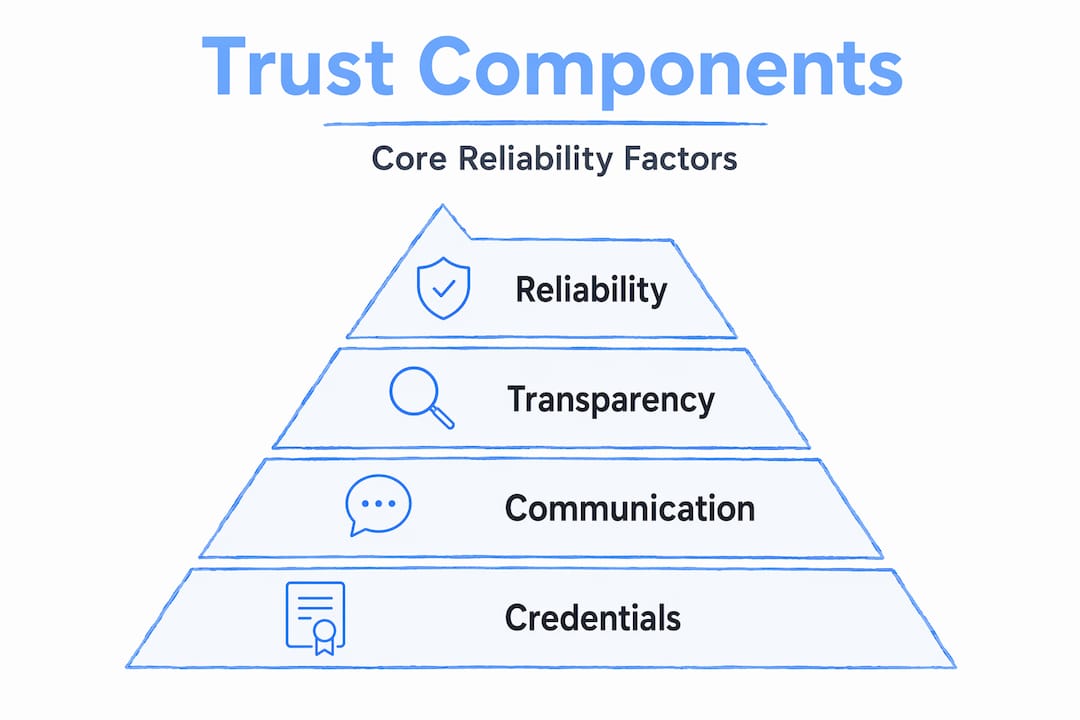
Research supports this framework. Trust as a project performance driver includes honest communication, reliance on delivered outcomes, and measurable follow-through as its core elements. This means trust is not only relational but also quantifiable and tied directly to results.
The relationship between trust and project success is well documented. When trust exists between a homeowner and a contractor, problems get resolved faster, change orders are handled without escalation, and the final product more closely matches expectations. When it breaks down, disputes follow.
“Trust is created best by getting the process right early, through clear scope, responsibilities, and decision rules, not by vague comfort or intuition.” — NEC Contracts Global Research, 2026
That quote captures something many homeowners miss. Effective communication and early process alignment are among the top drivers that minimize disputes. Trust is built through structure, not just rapport.
Key trust factors when evaluating a contractor
When you start the process of choosing a contractor for your project, you need a structured set of criteria. Here are the most important trust factors to evaluate, ranked by their impact on project outcomes.
-
Legal verification. Confirm that the contractor holds a current, valid license for the type of work they are performing in your state. Verify they carry general liability insurance and workers’ compensation coverage. Confirming licenses, insurance, and compliance protects you from legal exposure if something goes wrong on your property.
-
Experience and past performance. Ask for a portfolio of completed projects that match yours in scope and complexity. Request references and actually call them. Ask references whether the contractor met their timeline, stayed on budget, and communicated proactively.
-
Financial stability. A contractor who is financially overextended may cut corners, delay your project to fund another, or disappear mid-job. Ask how many active projects they are managing and whether they can provide a basic financial reference from a supplier or materials vendor.
-
Communication quality. Pay attention to how the contractor communicates during the bidding phase. Do they respond promptly? Do their written proposals show attention to detail? Structured and transparent processes in the early stages predict how they will perform under pressure.
-
Contract clarity. A trustworthy contractor will not resist a detailed, written contract. Transparent risk allocation in contracts builds trust and reduces disputes. Look for clear payment schedules, defined milestones, change order procedures, and a dispute resolution process.
Pro Tip: Ask every contractor for a sample contract before you award the project. A contractor who cannot provide one, or who discourages written agreements, is showing you something important about how they operate.
Here is how two contractor profiles compare on key trust dimensions:
| Trust factor | Trustworthy contractor | Risk contractor |
|---|---|---|
| Licensing | Current, verifiable license on file | License expired or unverifiable |
| Insurance | General liability + workers’ comp | “Has insurance” but no documentation |
| Communication | Responds within 24 hours, writes proposals | Verbal commitments, hard to reach |
| Contract | Detailed written contract with milestones | Handshake agreement or vague scope |
| References | Three verifiable recent references | No references or deflects the question |
| Financial stability | Manageable workload, supplier references | Multiple simultaneous projects, vague answers |
Payment reliability is another dimension that works both ways. Clear payment schedules tied to progress signal professionalism and protect both parties. A contractor who demands full payment upfront is asking you to trust them without any accountability mechanism in place.

Common misconceptions about trusting contractors
Many homeowners make predictable mistakes when assessing trustworthiness. Knowing these pitfalls before you hire can save you thousands of dollars and months of frustration.
-
Trusting price as a quality signal. The lowest bid is often a sign that a contractor has cut something, whether that is labor quality, materials, insurance, or their own profit margin. Selecting contractors based solely on price leads to measurable risk. Evaluate capacity, communication, and financial stability alongside cost.
-
Assuming past good performance guarantees future results. A contractor who did excellent work for your neighbor two years ago may have grown too fast, changed their crew, or taken on projects that exceed their current capacity. Always verify current workload and staffing before hiring, even for contractors you have worked with before.
-
Relying on familiarity over verification. Hiring a contractor because you know them personally skips the objective checks that protect you. Familiarity creates social pressure to overlook red flags.
-
Treating initial verification as sufficient. Many homeowners check credentials once at hiring and then assume everything is fine for the duration of the project. Credential badges reflect last verification status and may expire. A contractor’s insurance can lapse mid-project. Licenses can be suspended.
-
Neglecting communication structure. When there are no agreed processes for approvals, changes, or updates, small misunderstandings grow into disputes. Trust does not survive a communication vacuum.
Pro Tip: Before awarding any project over $10,000, run a quick online search of the contractor’s name and license number through your state licensing board. It takes five minutes and confirms their current standing.
The clearest warning sign that trust has been misplaced is usually visible before the project starts. A contractor who pressures you to decide quickly, cannot explain their pricing, or avoids written documentation is telling you how they will handle problems once your money is on the line.
Practical steps to build and maintain contractor trust
Building trust with contractors is not a one-time event. It is a process that starts before hiring and continues through the final walkthrough. Here is how to approach it systematically.
-
Run a structured due diligence check. Verify the license number directly through your state’s licensing board website. Request a current certificate of insurance, not just verbal confirmation. Check online reviews across multiple platforms and look for patterns, not just ratings. For larger projects, consider using a third-party credential verification service that monitors ongoing license and insurance status.
-
Document everything in writing from day one. Your contract should include a full scope of work, a payment schedule tied to specific milestones, a timeline with agreed checkpoints, and a process for handling change orders. Payment schedule clarity and documented approval milestones prevent financial disputes and keep both parties accountable.
-
Schedule regular project check-ins. Weekly updates, even brief ones, maintain communication and give you early warning of problems. Ask for progress photos tied to payment milestones. This is not micromanaging. It is responsible oversight.
-
Re-verify credentials at key project stages. For projects lasting longer than 60 days, confirm that insurance and bonding remain active at the halfway point. This is a reasonable, professional request that any reputable contractor will understand.
-
Use technology to your advantage. Platforms that centralize bids, messages, and documentation create a traceable record of every commitment made. This protects you legally and makes it harder for disputes to take hold.
Here is a simple timeline for trust verification throughout a typical renovation project:
| Project stage | Trust verification action |
|---|---|
| Pre-hire | Verify license, insurance, references, and financial stability |
| Contract signing | Confirm written scope, payment schedule, and change order process |
| Project start | Review crew credentials and confirm site safety compliance |
| Mid-project (30-60 days) | Re-verify insurance; review progress against documented milestones |
| Final payment | Conduct walkthrough against contracted scope before releasing funds |
One thing that most articles on hiring trusted contractors overlook is the final payment stage. Releasing the final payment before a documented walkthrough removes your only remaining leverage point. Keep that leverage until the work matches what was agreed in writing.
For homeowners planning larger renovations, reviewing interior renovation planning tips alongside your contractor vetting process helps you set realistic expectations and create documentation that supports trust from both sides.
My honest take on trust and contractor selection
I have spent years watching homeowners and property managers get burned, and the pattern is almost always the same. They trusted a feeling instead of a process.
The most common mistake I see is confusing likability with reliability. A contractor can be personable, responsive during the sales phase, and still deliver shoddy work or disappear after the deposit clears. Charm is not a trust indicator. Verifiable track records are.
What I have found actually works is treating every contractor hire like a small business transaction, because that is exactly what it is. You would not wire money to a vendor without confirming their banking details. You should not hand over access to your home and a significant sum of money without confirming a license, active insurance, and at least two verifiable references from recent, comparable projects.
The other thing I have learned is that the best contractors actually welcome your due diligence. They have seen what happens when a homeowner hires the wrong person, and they know that a client who asks smart questions is less likely to be a problem client later. If a contractor gets defensive when you ask for documentation, that reaction itself is your answer.
One overlooked factor is workload transparency. A contractor stretched across eight active projects cannot give yours the attention it needs. Asking “how many active projects do you currently have and who manages them when you are off-site” is one of the most useful questions you can ask. Contractors who answer it clearly and specifically are showing you exactly the kind of accountability that predicts a good outcome.
Trust in contractor relationships is not blind faith. It is confidence built on evidence, structured processes, and clear agreements. When you approach it that way, you protect yourself and you tend to attract better contractors.
— Devin
Find verified contractors with confidence on Bidwolf
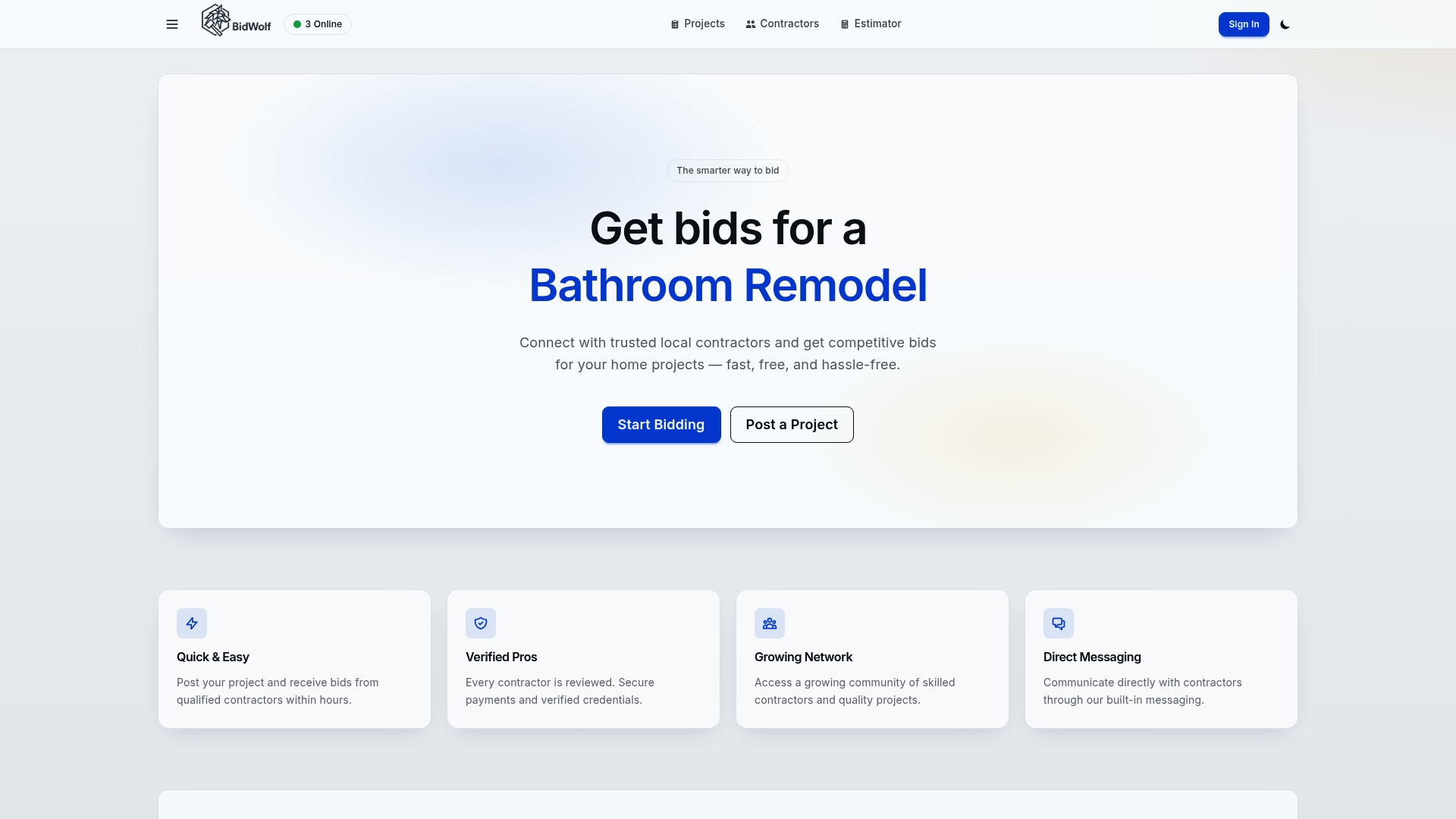
Bidwolf takes the guesswork out of contractor selection by giving you a platform where verification is built in. Every contractor in the Bidwolf network goes through credential checks before they can bid on your project. You can post your project, receive competitive bids from local professionals, and compare contractors side by side using documented profiles, reviews, and credential status. Built-in messaging keeps all communication in one traceable place, so nothing gets lost in a text thread. Whether you are managing a bathroom remodel, a roofing repair, or a full renovation, Bidwolf gives you the tools to make an informed, confident decision. Post your project today and start receiving bids from verified local contractors, or browse contractor profiles in your area to start comparing your options.
FAQ
What does trust mean in contractor selection?
Trust in contractor selection refers to verifiable reliability, including a contractor’s valid license, active insurance, communication habits, and history of delivering on commitments. It is not just a feeling but a measurable set of criteria tied to project performance.
How do I verify a contractor’s trustworthiness before hiring?
Confirm their license through your state board, request a current certificate of insurance, call at least two recent references, and review their proposed contract for clear scope, milestones, and payment terms. These steps take less than a day and significantly reduce your risk.
Why should I re-verify a contractor’s credentials mid-project?
Insurance and licenses can expire or be suspended after your initial check. Re-verifying at key project stages ensures you remain protected throughout the entire project, not just at the point of hire.
Is the lowest bid a reliable indicator of a trustworthy contractor?
No. Selecting based solely on price increases risk. A low bid often signals reduced insurance coverage, lower-quality materials, or a contractor who is underestimating costs and may cut corners to maintain margin.
How does clear communication build trust with contractors?
Early process alignment on scope, schedules, and decision rules is one of the top factors that minimizes disputes. Structured communication turns informal expectations into documented agreements that protect both parties.