

Project Management for Homeowners: A Practical Guide

TL;DR:
- Homeowners need active project management to coordinate scope, schedule, and budget for renovations. Proper planning, trade sequencing, and documentation prevent costly delays and disputes. Using a formal process ensures control, smooth progress, and a successful project outcome.
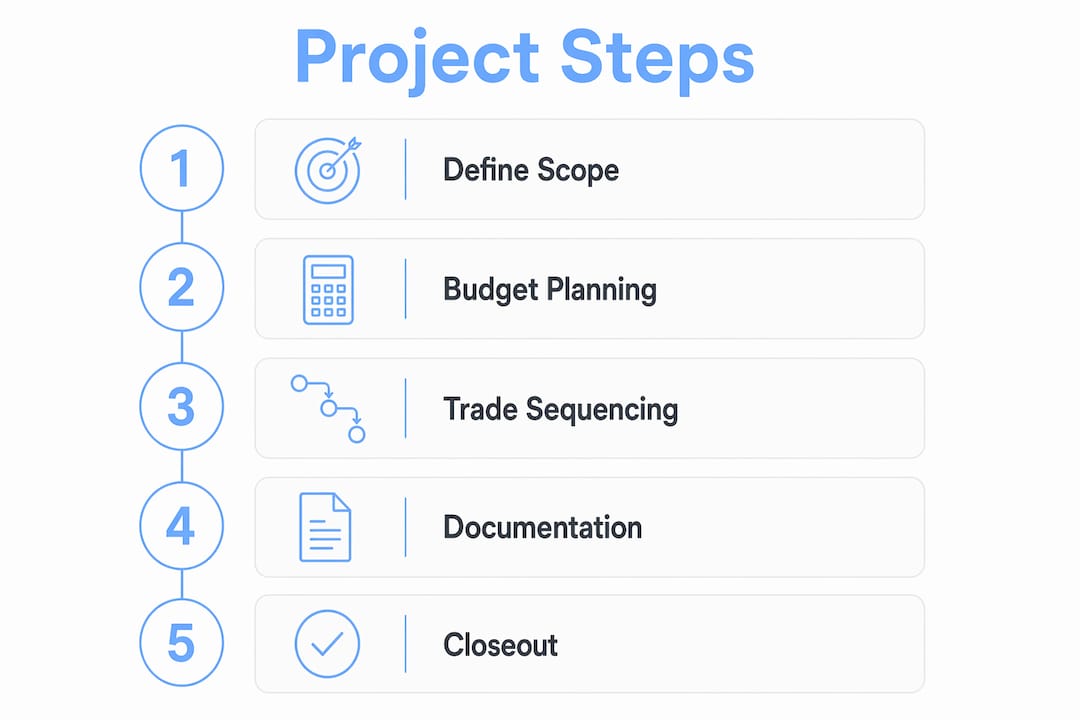
Project management for homeowners is the structured process of planning, budgeting, scheduling, and overseeing home improvement work to deliver projects on time, within budget, and to expected quality. Most homeowners assume hiring a contractor is enough. The reality is that someone still needs to coordinate scope, sequence trades, document changes, and close out the work properly. That someone is you. This guide breaks down what is project management for homeowners into clear, practical steps you can apply to any renovation or repair project, whether you are remodeling a bathroom or replacing a roof.
What is project management for homeowners?
Project management for homeowners is the active coordination of every moving part in a renovation or repair project. It goes beyond signing a contract. It means defining exactly what work gets done, tracking costs against a budget, keeping trades on schedule, and documenting every decision made along the way. The Project Management Institute defines this discipline in professional settings as applying knowledge, skills, tools, and techniques to project activities to meet requirements. For homeowners, the same principles apply at a smaller scale.

The core difference between a homeowner who manages their project and one who does not is control. Without active oversight, scope creeps, costs balloon, and contractors fill decision gaps with whatever is easiest for them. With a clear plan in place, you stay in the driver’s seat. Homeowners with a solid project plan earn contractor respect and faster decisions during the build.
What are the main components of homeowner project management?
A well-run home renovation project management effort covers six core components. Each one builds on the last, and skipping any one of them creates problems downstream.
- Project overview and objectives. Define what success looks like before a single nail is pulled. Write down your goals, your non-negotiables, and your constraints, including budget ceiling and move-in deadline.
- Detailed scope definition. List every item included in the project and, just as critically, every item excluded. Scope ambiguity leads to soft pricing, increased change orders, and payment disputes. A written scope sheet is your first line of defense.
- Budget tracker. Separate your numbers into three columns: estimated cost, committed cost (signed contracts), and actual cost (invoices paid). This three-column view shows you exactly where money is going at any point in the project.
- Task schedule with dependencies. Map out which trades come in what order and how long each phase takes. A schedule with dependencies prevents you from booking a tile installer before the plumber has roughed in the shower drain.
- Decisions log. Record every material selection, design change, and vendor choice in one place. This prevents the “I thought we agreed on white oak floors” conversation three weeks before closeout.
- Change control process. Written change orders for all scope deviations must be signed before any new work proceeds. This single habit eliminates the majority of contractor disputes.
Pro Tip: Create a shared folder, whether in Google Drive or a simple binder, that holds your scope sheet, budget tracker, schedule, decisions log, and all signed change orders. Every stakeholder gets access, and nothing gets lost in a text thread.
A typical renovation project plan includes all six of these components in a single document. Treat that document as the single source of truth for every decision made on the project.
How does proper trade sequencing prevent costly mistakes?
Trade sequencing is the order in which different contractors perform their work on a project. Getting it wrong is one of the most expensive mistakes a homeowner can make. Rework costs time and money, and one out-of-order trade can create a domino effect that pushes your entire schedule back by weeks.
The standard trade sequencing logic for a residential renovation follows this order:
- Demolition. Remove existing finishes, fixtures, and structural elements that need to go. Do this before any new work begins.
- Framing and structural work. Build or modify walls, beams, and structural supports. All other trades depend on this being complete.
- Rough plumbing, electrical, and HVAC. Run pipes, wires, and ductwork through open walls and ceilings before they are closed up.
- Inspections. Schedule your rough-in inspections before insulating or drywalling. Failing an inspection after drywall is up means tearing it back out.
- Insulation and drywall. Close up the walls once all rough-in work passes inspection.
- Painting and trim. Prime and paint walls before installing cabinets or fixtures to avoid masking and touch-up work.
- Cabinetry and fixtures. Install kitchen cabinets, bathroom vanities, and built-ins after painting is complete.
- Flooring last. Install hardwood, tile, or luxury vinyl plank after all other trades are finished. Flooring is the most vulnerable finish surface on a job site.
Pro Tip: Build a rolling look-ahead schedule that shows the next two to three weeks of work in detail. Update it every Friday. This keeps you ahead of material lead times and prevents trades from showing up to a site that is not ready for them.
Scheduling, permitting, and compliance coordination are critical daily tasks in residential construction. Permit timing is especially easy to mismanage. If your inspector is booked two weeks out, you need to request that inspection before the rough-in work is done, not after.
What is the role of documentation and closeout in home project management?
Documentation is the part of project planning for homeowners that most people skip. It also causes the most post-project headaches. Good documentation during a project protects you legally, financially, and practically.
The closeout phase is where many projects fall apart. Work gets 95% done, the contractor moves to the next job, and you spend months chasing them for the last few items. A formal closeout process prevents this entirely.
Key documentation practices to follow throughout your project:
- Keep a written record of every verbal agreement made on site. Send a follow-up email or text confirming what was discussed and agreed.
- Photograph work in progress, especially before walls are closed. These photos document what is behind your drywall and are invaluable for future repairs.
- Log every change order with the date, description of work, cost impact, and both parties’ signatures.
- Track all permit numbers and inspection results in your project folder.
Closeout documentation to collect before releasing final payment:
| Document | Why It Matters |
|---|---|
| Signed punch list | Confirms all deficient items are resolved before final payment |
| Lien waivers | Protects you from contractor or subcontractor liens on your property |
| Product warranties | Covers materials and fixtures if they fail after installation |
| Equipment manuals | Needed for maintenance and future service calls |
| As-built drawings | Shows final locations of pipes, wires, and structural elements |
Final walkthrough and punch-list management is required before releasing final payment. Walk every room with your contractor, write down every incomplete or deficient item, and set a deadline for resolution. Do not release the final check until the punch list is fully signed off. Closeout discipline with punch lists and lien waivers prevents months of post-project follow-up.
When should you hire a professional project manager?
Not every renovation needs a professional project manager. A bathroom refresh with one contractor is manageable on your own. A whole-home remodel involving structural changes, six trades, and a six-figure budget is a different situation entirely.
The table below shows when self-management works and when professional help pays for itself.
| Situation | Self-Management | Professional PM |
|---|---|---|
| Single trade, simple scope | Works well | Not necessary |
| Multiple trades, 4+ weeks | Manageable with tools | Recommended |
| Structural changes or additions | Risky without experience | Strongly recommended |
| Absentee homeowner | Very difficult | Required |
| Budget over $100,000 | High risk without structure | Strongly recommended |
An owner’s representative is not the same as a general contractor. A general contractor builds the work. Owner’s representatives protect your interests by managing scope, schedule, budget, and quality assurance independently of the people doing the work. They report to you, not to the trades. This distinction matters when disputes arise.
For projects in the middle range, digital tools fill the gap between full self-management and hiring a professional. Home project apps let you track tasks, store documents, manage contractor communication, and monitor budgets from your phone. Platforms like Bidwolf go further by connecting you with vetted local contractors and letting you compare competitive bids in one place.
How can you apply project management principles to your renovation?
Applying effective project management at home does not require a certification. It requires a system and the discipline to follow it. These six steps give you a repeatable process for any home improvement project.
- Write a project plan before contacting contractors. Define your objectives, scope, budget ceiling, and target completion date. Contractors give better bids and take you more seriously when you arrive with a written scope.
- Freeze your scope before work starts. Mid-project changes are the single biggest driver of cost overruns. Decide on finishes, fixtures, and layout changes before demolition begins, not during.
- Build your budget with a contingency buffer. Add 10–15% to your estimated costs as a contingency reserve. Unexpected conditions behind walls, such as old wiring or water damage, are common in homes older than 20 years.
- Set milestone sign-offs. Agree with your contractor on specific milestones, such as rough-in complete, drywall complete, and punch list resolved, where you formally review and approve work before the next phase begins.
- Maintain one communication channel. Pick email or a project app and keep all project decisions there. Avoid making binding decisions over phone calls without a written follow-up.
- Use a closeout checklist. Before releasing final payment, check off every item on your punch list and collect all closeout documents. Use a home renovation checklist to make sure nothing gets missed.
Pro Tip: When collecting bids, require every contractor to bid against the same written scope. Bids based on different assumptions are impossible to compare fairly. A detailed scope sheet levels the playing field and reveals which contractors actually read what you sent.
Project managers provide a participatory approach that keeps homeowners involved and projects compliant with local codes. Even if you self-manage, building that same involvement into your process produces better outcomes. Know your permit requirements, attend key inspections, and never let a contractor pull you away from a milestone sign-off.
Knowing how to select service providers is also part of the process. Vetting credentials, checking references, and confirming insurance before signing a contract saves significant trouble later.
Key Takeaways
Effective home renovation project management requires a written plan, a frozen scope, logical trade sequencing, and formal closeout documentation before any final payment is released.
| Point | Details |
|---|---|
| Define scope in writing | List every inclusion and exclusion before contacting contractors to prevent cost disputes. |
| Sequence trades correctly | Follow demolition through flooring order to avoid rework and schedule delays. |
| Document every change | Require signed change orders before any scope deviation proceeds. |
| Close out formally | Collect lien waivers, warranties, and a signed punch list before releasing final payment. |
| Use a contingency buffer | Reserve 10–15% above your estimated budget for unexpected conditions. |
Why project management changed how I think about renovations
Most homeowners treat a renovation like a purchase. You pick a contractor, agree on a price, and expect the finished product to arrive. That mindset is the root cause of most renovation disasters I have seen.
The projects that go well share one trait: the homeowner showed up prepared. They had a written scope. They knew their budget down to the line item. They asked for a schedule before work started, not after the first delay. Contractors respond to that preparation differently. They tighten their own processes when they know the homeowner is paying attention.
The hardest lesson I have learned is that scope freeze is not optional. Every time a homeowner says “while you are at it, can we also…” the project gets longer, more expensive, and harder to close out cleanly. Treat your renovation like running a small business. Decisions have costs and consequences. Document them, price them, and approve them in writing before they happen.
Closeout is the other area where discipline pays off disproportionately. Collecting lien waivers, warranties, and a signed punch list feels like paperwork. Three years later, when a subcontractor files a lien or a fixture fails under warranty, that paperwork is the difference between a quick resolution and a legal headache.
— Devin
How Bidwolf helps you manage your next home project
Coordinating a renovation means juggling bids, contractor schedules, and project decisions all at once. Bidwolf makes that coordination faster and more transparent for homeowners across Texas.

With Bidwolf, you post your project once and receive competitive bids from vetted, verified local contractors. Built-in messaging keeps all contractor communication in one place, so nothing gets lost in a text thread. Secure payments and verified credentials mean you hire with confidence. Whether you are managing a bathroom remodel, a roofing replacement, or a full kitchen renovation, Bidwolf gives you the tools to stay in control from bid to closeout. Post your project on Bidwolf and start receiving bids from qualified local contractors today. You can also browse local contractors by trade and location to find the right fit before you even post.
FAQ
What does project management mean for a homeowner?
Project management for homeowners is the process of planning, budgeting, scheduling, and overseeing a home renovation or repair from start to finish. It includes coordinating trades, documenting changes, and closing out the project with a formal punch list.
What is a punch list in home renovation?
A punch list is a written record of all incomplete or deficient items identified during the final walkthrough. Final payment should not be released until every item on the punch list is resolved and signed off by both parties.
Why is trade sequencing important in a remodel?
Trade sequencing determines the order contractors perform their work. The correct order runs from demolition through rough-in trades, inspections, drywall, finishes, and flooring last. Incorrect sequencing causes rework and schedule delays that compound across the entire project.
When should a homeowner hire a professional project manager?
Homeowners should consider hiring a professional project manager or owner’s representative when a project involves structural changes, multiple trades, an absentee owner, or a budget above $100,000. For simpler projects, a written plan and digital tools are usually sufficient.
What is a change order and why does it matter?
A change order is a written, signed document that records any deviation from the original project scope, including the cost and schedule impact. Requiring signed change orders before work proceeds prevents surprise costs and protects both the homeowner and the contractor.