

Home Renovation Marketplace Explained for Homeowners

TL;DR:
- Home renovation marketplaces connect homeowners with local contractors by facilitating direct interactions and earning fees. They use geographic proximity, trade specialties, and project scope to match projects, with costs often embedded in contractor bids due to lead fees. To hire safely, homeowners should verify licenses and insurance independently, obtain multiple detailed bids, and clarify permit responsibilities before starting work.
A home renovation marketplace is a two-sided platform that connects homeowners with local contractors without owning inventory or performing any work itself. The platform creates value by facilitating direct interactions between both sides and monetizing that exchange through fees, commissions, or subscriptions. Well-known examples include Angi, Thumbtack, and TaskRabbit, each operating on slightly different models. Understanding how these platforms work gives you a real advantage when hiring for your next project. This home renovation marketplace explained guide covers how they operate, what they cost, and how to hire safely through them.
How does a home renovation marketplace connect homeowners with contractors?
A home renovation marketplace operates as a two-sided market, with homeowners on the demand side and contractors on the supply side. The platform earns revenue by facilitating that connection, not by doing the work. Platforms like Angi, Thumbtack, and TaskRabbit each use different methods to match the two sides, but the core structure is the same.

Matching methods platforms use
Platforms match homeowners with contractors using three primary methods: geographic proximity, trade specialty codes, and project scope keywords. Geographic matching is the most basic. It surfaces contractors within a defined radius of your zip code. Specialty matching goes deeper by filtering contractors based on their licensed trade category, such as electrical, plumbing, or general contracting. Scope-based matching uses the details you enter about your project to narrow the field further.
Specialty-based matching produces better renovation outcomes than matching on availability or zip code alone. A contractor whose license and experience align with your specific project type is far more likely to deliver accurate bids and compliant work.
How platforms make money
Most home renovation platforms monetize through one of three models: pay-per-lead, subscription, or commission. In a pay-per-lead model, contractors pay a fee each time the platform sends them your contact information. In a subscription model, contractors pay a flat monthly fee for access to a set number of leads. Commission models charge a percentage of the completed job value.
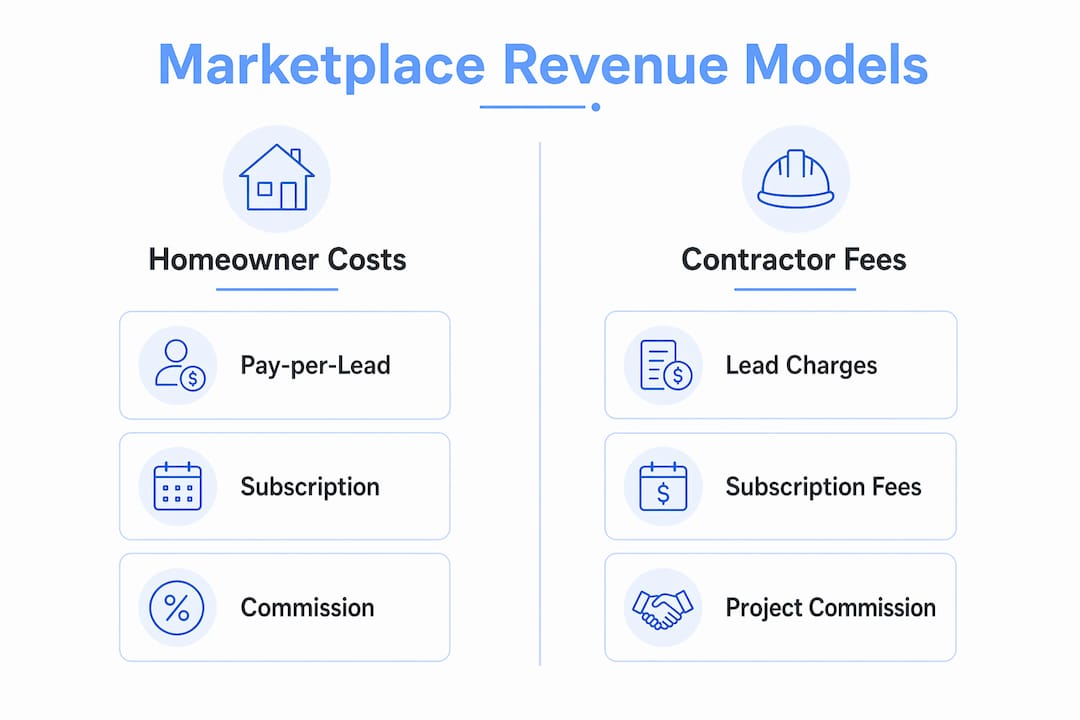
Shared-lead platforms sell the same homeowner lead to multiple contractors simultaneously. That competition can work in your favor, but it also means contractors factor their lead costs into their bids. Understanding this pricing dynamic is part of using any home renovation platform guide effectively.
Pro Tip: The more detail you provide when posting your project, the more accurate your bids will be. Include square footage, preferred materials, timeline, and any known permit requirements. Vague project descriptions produce vague quotes.
What are the benefits and challenges of using a renovation marketplace?
Home improvement marketplace benefits are real, but so are the trade-offs. Knowing both sides helps you set the right expectations before you post your first project.
Key benefits for homeowners
- Access to multiple contractors fast. Posting one project can generate bids from several qualified professionals within 24–48 hours, compared to days or weeks of cold calling.
- Transparent comparison. Bids arrive in a structured format, making it easier to compare scope, price, and timeline side by side.
- Verified credentials. Most platforms perform at least a basic license and background check before listing a contractor.
- Built-in communication tools. Messaging features create a documented record of every conversation, which protects you if a dispute arises later.
- Competitive pricing. Multiple contractors bidding on the same project creates natural price competition.
Common challenges to watch for
The biggest challenge is embedded lead costs. Contractors on shared-lead platforms pay $20–$80 per lead, and on projects above $5,000, those costs can raise quotes by 1%–6%. That cost is not a line item on your bid. It is built into the contractor’s overhead and passed to you invisibly.
Vetting rigor also varies widely across platforms. A contractor listed on a marketplace may have passed a background check six months ago but let their insurance lapse since then. Platform verification is a starting point, not a guarantee. Regulatory and permit requirements add another layer of complexity. Some platforms do not clarify who is responsible for pulling permits, and that ambiguity can create legal exposure for homeowners if work is done without proper approvals.
Incomplete bids are a third common problem. A low bid that excludes demolition, disposal, or finishing work looks attractive until the change orders arrive. Requesting a full scope breakdown before accepting any bid is the most effective way to avoid this.
How can homeowners safely hire contractors through a marketplace?
Safe contractor hiring through any platform follows a clear process. Skipping steps creates financial and legal risk. The checklist below covers the most critical actions.
Step-by-step hiring checklist
- Get at least three written bids. Verbal estimates are unreliable; written bids with detailed scope, material and labor breakdowns, timelines, and payment schedules are the minimum standard for comparison.
- Verify the contractor’s license directly. Do not rely on the platform’s badge. Contact your state licensing board to confirm the license is active and covers the type of work being done.
- Confirm insurance coverage with the insurer. Marketplace vetting does not guarantee current insurance. Coverage lapses between policy renewals, and a certificate of insurance can be outdated by the time you receive it. Call the insurer directly to verify active coverage.
- Clarify permit responsibility in writing. Assigning permit responsibility clearly before work begins prevents legal and inspection complications. Homeowner-pulled permits can create liability if the contractor’s work fails inspection.
- Watch for red flags. Excessive upfront deposits (more than 10%–30% of the total project cost), vague bid language, and pressure to start immediately are warning signs.
- Document all scope exclusions. Ask each contractor to list what is not included in their bid. This prevents disputes when unexpected work surfaces mid-project.
Pro Tip: Before posting your project, write a one-paragraph scope statement that includes what you want done, what you are supplying yourself, and what you expect the contractor to handle. A clear scope statement reduces bid volatility and keeps all contractors quoting the same job.
Understanding the types of renovation contractors available also helps you post more accurately and attract the right professionals from the start.
How do renovation marketplaces compare to traditional hiring methods?
The home design service comparison between marketplaces and traditional hiring methods comes down to speed, cost structure, and vetting depth. Each method has a distinct trade-off.
| Feature | Online Marketplace | Traditional Referral | Directory Listing |
|---|---|---|---|
| Speed to first bid | 24–48 hours | 3–7 days | 3–10 days |
| Vetting included | Basic license/background check | Peer-reviewed reputation | Self-reported credentials |
| Cost structure | Lead fees embedded in bids | No platform cost | Minimal or no cost |
| Bid comparison tools | Built-in | Manual | Manual |
| Communication record | Documented in platform | Phone or email | Phone or email |
| Matching method | Specialty, geography, scope | Personal network | Category search |
Traditional referrals from neighbors, family, or a property manager’s network remain the gold standard for trust. The contractor has a proven track record with someone you know. The trade-off is time. Referral networks are slow and limited in scope, especially for specialty trades like electrical or HVAC.
Directory listings, such as those found on local chamber of commerce websites or trade association pages, provide access to licensed professionals but no matching logic. You search, you call, you vet everything yourself. There is no built-in comparison tool and no documented communication trail.
Online marketplaces close the speed and comparison gap. Digital matching services align contractors with project scope and regulatory competence in ways that zip-code-only searches cannot. The cost trade-off is the embedded lead pricing that flows through contractor bids. For most homeowners, the time savings and bid transparency justify that trade-off, provided you verify credentials independently.
Renovation project management tools built into platforms like Bidwolf add another layer of value. Built-in messaging, bid comparison dashboards, and secure payment processing reduce the administrative work of managing multiple contractors across a single project.
Key Takeaways
A home renovation marketplace connects homeowners with local contractors through a two-sided platform model, and using it effectively requires understanding bid pricing, verifying credentials independently, and defining your project scope clearly before posting.
| Point | Details |
|---|---|
| Two-sided platform model | Marketplaces facilitate connections and earn revenue through fees, not by doing the work themselves. |
| Embedded lead costs | Contractor bids on shared-lead platforms can include $20–$80 in lead fees, raising your final cost. |
| Independent credential verification | Always confirm active license and insurance directly with the licensing board and insurer. |
| Scope clarity reduces disputes | A written scope statement with exclusions produces more accurate bids and fewer change orders. |
| Permit responsibility matters | Clarify in writing who pulls permits before work begins to avoid homeowner legal liability. |
What I’ve learned after watching homeowners use these platforms
Most homeowners treat a marketplace bid like a price tag on a shelf. They assume the number is final and complete. It rarely is. The bid reflects what the contractor understood about your project at the moment they submitted it. If your scope was vague, their bid is an educated guess.
The single most common mistake I see is homeowners comparing bids without first confirming that all three contractors quoted the same scope. One contractor includes tile removal in their bathroom remodel bid. Another excludes it. The lower number looks like a deal until demolition day, when the exclusion becomes a change order. The fix is simple: send every contractor the same written scope document and ask each one to list what their bid does not cover.
The second mistake is trusting the platform’s green checkmark too much. Platforms screen contractors at the time of onboarding. They do not monitor insurance renewals in real time. A contractor whose certificate of insurance expired last month can still appear as verified on the platform today. Calling the insurer takes five minutes and eliminates that risk entirely.
Permit responsibility is the issue that surprises homeowners most. Many assume the contractor handles permits automatically. That assumption is wrong unless it is written into the contract. When a homeowner pulls their own permit to save money, they inherit legal responsibility for the work passing inspection. If it does not pass, the liability is theirs.
My honest recommendation: use a marketplace to find candidates fast, but do your own vetting before signing anything. The platform gets you to the starting line. Your due diligence gets you to a finished project without surprises.
— Devin
How Bidwolf makes finding local contractors straightforward
Bidwolf is built for homeowners who want competitive bids from verified local contractors without the back-and-forth of cold calling. You post your project once, whether it is a bathroom remodel, roofing job, electrical upgrade, or landscaping project, and qualified contractors in your area submit bids directly.
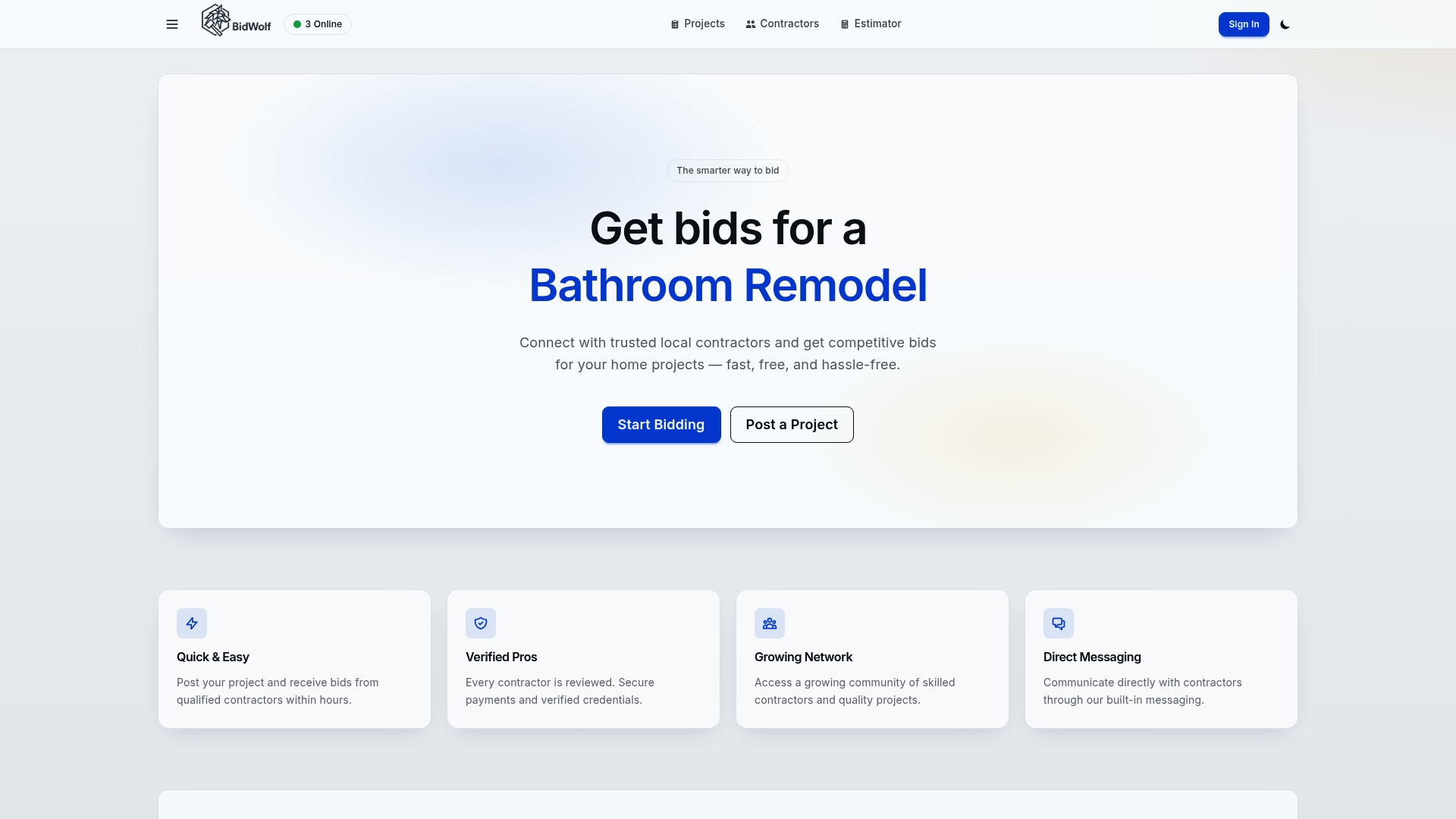
Bidwolf verifies contractor credentials, provides built-in messaging for documented communication, and supports secure payments throughout the project. The platform’s mobile app lets you manage bids and communicate with contractors from anywhere. Homeowners across Texas use Bidwolf to post renovation projects and receive competitive bids from local professionals. You can also browse and connect with local contractors directly to find the right fit for your specific project before committing to a bid.
FAQ
What is a home renovation marketplace?
A home renovation marketplace is a two-sided online platform that connects homeowners with local contractors for renovation and repair projects. The platform facilitates the connection and monetizes through fees or commissions without performing any work itself.
Why are contractor bids on marketplaces sometimes higher than expected?
Contractors on shared-lead platforms pay $20–$80 per lead, and those costs are typically built into their bids. On projects above $5,000, embedded lead pricing can raise quotes by 1%–6% compared to direct-hire arrangements.
How do I verify a contractor’s license and insurance?
Contact your state licensing board directly to confirm the contractor’s license is active and covers your project type. For insurance, call the insurer listed on the certificate of insurance to verify the policy has not lapsed.
Who is responsible for pulling permits on a renovation project?
Permit responsibility must be assigned in writing before work begins. Homeowners who pull their own permits inherit legal liability if the work fails inspection, so most renovation contracts assign this responsibility to the licensed contractor.
How many bids should I get before hiring a contractor?
Get at least three written bids that include a full scope breakdown, material and labor costs, timeline, and payment schedule. Comparing three detailed bids gives you enough data to identify outliers and make a confident hiring decision.